Accidentally encountered on the net yesterday: this t-shirt triumph of supercilious peeving:
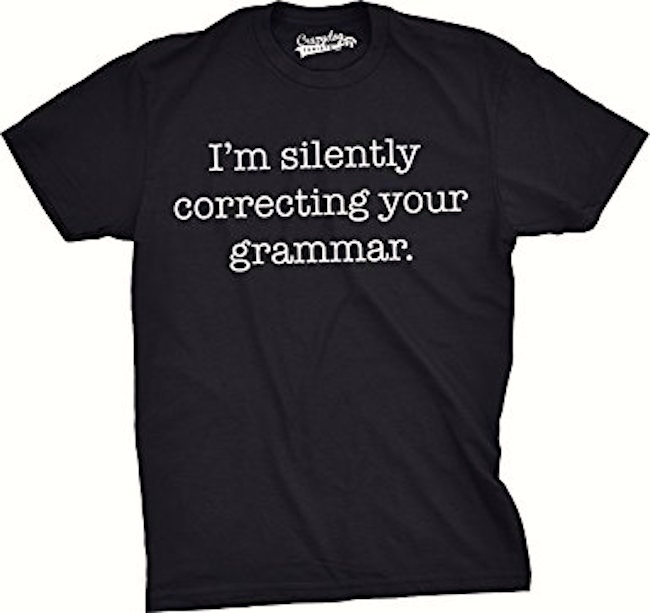 (#1)
(#1)
It’s also available on signs, mugs, plaques, and goodness knows what else. Dare I hope for underwear?
Accidentally encountered on the net yesterday: this t-shirt triumph of supercilious peeving:
(#1)
It’s also available on signs, mugs, plaques, and goodness knows what else. Dare I hope for underwear?
Yes, Ricky Martin is the hook for this posting. Aside from the fact that I’m a big RM fan, this is not at all a forced connection, as you’ll see. For the moment, this:
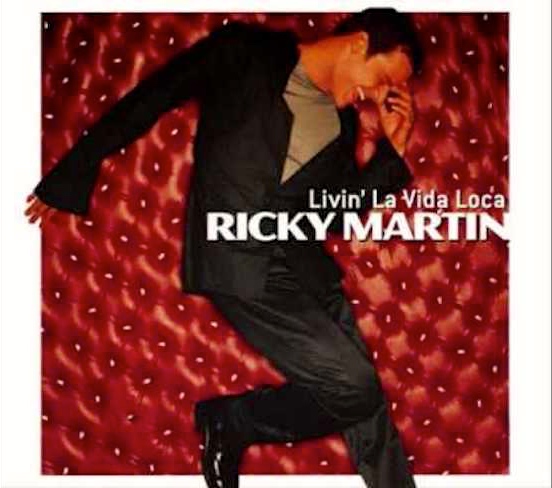 (#1) See also #1 in this posting on RM, showing him in a performance of the song.
Back in June, I posted (here) about the retirement party for Stanford’s Eve Clark, prominently mentioning Herb Clark’s comments about the 2014 Festschrift for Eve edited by
Inbal Arnon, Marisa Casillas, Chigusa Kurumada, Bruno Estigarribia
There I said, of Eve and Herb, that
each of them read and critiqued almost everything the other wrote, and they talked about their research essentially on a daily basis. As Herb remarked yesterday, this made it incredibly difficult for him to write his contribution to the Festschrift … without tipping Eve off to the project; complex ruses were resorted to.
Herb also reflected on the diversity of the editors’ names, each from a different language — Bruno’s, from Basque, being the most exotic of the four. They are all multilingual (and multicultural), Bruno pretty spectacularly so. And, being linguists, they all know at least a bit about a huge number of languages (and the cultures and societies those languages are part of).
Such experiences, I think, incline linguists to a certain liberality of spirit: openness to new ideas, appreciation of social, cultural, and individual variety, and resistance to prejudice. Characteristics to be seen in Eve and all four of the editors. And, arrived at by a somewhat different route, in Ricky Martin.
(The Daily Jocks ad (for PUMP!) from 9/19, with a caption from me, plus some fantasy. About the gay world and mansex, so not for kids or the sexually modest.)
 (#1) Doorman of the underworld
Gymangelic Portalo guards a
Subterranean landscape of
Man with man, a secret, dark,
Sweaty country overseen by
Angel EaglePay Portalo with a kiss to
Enter, explore,
Embrace, explode, to be
Embraced, entered,
Occupied.
A phenomenon that Bill Griffith returns to from time to time, under a series of names. Today it’s repetitive phrase disorder, manifested in the tetrametrical mantra turtle-headed sea snakes:
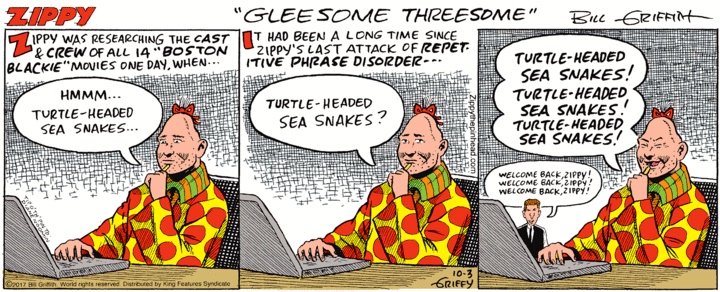
Savor its power: say it three times!
Some weeks ago YouTube brought me a delightful video of a flash mob performance of Ravel’s “Boléro” (in a town square in Toluca, Mexico). About the same time, my Enhance Fitness class (aimed especially at older and disabled participants) at the Palo Alto YMCA conceived of the idea of converting one of our regular exercise routines — done to the original Billy Ray Cyrus recording of “Achy Breaky Heart” — into a flash mob performance in the lobby of the Y (all this achieved at 5 p.m. on Wednesday September 20th).
Both musical flash mobs were “cumulative” — starting with just a few participants, with more and more added in stages until there was a true mob. Especially effective for the Ravel, which starts with a snare drum ostinato to which a flute is added, and then further instruments, a few at a time, as the piece builds to a crashingly loud finale.
Yesterday’s Mother Goose and Grimm pays a visit to another house in Comics Town:
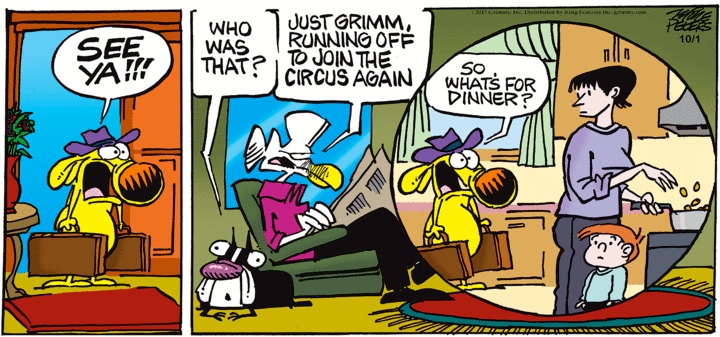
To understand this cartoon, you have to recognize that the circus Grimm has run off to join is The Family Circus, a comic by Bil and Jeff Keane that is famous for its really cute kids and its warm, wholesome view of family life (characteristics that have made it a frequent target for parody).
The Zippy from September 30th, featuring Mary’s Coffee Shop, which also offers grinders:
 (#1)
(#1)
Plays on several senses of grind, plus the idiom one-hit wonder (with its phonological play on /wʌn/).
Following up on yesterday’s posting “The archangel Michael” (focusing on the nature of angels and archangels, especially those represented in art as wingèd men), on to angelic music in the Sacred Harp hymnbook: on
angels, wings of love, robes of light, flying away, being carried away, ecstasy. With trumpets.
As before, I’ll start with the Christian context — of art yesterday, of music today — and move to sexual, in particular gay, interpretations of these works, finding in them homoerotic elements that were surely never intended. This move is straightforwardly sacrilegious, and therefore offensive to many, so I’m warning you now that after a respectful discussion of themes in hymn texts, I’ll turn to descriptions and depictions of flagrant mansex, but I’ll flag this shift, so you can bow out if you wish.
The connection is the ambiguity of the word ecstasy, an ambiguity that is rooted in a significant similarity between religious ecstasy and sexual ecstasy: being transported or carried away, in mind and body, by an experience.