Archive for the ‘Conversion’ Category

Vulgar slang is busting out all over

April 28, 2026

(about a family of vulgar slang expressions, so streams of raunchy talk about sex: totally not for kids or the sexually modest)

With apologies to the Rodgers and Hammerstein of Carousel, notes on to bust a nut ‘to ejaculate, orgasm’ and its kin, among them the verbs bust, nut, dick, and ball (plus all those bodypart nouns).

(more…)

Ad-talk: your morning groom

December 19, 2025

Caught on tv this morning, one version of a Titanium Edge tv spot ad “Any Hair Anywhere”, released 7/31/25 (details on the iSpot site here); from this ad:


Titanium Edge, the “2-in-one nose and ear groomer that goes wherever razors can’t … to finish my groom” — with a noun groom, a nouning of the verb groom, to denote a regular routine of grooming, here specifically for men and in fact specifically for shaving; this nouning would appear to be a commercial invention by Titanium Edge’s ad agency

(more…)

Los Angeles looterers

January 11, 2025

Heard on MSNBC on 1/9, a reporter on scene at the Palisades wildfire in Los Angeles, noting that looterers had become a problem — using, not the agent noun looter, based on the established verb loot, but the agent noun looterer, based on the innovative verb looter (a verbing of the noun looter). A looterer is someone engaged in lootering, which is a kind of looting.

The question is why the reporter went for the elaborate innovative noun looterer rather than the simpler established noun looter. In the context, it was clearly not a mistake, and the reporter repeated it. And then it turns out that the usage wasn’t her invention on the spot; the verb looter and its derived agent noun looterer are attested from others. Even with reference to the Los Angeles fires; from the iHeart podcasts about the fires:

2 days ago  That’s just the estimate. Speaker 2 (00:43): So the Los Angeles Police arrested a possible arson suspect … twenty looterers have been arrested

(more…)

Sweatless in the poolside sun

November 24, 2024

(There will be mentions — in vernacular but not actually vulgar terms — of male-male sexual practices that some will find icky, so this posting will not be to everyone’s taste; and it might stretch some kids’ horizons a bit, so a gentle warning)

From back on 10/30, e-mail from Gadi Niram, with a video gift for me, saying: I found this video (and the young man in it) to be quite a pleasant diversion:


(#1) Screen shot from the video, which you can view here

A shirtless young man in ripped denim shorts playing the 3rd movement of Beethoven’s “Moonlight” Sonata (Piano Sonata No. 14 in C-sharp minor, Op. 27 No.2) on a fancy grand piano (with a mirrored fallboard, as in the finest piano lounges). alongside the pool at at what looks like a tropical oceanside resort. (For a bit of extra sexiness, those shorts are down far enough in the back to expose the waistband of his black Calvins; here the girls and the gay boys swoon.)

(more…)

striking language

October 19, 2024

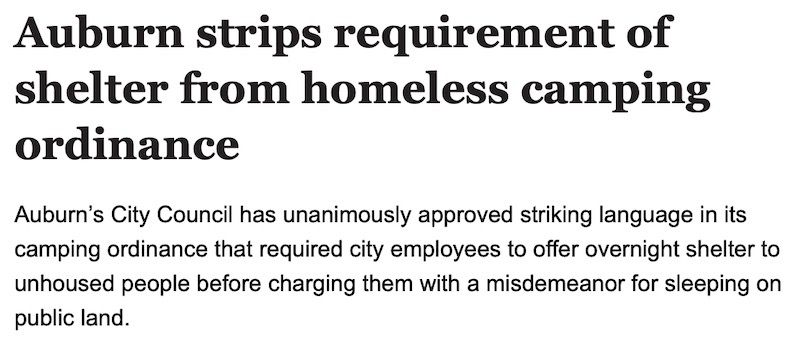
From Ellen Kaisse in e-mail to me on 10/4 (yes, the blog mill grinds very very slowly on Ramona St.): a nice ambiguity from the Seattle Times, in the first sentence of the story:
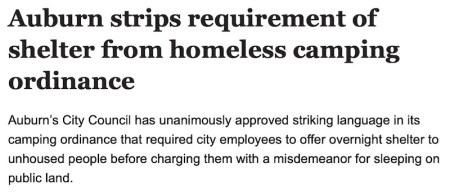

[what EK wrote, with some bracketed amendments by me:] I read striking as an adjective meaning ‘notable’ and modifying language rather than the intended reading where striking is [the nominalization of] a verb with language as its direct object [AZ: the nominalization (together with language and a very long relative clause modifying language) is itself the direct object of the verb approved]. It was only the headline that alerted me that my first reading was the opposite of what was actually approved.

Now if you ask an ordinary person what’s gong on with that sentence, they’ll tell you that it’s ambiguous, and they’ll provide some attempt at a paraphrase (as a sufficient account of the ambiguity), but they’ll simplify things somewhat by disregarding that long relative cause and, in effect, localizing the source of the ambiguity in the expression striking language, telling you that in the Auburn City Council sentence this expression means two different things, ‘notable language’ or ‘removing language’ (from something), and maybe they’ll go on to localize the source even further in the word striking, saying that striking in striking language can mean either ‘notable’ or ‘removing’ (from something).

Ask a linguist, like Ellen or me, and even our briefest answer will go immediately to localizing the ambiguity in specific words that are the crux of the matter. We’ll identify the lexical items involved and supply some relevant properties of the words — what syntactic category they belong to (EK refers explicitly to adjective (Adj) and verb (V) and implicitly to noun (N)); perhaps what derivational and inflectional categories they belong to (implicit in our references to nominalization). And then, especially, we’ll tell you something about the syntactic constructions in which the words are related to one another (we’ll refer to modifying / attributive adjectives, to verbs with direct objects, and so on). Our very brief comments are laden with allusions to the structure of English — its morphology and syntax — as well as to its lexicon.

The linguists’ view is that the lexicon, morphology, and syntax of the language work together in such a way that a stretch of phonological material can convey two different meanings; when we confront an ambiguous expression, we see it not as a brute fact (as if people somehow memorize how phonological substance and semantics are paired with one another, expression by expression), but as the consequence of the system of the language. Surprise! There are two ways you can end up with striking language, two ways the expression can be analyzed. (There are, in fact, more than two; but there are at least the two EK told us about.)

Now I’m going to wade hip-deep into the system of English involved in striking language (and some similar expressions). Not to tell you everything, but to tell you just enough to show you that the system is both big and complex. Therefore, challenging. And therefore, wonderful to figure out. Contemplating stuff like this makes me happy.

(more…)

vitals

October 3, 2024

Every morning and every evening I send a brief e-mail to Elizabeth Daingerfield Zwicky, to reassure her that I’m still functioning. In the G’MORNIN bulletins I report my sleep times and summarize my morning vitals — my morning vital signs (always blood pressure and pulse rate, occasionally more tests if they seem to be called for). It was only this morning that I realized that morning vitals ‘morning vital signs’ was an especially nice example of a subtype of what I’ve called beheadings. To go along with, from previous postings, examples like chewables  ‘chewable vitamins’ and squares ‘square meals’ (in three squares a day ‘three square meals a day’).

The relevant subentry in NOAD just says:

noun vitals: short for vital signs.

Well, yes, but short in a very specific way:

(more…)

Ambiguity day in the comics

September 26, 2024

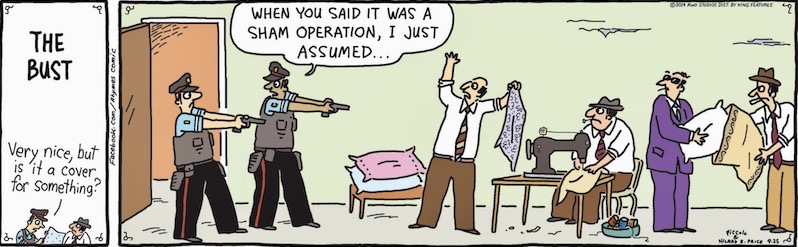
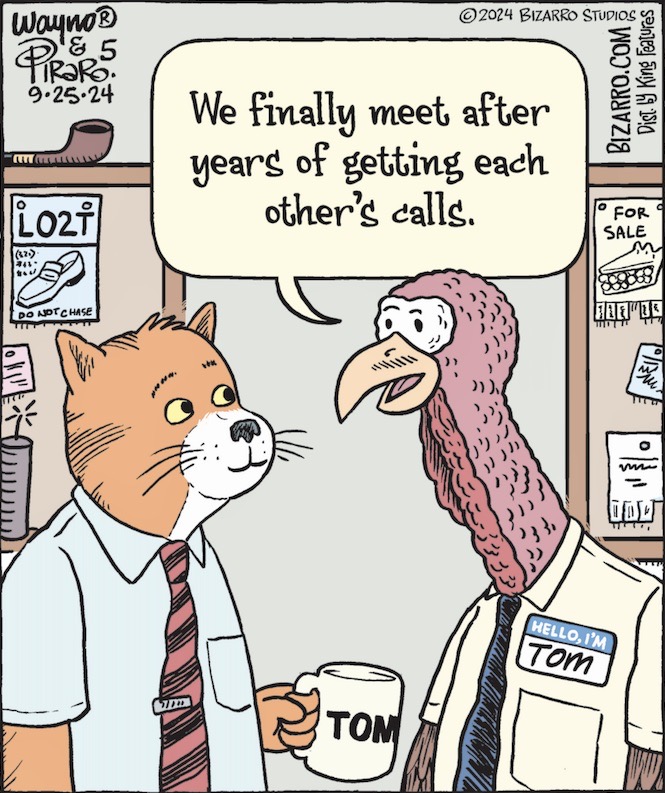
Complex ambiguities in the 9/25 comics: a Piccolo / Price Rhymes With Orange turning on the ambiguity of sham; and a Wayno / Piraro Bizarro turning on the ambiguity of tom:


(#1) sham conveying fraud, hence illegality; vs. sham for a decorative pillow cover (being manufactured in a small workshop, though note the suggestion in the title panel that the place might be a cover — ambiguity alert! — in the sense ‘an activity or organization used as a means of concealing an illegal or secret activity’ (NOAD) —  but why are these pillow coverings called shams?


(#2) Personified, talking animals: two toms, a tomcat and a tom turkey, presented as characters named Tom, who work for the same company and are encountering one another over coffee, hence Wayno’s title “Breakroom Encounter” (if you’re puzzled by the odd symbols in the cartoon — Dan Piraro says there are 5 in this strip — see this Page)

(more…)

Annals of verbing: to get storrowed

May 10, 2024

A brief Friday delight, to which I was alerted by Gadi Niram on Facebook: a passive-only verbing based on a proper place name. In today’s CBS News from Boston, the story “3 trucks, including one from Trillium Brewing, get “storrowed” in one day on Storrow Drive”:

(more…)

Everyday beheadings

March 29, 2024

For some time now, I’ve been collecting examples of a scheme of English derivational morphology I’ve called beheading, as in

crude (Adj) oil (N) -> crude (N), where the derived item crude ‘crude oil’ is a Mass N (like oil)

commemorative (Adj) stamp (N) -> commemorative (N), where the derived item commemorative ‘commemorative stamp’ is a Count N (like stamp)

A great many of the examples come from jargons, the vocabularies of specific occupational or interest groups, like people in the energy business or philatelists — or medical professionals (N attending ‘attending physician’), food preparers, servers, and sellers (N Swiss ‘Swiss cheese’), and so on. More generally, most beheadings are notably context-specific. But some come from everyday language and don’t need much contextual backing.

Here, after a somewhat more careful account of what beheadings are, I’ll add a few everyday beheadings to supplement the ones in my files (see the Page on this blog). Then I’ll veer all the way to the other pole and note that with enough contextual backing, completely novel beheadings can be coined and understood. Finally, I’ll cite the everyday beheading that inspired this posting: three squares a day ‘three square meals a day’, from US President Joe Biden, which I put off because some commenters took it — or, possibly, the idiom square meal itself — to be outdated, hence a sign of Biden’s being old and out of touch, a development that merited some discussion on its own. But there are plenty of cites, including a NOAD entry for the beheading square; and then all those comments vanished from the net, so I had no one to bash.

(more…)

The Bizarro dog park

March 3, 2024

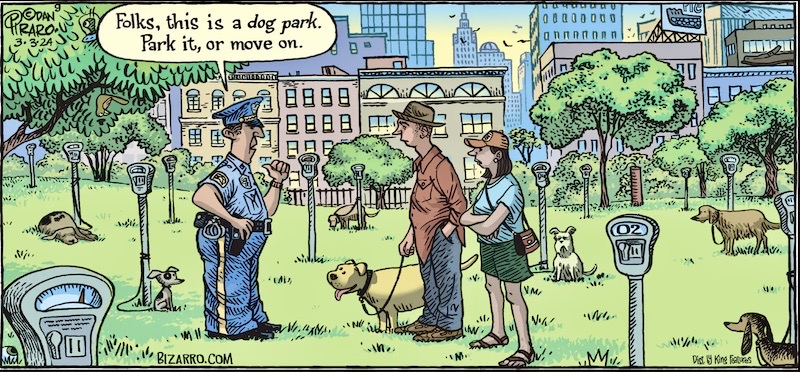
In today’s Bizarro, a dog park, with parking meters, where you can park your pooch by the hour:

Surprise! The strip exploits a possible sense of the N+N compound dog park — roughly, ‘an area or building where dogs may be left temporarily, for a fee’, the canine analogue of (largely British) car park ‘an area or building where cars or other vehicles may be left temporarily; a parking lot or parking garage’ (NOAD) — that you probably had never imagined.

Instead, you expected the everyday sense of dog park, ‘a park for dogs to exercise and play off-leash in a controlled environment under the supervision of their owners’ (Wikipedia) — a Use compound with the general meaning ‘park for dogs (to use)’, but coming with a sociocultural context that in practice conveys something considerably more specific.

Now, more details on everyday dog parks, and Bizarro dog parks too.

(more…)