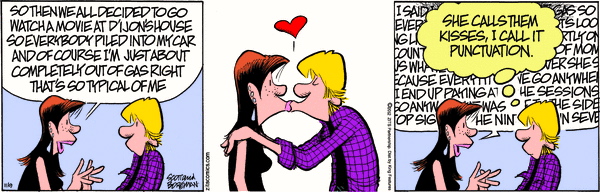
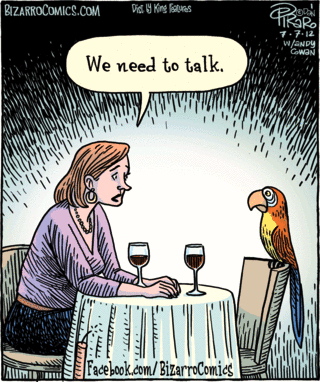
In today’s print NYT Science Times, a piece by Douglas Quenqua entitled “They’re, Like, Way Ahead of the Linguistic Currrrve”, about young women as trendsetters in linguistic change. Featuring a sizable cast of experts, starting with Stanford’s Penny Eckert.
The two main points:
Girls and women in their teens and 20s deserve credit for pioneering vocal trends and popular slang, [linguists] say, adding that young women use these embellishments in much more sophisticated ways than people tend to realize.
And, at the end, two points. One, that a bit of linguistic stuff — vocal fry, uptalk, and the discourse particle like are the three examples the article focuses on — is just a resource, which can be used in many different ways by different groups of speakers (that is, there’s no intrinsic meaning to a resource — as I’ve taken to saying, it’s “just stuff” — but only meanings as expressed by particular groups of speakers and meanings as interpreted by others). And two, that the meanings for speakers and hearers can be seriously at variance:
“language changes very fast,” said Dr. Eckert of Stanford, and most people — particularly adults — who try to divine the meaning of new forms used by young women are “almost sure to get it wrong.”
“What may sound excessively ‘girly’ to me may sound smart, authoritative and strong to my students,” she said.
(more…)