Archive for April, 2023

In search of a paper of mine

April 10, 2023

I’m trying to get a copy of

A.M. Zwicky & J.M. Sadock. 1984. A reply to Martin on ambiguity. Journal of Semantics 3: 249-256. DOI: 10.1093/Jos/

that I can not only read, but also also save on this blog so that it continues to be available to me and to my readers (as most of my other publications are).

(more…)

Auriculas

April 9, 2023

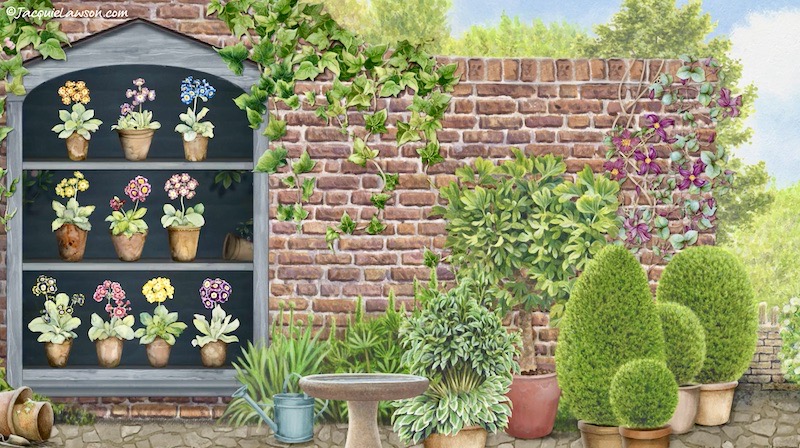
It starts with a Jacquie Lawson e-card “Auricula Theatre”, sent to me by Benita Bendon Campbell for Easter. The auriculas in question are cultivars of Primula auricula (aka the mountain cowslip or bear’s ear), a species of primrose.

The final image of the e-card:


(#1) On the left, the Auricula Theatre

(more…)

Kentucky country ham

April 9, 2023

An exercise in nostalgia (much transformed) for Easter lunch today: sandwiches of slices of Kentucky country ham — KCH for short — and melted cheddar cheese. The nostalgia is in the ham:


(#1) Thinly sliced ham from Broadbent B & B Foods in the little country town of Kuttawa KY (in Lyon County in far (south)western Kentucky)

To come: on country ham the compound noun and country ham the foodstuff; on my personal history with KCH (associated in my household with Christmas rather than Easter); and on the Broadbent company.

(more…)

A toast to Liana Finck

April 8, 2023

… on the occasion of her being among the winners of 2023 fellowships from the John Simon Guggenheim Memorial Foundation, announced on 4/5. From the list:

in General Nonfiction: Liana Finck, Writer, Brooklyn, New York; Adjunct Associate Professor, Department of English, Barnard College

LF came to me first as the creator of extraordinary cartoons for The New Yorker magazine; there is a Page on this blog devoted to my postings about these cartoons. But there’s lots more, some of which I’ll cover below, in a somewhat haphazard look at her career. I’ll start with an appreciation of one of her NYer cartoons, in one of these postings, from 10/31/17: “Three kinds of cartoon”:


(#1) Liana Finck in the 5/8/17 New Yorker: two worlds intersect on the street

Christian evangelism meets recycling. To understand Finck’s cartoon … , you need to recognize the formula “Have you heard the good news?” as part of a routine of public evangelism, especially by Mormons and Jehovah’s Witnesses, going door to door or appealing to people in public places, including on the street. In an expanded form:

Have you heard the good news (about (our Lord) Jesus Christ)? (He is/has risen (from the grave).)

You also need to recognize the two characters in the cartoon as plastic water bottles — not at all difficult — and — more difficult — also recognize the symbol

(#2)

as a symbol of recycling, and in addition understand that “recycling is the process of converting waste materials into new materials and objects” (Wikipedia). That is, in recycling, material metaphorically dies (when it is discarded) and then, if recycled, is reborn — metaphorically rises from the dead.

If you’ve got all that, you can appreciate the cleverness in having evangelical water bottles spreading the good news about how water bottles have been resurrected (via the miracle of recycling).

About LF. A portrait of the artist (born 1986):


(#3) photo: Ilya S. Savenok

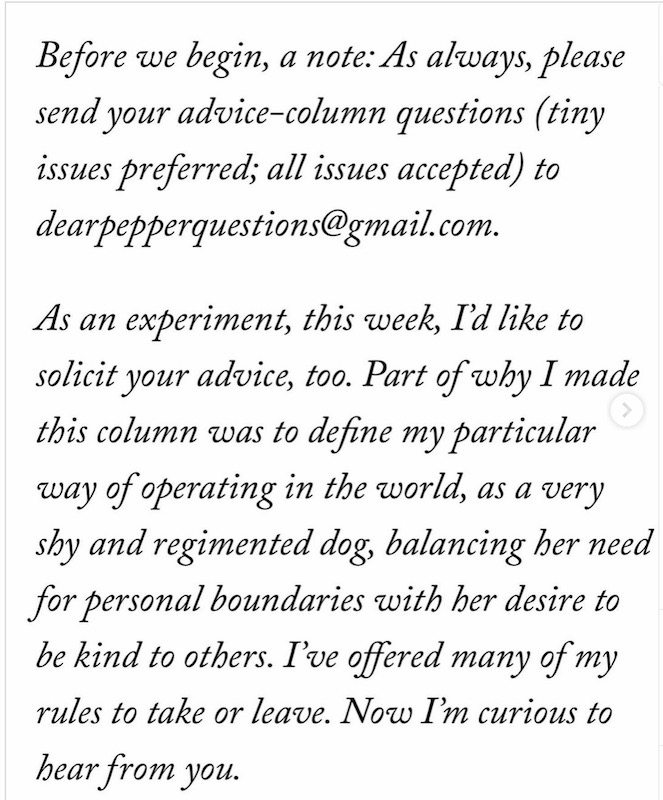
Meanwhile, some details of her work on her home page. Among her projects is an advice column, Dear Pepper, maintained on her Instagram page. A recent notice from her there:

(#4)

And then the books.

— from Amazon.com on A Bintel Brief: Love and Longing in Old New York by Liana Finck (Ecco paperback, 2014); publisher’s blurb:

In an illustrative style that is a thrilling mash-up of Art Spiegelman’s deft emotionality, Roz Chast’s hilarious neuroses, and the magical spirit of Marc Chagall, A Bintel Brief is Liana Finck’s evocative, elegiac love letter to the turn-of-the-century Jewish immigrants who transformed New York City and America itself.

A Bintel Brief “A Bundle of Letters” — was the enormously popular advice column of The Forward, the widely read Yiddish language newspaper begun in 1906 New York. Written by a diverse community of Eastern European Jewish immigrants, these letters spoke to the daily heartbreaks and comedies of their new lives, capturing the hope, isolation, and confusion of assimilation.

Drawn from these letters — selected and adapted by Liana Finck and brought to life in her appealing two-color illustrations — A Bintel Brief is a tour of Lower East Side New York, and includes an imaginative conversation with the Yiddish “Dear Abby,” Abraham Cahan, The Forward’s legendary editor and creator of the Bintel Brief column.

From premarital sex to family politics to struggles with jobs and money, A Bintel Brief is an enlightening look at a segment of America’s rich cultural past that offers fresh insights for our own lives as well.

— on Passing for Human: A Graphic Memoir by Liana Finck (Penguin Random House, 2018), the publisher’s blurb from their site:

In this achingly beautiful graphic memoir, Liana Finck goes in search of that thing she has lost — her shadow, she calls it, but one might also think of it as the “otherness” or “strangeness” that has defined her since birth, that part of her that has always made her feel as though she is living in exile from the world. In Passing for Human, Finck is on a quest for self-understanding and self-acceptance, and along the way she seeks to answer some eternal questions: What makes us whole? What parts of ourselves do we hide or ignore or chase away — because they’re embarrassing, or inconvenient, or just plain weird — and at what cost?

Passing for Human is what Finck calls “a neurological coming-of-age story” — one in which, through her childhood, human connection proved elusive and her most enduring relationships were with plants and rocks and imaginary friends; in which her mother was an artist whose creative life had been stifled by an unhappy first marriage and a deeply sexist society that seemed expressly designed to snuff out creativity in women; in which her father was a doctor who struggled in secret with the guilt of having passed his own form of otherness on to his daughter; and in which, as an adult, Finck finally finds her shadow again — and, with it, her true self.

Melancholy and funny, personal and surreal, Passing for Human is a profound exploration of identity by one of the most talented young comic artists working today. Part magical odyssey, part feminist creation myth, this memoir is, most of all, an extraordinary, moving meditation on what it means to be an artist and a woman grappling with the desire to pass for human.

— Excuse Me: Cartoons, Complaints, and Notes to Self  by Liana Finck (Penguin Random House, 2019): over 500 cartoons from Instagram and The New Yorker

— on Let There Be Light: The Real Story of Her Creation by Liana Finck (Penguin Random House, 2022), the publisher’s blurb from their site:


(#5) The book cover

In this ambitious and transcendent graphic novel, Liana Finck turns her keen eye to none other than the Old Testament, reimagining the story of Genesis with God as a woman, Abraham as a resident of New York City, and Rebekah as a robot, among many other delightful twists. In Finck’s retelling, the millennia-old stories of Adam and Eve, Abraham and Isaac, and Jacob and Esau haunt the pages like familiar but partially forgotten nursery rhymes ― transmuted by time but still deeply resonant. With her trademark insightfulness, wry humor, and supple, moving visual style, Finck accentuates the latent sweetness and timeless wisdom of the original text, infusing it with wit and whimsy while retaining every ounce of its spiritual heft.

Let There Be Light is proof that old stories can live forever, whether as ancient scripture or as a series of profound and enchanting cartoons. The Book of Genesis is about some of the most fundamental, eternally pertinent questions that we can ask: What does it mean to be human? What is the purpose of our lives? And how should we treat one another? The stories that attempt to answer these questions are an immediate link with the people who first told them. Unable to fathom the holiness and preciousness of that notion, or put it into words, Finck set out to depict it. The result is a true story of creation, rendered by one of our most innovative creators.

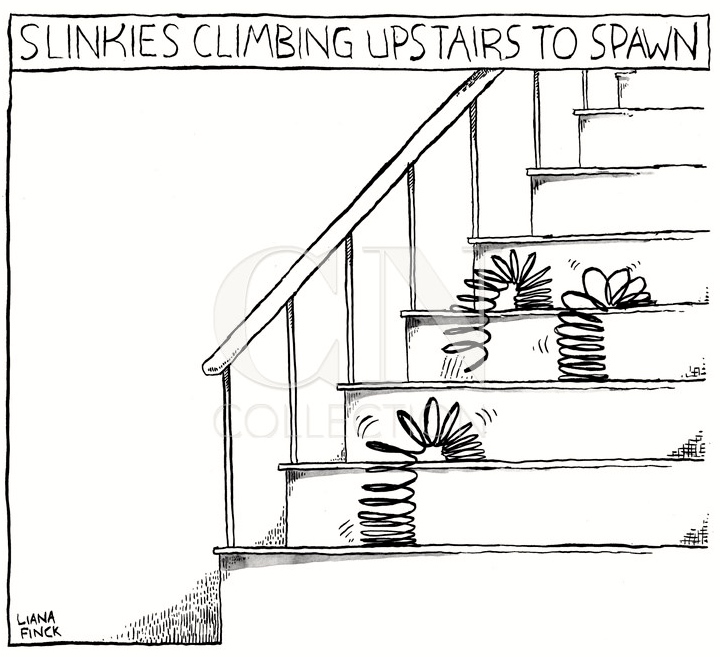
Finale. Finck’s quirky sense of humor on display in a NYer cartoon from 2/25/13 exploiting the characteristics of the Slinky toy and the habits of the salmon:

(#6)

Peeps on parade

April 8, 2023

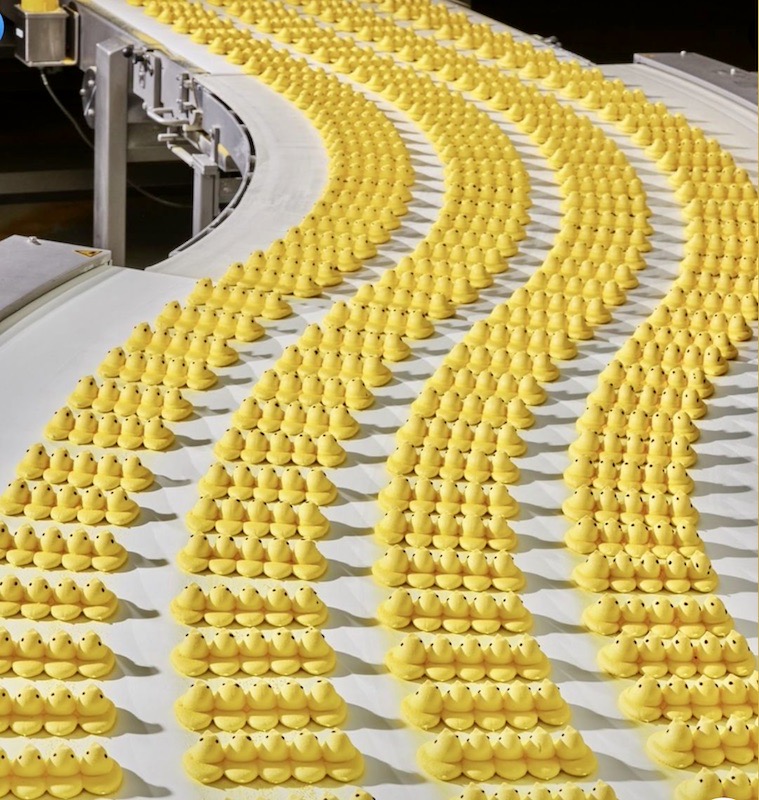
Posted on Facebook by Will Leben on Good Friday (source not identified):


(#1) My caption: The phalanx of troops marching from the Just Born factory in Bethlehem PA to blanket the landscape, in the annual Easter Promenade and Cavalcade. They are charming but merciless.

(more…)

The sculpture garden

April 6, 2023

Specifically, a huge (and very popular) public sculpture garden featuring nude statuary. Scarcely imaginable in the prudish United States, but it’s something of a national treasure in Norway.

From the Third Eye Traveller site, “Vigeland Sculpture Park in Oslo – Why You MUST Visit the Weird & Wonderful Frogner Park” by Sophie Pearce, last updated 1/15/22. One example from Pearce’s story, with her comment:


The Man Attacked by Babies sculpture shows a man that literally has babies crawling all over him. It almost looks like the babies are flying everywhere.
This abstract work is meant to represent a father who is nervous at the thought of parenthood.
Others say this is called the Man fighting off genii, or evil spirits.

(more…)

Apple mousse

April 5, 2023

From Kyle Wohlmut on Facebook today under the header “Rate this translation”:


(#1) They spell French pamplemousse ‘grapefruit’ wrong and then treat it as if it were parsed as pomme ‘apple’ + mousse (referring to one of several foamy substances; see especially senses 1 and 2 in English, below, which are directly borrowed from French)

Inventive, but absurd, and totally off the mark. Prime-grade etymythology.

(more…)

The Rodin of the 21st century

April 3, 2023

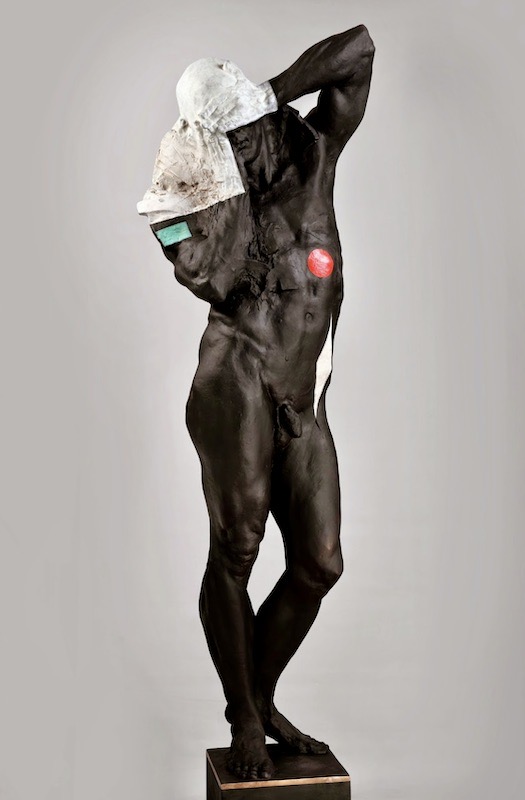
That would be Grzegrorz Gwiazda, whose extraordinary bronze Shamefaced (of 2015) came to me on Pinterest a little while back:

(#1)

All sorts of details to come, but I’ll start out by juxtaposing #1 to two works by the father of modern realistic sculpture, Auguste Rodin (12 November 1840 – 17 November 1917).

(more…)

The divine phallus

April 2, 2023

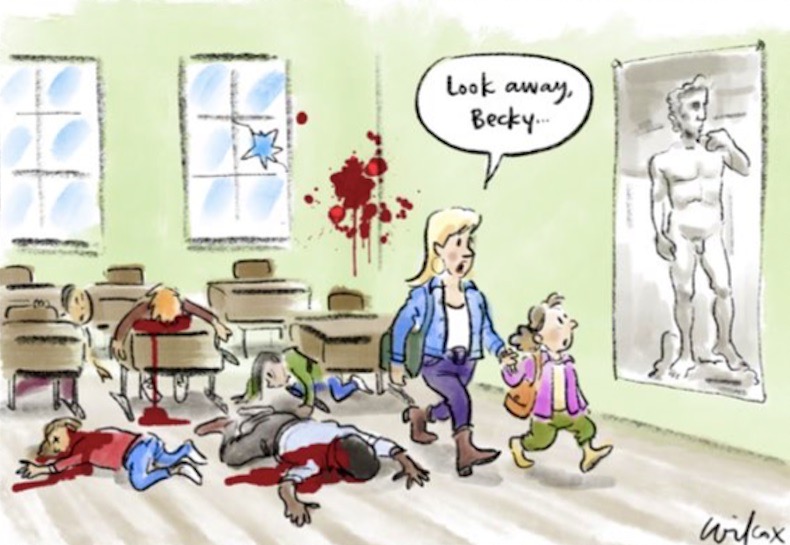
… in marble and bronze: a continuation of yesterday’s “Two bronze Orpheuses”, which began with the fate of Michelangelo’s marble David in Florida, where high school students must be shielded from viewing the statue’s penis. Australian cartoonist Cathy Wilcox’s savage take on that situation:


(#1) Wilcox’s “American Obscenity” cartoon (from the Sydney Morning Herald)

From here, even disregarding the American obsessive prudery about the human body, the topic goes off in many different directions. I’ll ramble through these in no particular order, starting with a digression on Wilcox, who’s new to this blog.

(more…)

Two bronze Orpheuses

April 1, 2023

🐇 🐇 🐇 rabbit rabbit rabbit for the first of April, and that’s no joke. Today’s topic is the depiction of the god Orpheus in two bronze statues, one in the UK, one in the US.

More specifically, it’s about the treatment of Orpheus’s genitals in the two statues, reflecting a (sub)cultural difference between the US (where a strain of fundangelical belief holds that the naked human body, especially the male body, is unclean and dangerous, especially to children and women, who therefore must be elaborately protected from viewing it) and essentially the rest of what might referred to in shorthand as western civilization (where norms of privacy and modesty hold sway, but artistic representations of the naked body have their place, even in public parks and gardens).

This posting was provoked by, first, a complex case in Florida involving a reproduction of Michelangelo’s David shown to a high-school class; and then the ensuing photo of one of the Orpheuses — from the UK — on Facebook. There’s a lot more, but I’m unable to finish this posting today, so I’ll just give you the teaser materials here. More to come

(more…)