An occasional poem (in free verse) for my friend Sharon on her recent birthday, wrapped up in the calendar, the female body, and plants and their sexual symbolisms, with photos. The poem first, then remarks on its form, then a bit of background information.
Archive for the ‘Taxonomic vs. common’ Category
A rose for Sharon
June 21, 2025Invasion of the superb birds
May 9, 2025Yesterday, a greeting card from Ann Burlingham, written on 5/5 in Pittsburgh (mostly about the University of Pittsburgh graduation on 5/3, featuring graduate Opal Armstrong Zwicky among the crowd of about 5,000), arrived in Palo Alto on 5/8, with a note beginning:
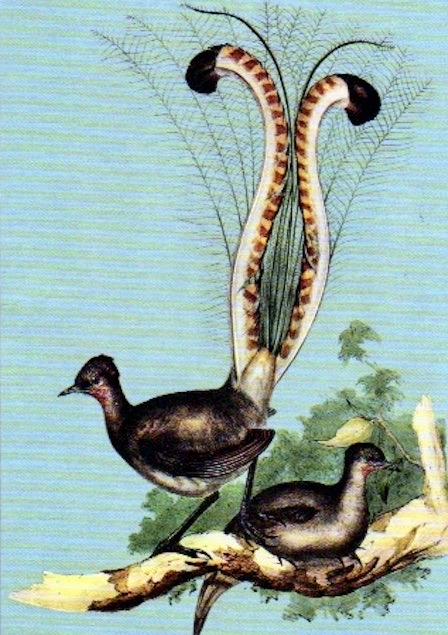
Another Superb Bird! How many can Australia have?
(#1) [from the Ikonink cards website:] Original Artwork: Superb Lyrebird (Menura superba), illustrated by Elizabeth Gould for John Gould’s Birds of Australia (1840-1848). Currently displayed at the Australian Museum.
The dandelion caper
March 9, 2025This posting is in a genre I’ve come to think of as Kharkiv Opera: a pleasant, playful, or joyous event staged in the face of terrible times; from my 3/2/25 posting “Three men walk into bar”:
the Ukrainians have been managing to mount opera performances in an underground bomb shelter in the city of Kharkiv. They sing and dance and enjoy one another’s company.
Today’s pleasure is the enjoyment of the plants and flowers around us, something that has been with me since I was a child at my father’s knee (so, for 80 years now), and was shared with Ann Daingerfield Zwicky (who was a wildflower enthusiast) and my guy Jacques Transue (whose passion for gardening matched mine), and survives now in my little patio garden (with super easy-care plants on it that I can look at through French doors while I work at the computer) and in occasional short walks in my neighborhood (with my sturdy outdoor walker to rest in as needed, and with the company of a caregiver, who I can talk with about what we see, while we refer frequently to on-line sources in Spanish and English).
Briefly noted: the halls of ivy
October 28, 2024From Nathan Sanders on Facebook on 10/26:
(#1) [NS:] I love when ivy changes colours! — at University of Toronto.
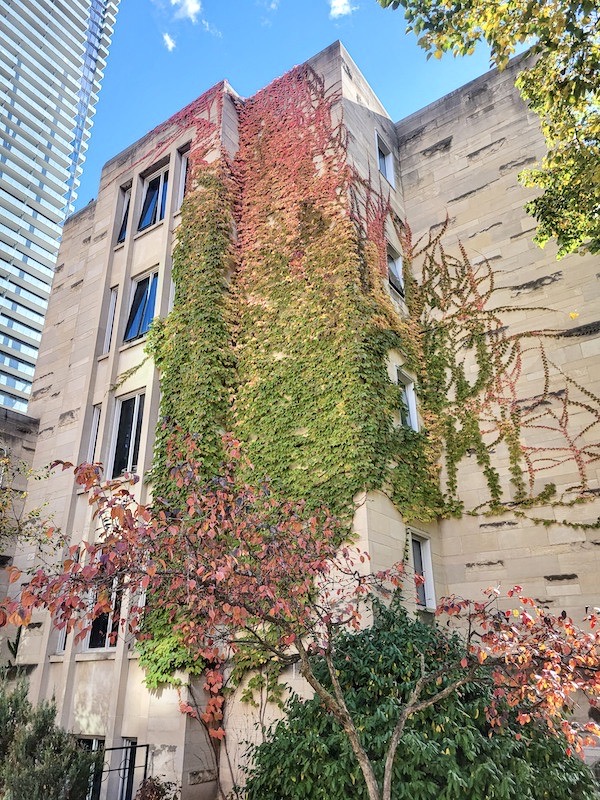
— AZ to NS: That is indeed lovely. It’s Parthenocissus tricuspidata, so-called “Boston ivy”, a vining plant in the grape family closely related to Virginia creeper, and not related at all to English, or common, ivy, Hedera helix (which I have growing all over my little patio). English ivy is evergreen; Boston ivy is deciduous, its leaves turning color gorgeously in the fall before dropping off.
Golden barrels
October 1, 2024From a 9/16 visit to Stanford’s Arizona Garden — the “cactus garden” in local talk — engineered by my caregiver León Hernández Alvarez (who will be L from here on out), to investigate new things (for him) in the area — so many wonderful places open to the public for free — and to provide me with enjoyment (and useful exercise with my walker).
When we came around a corner of the path from the parking lot, and suddenly faced an alien-planet vista of huge astonishing plants of all sorts, as far as the eye could see in every direction, L gasped in surprise and delight. And close to the ground there were all manner of other plants, every one of them a novelty. Nothing labeled, no information supplied, but I could provide some facts from memory. Though mostly L was being carried away in delight by the visual excess: everywhere you looked, another bit of (mostly dangerous) living magic.
Then, around a corner there was a large garden island populated by cactuses I certainly recognized. “These are called barrel cactuses, for obvious reasons”, I said, but for a few moments he didn’t care what they were called, they were amazing, and in fact adorable. Some of them were arranged in what you could think of as family groups. They were golden-green, with huge spines all over them. Spines so big you could feel them individually, discover they were soft and flexible, but with spear-sharp tips.
Eventually, L looked them up on his phone and discovered that they were, specifically, golden barrel cactuses. From Mexico originally, but in the desert far from the Mexico City region he grew up in.
Sneezeweed’s the name, not elecampane
February 17, 2024Or, for that matter, the eccentrically spelled elecamphane. This in reaction to a third plate from the 19th-century American Flora compendium that I’ve been posting about recently (“My wild valentine” posting here; “Daffodil poem” posting here). Which calls the plant elecamphane, but the name is elecampane, and everyone knows this plant as sneezeweed. The plate:
(#1) The usual spelling is elecampane; a net search turns up the ph spelling only on this American Flora plate — but in any case the flower is pretty clearly not elecampane (Inula helenium), but is instead a garden variety of the closely related common sneezeweed (Helenium autumnale), which is (to my eye anyway) considerably prettier than elecampane

Daffodil poem
February 16, 2024I slept from 7:30 to 4:15 last night, with some of the most distressing grotesque dreams I’ve ever had in my life, awakening frequently with terrible muscle cramps. Eventually I turned the dream around to something life-affirming and pleasant, but I awoke dead-exhausted from the night, confused and bewildered, and with screamingly sore muscles all over my body (for the record: I have had no fever or other clinical signs of infection, and I test negative for COVID).
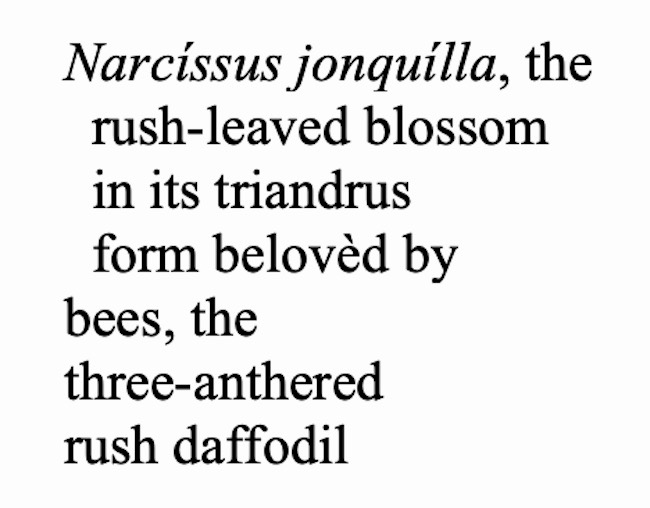
Not really able to face the day, I retreated to botanical art from the 19th century, as presented to me recently by the Sierra Club, in a set of five greeting cards with flower illustrations from The American Flora of 1840-1855; see yesterday’s posting “My wild valentine”, about the plate of the wildflower Potentilla atrosanguinea. Another plate from the Sierra Club set — this time for a garden flower, a daffodil — caught my eye and moved me to toss off a little poem leading up to the label on the American Flora plate:
(#1) A poem to the intriguingly named three-anthered rush daffodil
My wild valentine
February 15, 2024(Yes, a day late, but I’m barely functioning, so this is the best I can do.)
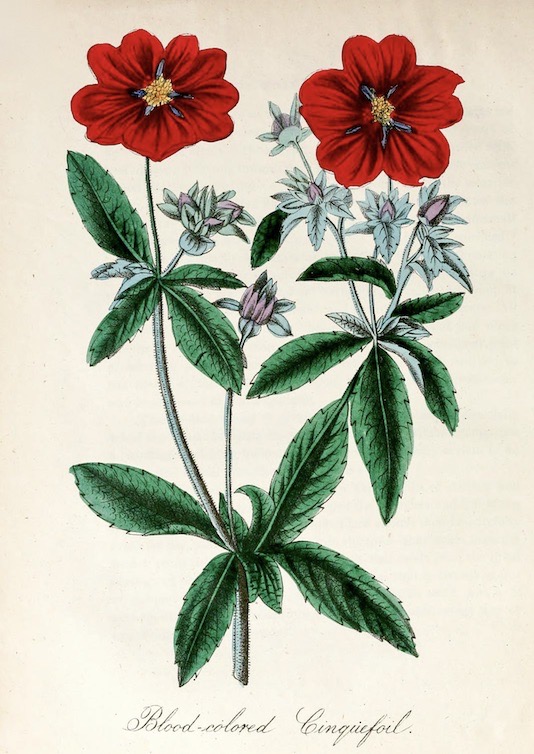
A fortuitous find. In my USPS mail, from the Sierra Club, a set of five 19th-century wildflower drawings on greeting cards: a free gift serving as leverage to get me to support their organization. Among the drawings, this intensely red Potentilla atrsosanguinea, with its very rose-like 5-petaled blossoms: a wild Valentine’s flower.
(#1) Blood-colored cinquefoil, Potentilla atrosanguinea, from The American Flora vol. III (1855)
Now: about the plant, and then about The American Flora.
The fairy fan-flower
July 25, 2022From Benita Bendon Campbell yesterday, a delightful plant, new to her, that had just come into her life. Her photo:
(#1) A white Scaevola aemula cultivar, in a hanging pot; the plant grows as a garden shrub, but hangs or drapes quite satisfyingly, as here

The scaevola plant was new to me as well; it was hard to believe that I’d never come across a plant whose common name is fairy fan-flower and has cultivars that are intensely purplish-blue: