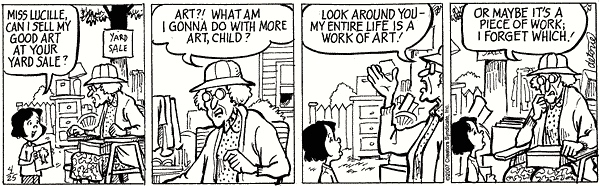
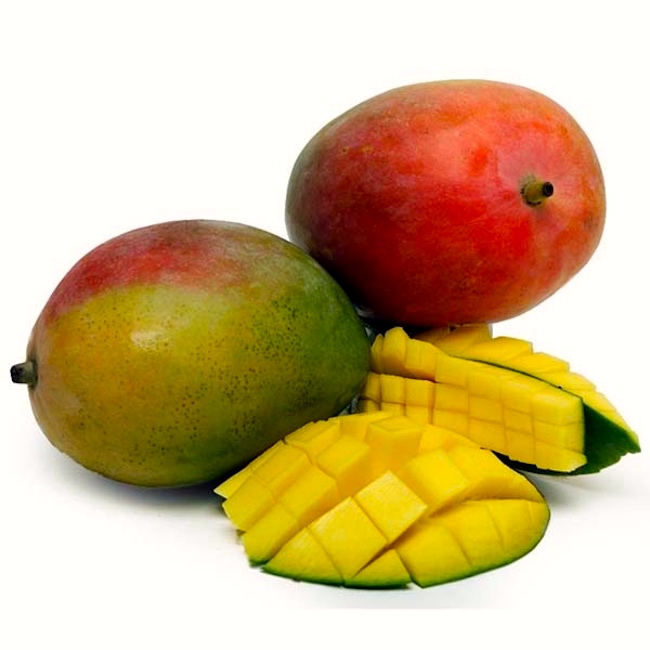
(Mango Meshman shows off his body, to the accompaniment of mansexually suggestive lyrics. Not for everyone.)
 (#1)
(#1)
The beauty of his buttocks
And the juicy sweetness
Of his secret parts
(Mango Meshman shows off his body, to the accompaniment of mansexually suggestive lyrics. Not for everyone.)
(#1)
The beauty of his buttocks
And the juicy sweetness
Of his secret parts
Posted in Clothing, Dance, Gender and sexuality, Silliness, Underwear | 1 Comment »
It came to me via Google Alert last week, another creative Zwicky: Denis Zwicky, videographer in Miami. At first, I guessed from his French first name and his fluent but non-native English that he was related to the Zwickys of Wallisellen, outside Zürich, of the Zwicky thread and yarn company and now the Zwicky Areal Facility, an exploration of urban development on the grounds of the thread factory:

(#1) Wallisellen: the old factory and a corner of the new development
Though they’re in German-speaking Switzerland, the younger generations of the family mostly have French names (I’ve written about Joelle); see my 6/27/18 posting “Three Züricher Peter Zwickys”, with a section about “Silk Peter” of the thread company and his four daughters.
But no, far otherwise. As I wrote in yesterday’s posting “Das Wappen”, Denis turned out to be one of the Slavic Zwickys (more in today’s posting “Tsviki from Belarus”). However, I’ll put this personal and family history aside for today, to report on Denis the videographer.
Posted in Art, Photography, Underwear, Zwickys | Leave a Comment »
As I noted in yesterday’s posting “Das Wappen”, over the years, Zwickys have moved from Canton Glarus not only to all parts of Switzerland, and from Switzerland north and west in Europe (and then further west to the Americas), but also to the east, all the way to the Slavic lands — specifically, to what is now Ukraine and Russia. And also to what is now Belarus. Where we find the Tsviki — Цвики — family.
Two Belarusian Tsvikis, about 60 years apart in age. One, Leonid, back in Vitebsk, Belarus; the other, Julia (who came to the US a few years ago), in Hallandale Beach FL.
Posted in Dance, Language and religion, Zwickys | 3 Comments »
Posted in Books, Idioms, Linguistics in the comics, Music, Snowclones | Leave a Comment »
A facebook exchange back on the 6th, between Andrew Carnie (professor of linguistics and dean of the Graduate College at the Univ. of Arizona) and Karen Chung (associate professor at National Taiwan University, teaching courses on linguistics and English).
Andrew: [Student], who only came to class less than 50% of the time, and turned in a bunch of assignments (really) late: These homeworks are way. too. hard. It’s unfair.
Karen: “Homework” as a countable noun? Is he/she a native speaker of English?
Academics will recognize Andrew’s note as the plangent lament of a professor facing the grading tasks at the end of a term, confronted with a self-entitled student who believes they are really smart, so preparation outside of class shouldn’t take much work (and they should be able to ace the final without much studying).
But what Karen picks up on is the use the noun homework as a C(ount) noun, clearly so because it occurs in the plural form homeworks here; for the M(ass) noun homework, the usage would be: This homework is way. too. hard. Or else: These homework assignments are way. too. hard.
Much as I sympathize deeply with Andrew’s lament — having had nearly 50 years of similar experiences (fortunately far outweighed by students who were a delight to teach) — what this posting is about is the C/M thing. There’s a fair amount to get clear about first, and then I’ll have some analysis, some data, and some reflections on larger matters (language use in particular communities of practice, the tension between brevity and clarity as factors in language use).
Posted in Ambiguity, Beheading, Brevity vs. Clarity, Count & mass, Lexical semantics, Semantics, Social life, Usage | Leave a Comment »
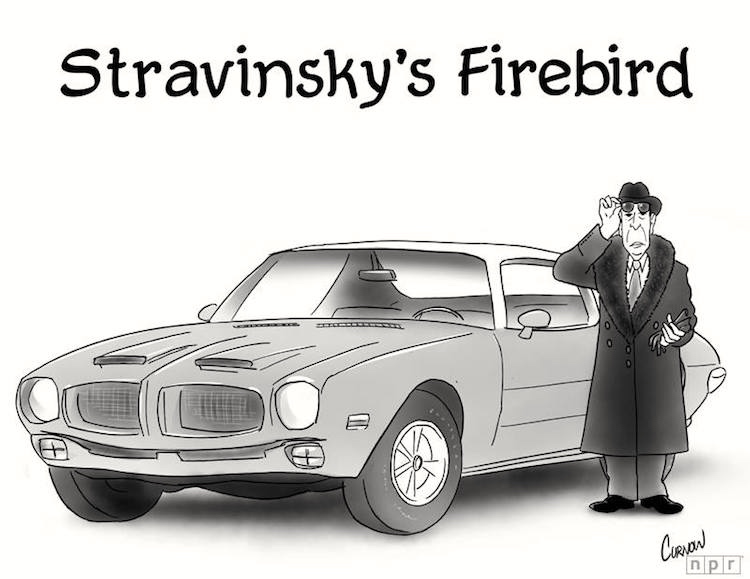
Music, cartoons, and language play, plus Slavic folklore, Seiji Ozawa and his expressive hair, pony cars, symphony trumpeters, NPR, and Frankenstein’s monster. It starts with this wonderful cartoon by Jeffrey Curnow from the NPR site (hat tip to Virginia Transue):
 (#1)
(#1)
Posted in Art, Folklore, Language play, Linguistics in the comics, Music, Names, Portmanteaus, Puns, Trade names, Understanding comics | Leave a Comment »
(Warning: It ends with indirect allusion to mansex and with two shirtless actors, arms around each other’s shoulders, showing their stuff in their underwear.)
A recent posting in the My Home is California group on Facebook:
(a) I dreamed of photographing a sliced strawberry …, thinking it was a fruit. It is actually more closely related to a rose.
To which I now respond, first:
(b) I dreamed of photographing a sliced potato, thinking it was a vegetable. It is actually more closely related to a petunia.
And, second:
(c) I dreamed of photographing James Franco, thinking he was a fruit. He is actually more closely related to a piece of meat.
Posted in Gender and sexuality, Homosexuality, Language and food, Language and plants, Movies and tv, Shirtlessness | Leave a Comment »
In advertising for the Palo Alto Art Center’s exhibition Local Editions: A Celebration of Bay Area Printmaking 6/15/19 – 8/25/19, this arresting print by Judy Aoki:

(#1) (She) Twerkin’, 2014 stone lithograph with watercolor (on Aoki’s website under the title Dance Styles of the 1800’s, from her Museum of Historical Makeovers)
A note on the late 20th- / early 21st-century dance craze twerking, then more on Aoki and her work.
Posted in Art, Dance, Pop culture | Leave a Comment »
(OPAs, for short.) The contrast is to inconspicuously playful allusions, what I’ve called Easter egg quotations on this blog. With three OPAs from the 4/20/19 Economist, illustrating three levels of closeness between the content of the OPA and the topic of the article: no substantive relationship between the two (the Nock, Nock case), tangential relationship (the Sunset brouhaha case), and tight relationship (the defecate in the woods case).
The three cases also illustrate three degrees of paronomasia: the Nock, Nock case involves a (phonologically) perfect pun; the Sunset brouhaha case an imperfect pun; and the defecate in the woods case no pun at all, but whole-word substitutions.
I’ll start in the middle, with Sunset brouhaha. But first, some background. Which will incorporate flaming saganaki; be prepared.
Posted in Acronyms, Allusion, Ambiguity, Idioms, Implicature, Jokes, Language and animals, Language and food, Language play, Metaphor, Metonymy, Movies and tv, Names, Pragmatics, Puns, Quotation, Sarcasm and irony, Semantics, Speech acts | 3 Comments »
(Talk of men’s bodies and mansex, not appropriate for kids or the sexually modest.)
From several posters on Facebook, a raunchy fabric composition involving TopPooh, TPooh for short, and BottomPooh, BPooh for short (both of them from Ernest Shepard illustrations for the original Winnie-the-Pooh books), doing a standing doggy:
Posted in Art, Gender and sexuality, Language and food, Language of sex, Metaphor, Metonymy | 2 Comments »
You are currently browsing the Arnold Zwicky's Blog blog archives for May, 2019.