Archive for the ‘Linguistics in the comics’ Category

Spot the error

September 2, 2016

From my sister-in-law Virginia Transue on Facebook, a comment on this Peter de Sève New Yorker cover of 7/28/08, “Summer Getaway”:

(#1)

Spot the error. Which Virginia’s grandson Owen (not yet 12) caught this summer, after the cover had been posted on the fridge for eight years (significant fact: the family has summered in Maine, way Down East, for many years).

(more…)

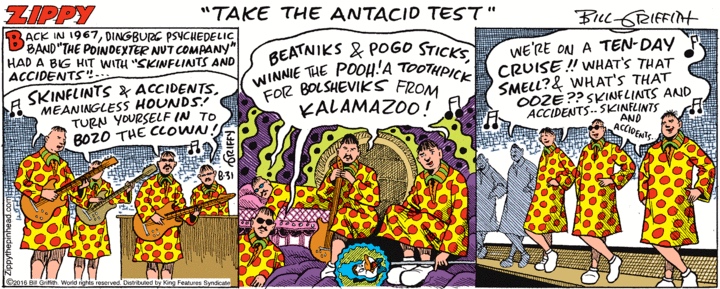
Skinflints and Accidents

September 1, 2016

Yesterday’s Zippy, with a burlesque that has given me a monster earworm:

(more…)

Alphabet soup

September 1, 2016

Yesterday’s Bizarro:

(If you’re puzzled by the odd symbols in the cartoon — Dan Piraro says there are 4 in this strip — see this Page.)

Here on AZBlog, we’re on the case, in the 1/23/11 posting “The alphabet soup of sexuality and gender” and the 2/11/11 posting “SemFest 12!” (a paper with the title: “Categories and Labels: LGBPPTQQQEIOAAAF2/SGL …”).


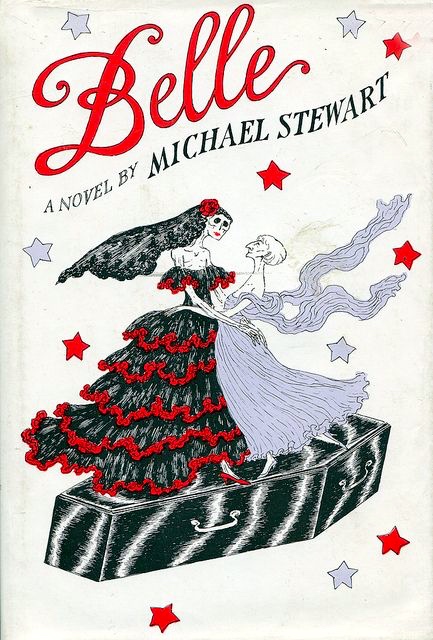
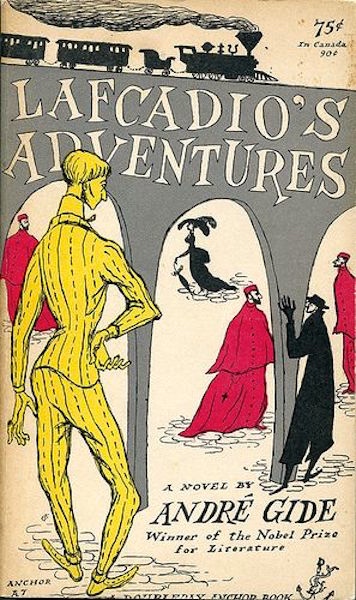
Gorey the illustrator

August 31, 2016

Just posted on Pinterest by Terry Castle, a set of nine book covers by Edward Gorey, illustrating the range of his work for Doubleday Anchor Books. Two examples here of books Gorey might have been expected to feel some association with, but there are also a number of books the company apparently just passed on to him:

(#1)

(#2)

(more…)

Annals of public art

August 30, 2016

(Mostly about art, of sorts, rather than language, though there are two puns.)

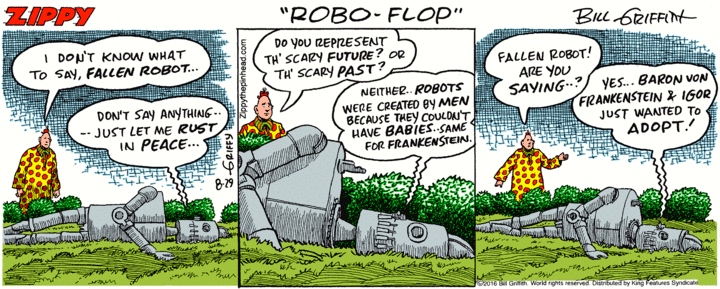
Yesterday’s Zippy took us to Tuscaloosa AL, home of Goldie:

(#1)

From Roadside America:

Tuscaloosa, Alabama: Collapsed and half-buried on Woods Quad, “Goldie 1971” was built by University of Alabama alumnus Joe McCreary. The rusted humanoid was meant to symbolize the collapse of Alabama’s steel industry, particularly the shutdown of the Sloss Furnaces in Birmingham in 1972.

In fact, the 23-foot-long robot is made from scrap iron cast at the Furnaces by McCreary in 2009. The robot’s name was supposedly taken from graffiti left by a welder and discovered by McCreary while he was making the sculpture.

To us, Goldie looks a lot like the old Marx Toy “Big Loo” robot, which squirted water from its belly-button. But much more artistic, of course.

(more…)

More Ruthian re-shaping

August 25, 2016

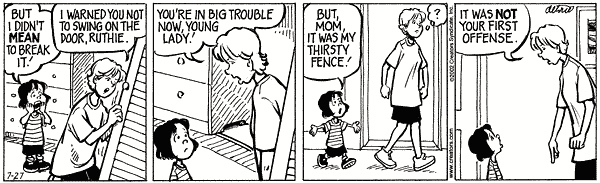
A One Big Happy (dated 7/27) in my comics feed today: once again, Ruthie re-shapes an unfamiliar expression, in this case the legal-tinged word offense (‘a breach of a law or rule; an illegal act’ — NOAD2), in the phrase first offense:

with first offense re-shaped as thirsty fence, a phrase that doesn’t make sense, but at least has the familiar word fence in it (and is very very close phonetically to first offense: initial f vs. 𝛉, unaccented ǝ vs. i or I).

I suppose it’s possible that at some point before the time of the strip, Ruthie heard first offense, didn’t understand it, and re-shaped it  But what the substitution really looks like is an old mishearing of first offense; mishearings very often don’t make sense, but do have parts that are recognizable words.

At this point, you’d really want to look at errors made by real, rather than cartoon, kids, in context.


November 11th, 2014

August 25, 2016

… was a banner day for cartoons in the New Yorker. Waiting a few minutes to get called in for routine blood tests at the Palo Alo Medical Foundation this morning, I chanced upon this particular issue of the magazine and found five cartoons of interest for this blog (plus some others I enjoyed but had no special interest here); all five were from artists already familiar on this blog.

(more…)

Ya gotta know the territory

August 25, 2016

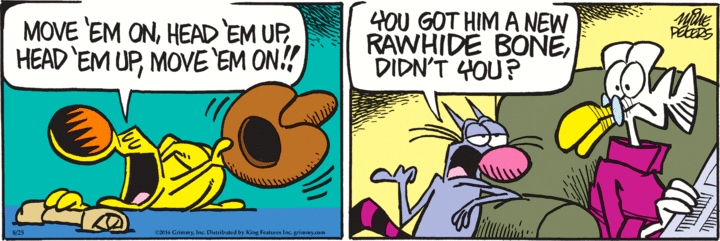
Another chapter in the long history of cultural background you need to see why some cartoons might be funny, or even to understand them at all. Today’s Mother Goose and Grimm, cat to Mother Goose about dog:

(#1)

Utterly baffling unless you know your 60s tv Westerns or are a big fan of Clint Eastwood.

(more…)

Four more Steinbergs

August 25, 2016

Posting recently on Edward Gorey reminded me of another wonderful artist / illustrator / cartoonist (artillustoonist?), admittedly of rather different tone, and I’ve created a Page for him. Herewith, four more (language-related) drawings by Saul Steinberg.

(more…)

Cartoon characters’ self-awareness

August 24, 2016

Yesterday’s Bizarro, way meta:

(If you’re puzzled by the odd symbol in the cartoon — Dan Piraro says there’s just one — see this Page.)

The conceit here is that the characters that appear in comic strips are in fact actors playing roles, so that they can go on strike (among other things). Even more, when the actors are absent, the activities in the strips just go on without them, as if the actors had simply become invisible. Invisible waiter (on strike) takes order from invisible diner (also on strike).

It’s not called Bizarro for nothing.