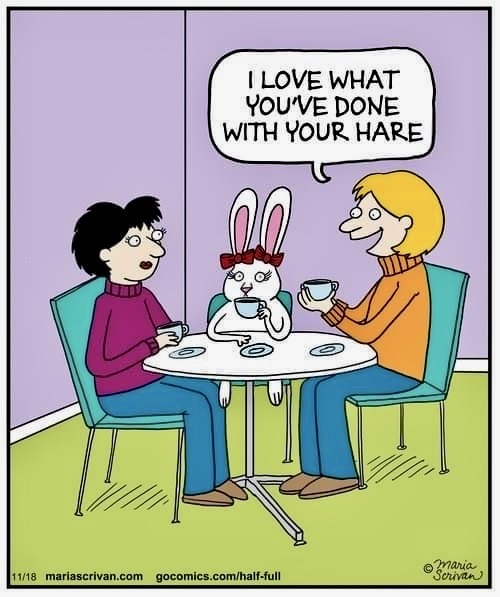
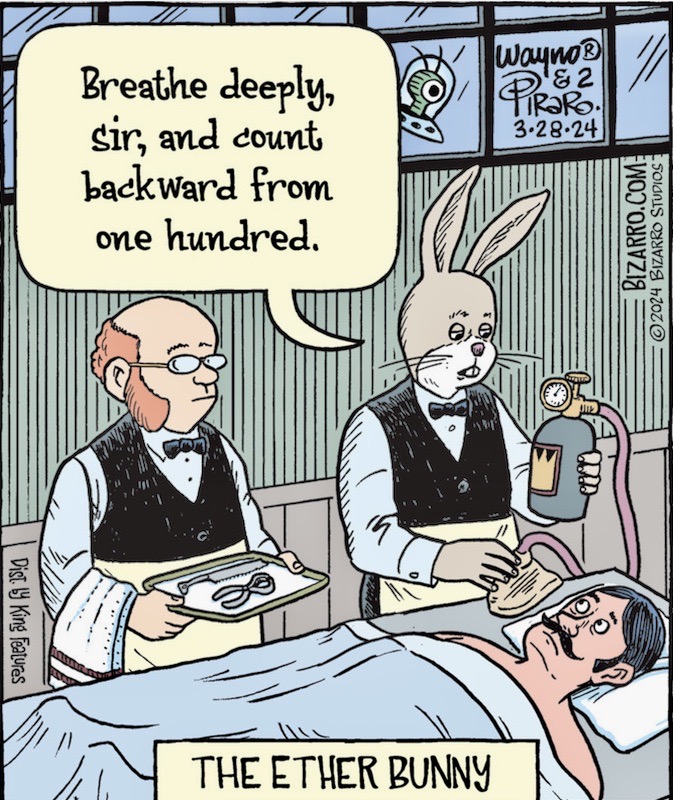
🐇 🐇 🐇 from my 5/1/20 posting “Trois lapins pour le premier mai”:
It’s the first of the month, which I have learned to greet with three rabbits — by starting the day saying “rabbit, rabbit, rabbit”. More than that, it’s the first of May — by some cultural reckonings the beginning of spring in the northern hemisphere and also (in some countries) International Workers Day, so: dance around the maypole, set bonfires for Beltane or Walpurgis, prepare for outdoor bo(i)nking (rabbits again!), break out the lilies of the valley (muguets pour le premier mai), cue the choruses of L’Internationale, and march in solidarity with the workers. (Feel free to choose from this menu, as your taste inclines and your schedule allows.)
But enough of lapins; time to attend to our moutons, the sheep of the day being English NPs of the form N1 of N2 (like bouquet of flowers and tons of stuff) and how they work as subjects of clauses. These sheep came to us on 4/29 from Steven Levine, who wrote on Facebook:
Here’s a sentence I just came across that seems odd to my ears:
By the mid century a variety of celebrations was engaging morris dancers.
I know that the subject is variety [AZ: no no no; the subject is a variety of celebrations; this is important] and the verb is was, and yet it seems off to me — I was expecting were. I’m not asking for a grammatical analysis, I’m asking if this would stop you for a second if you were just reading along.
To which I wrote:
Steven said he didn’t want a grammatical analysis, but here it comes anyway.
I warned you.