Archive for the ‘Actors’ Category

Morning names: kelp and skulk

January 15, 2024

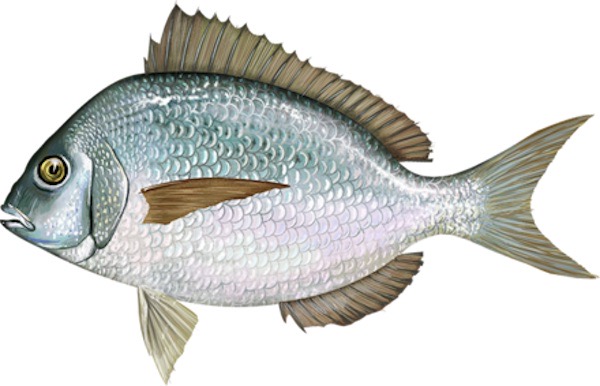
Immediately, I thought: Kelp and Skulk, Attorneys at Law, famously slimy and devious. But what came into my head on awakening was just the noun kelp, for the algae; and the verb skulk, roughly ‘lurk’. Suspiciously similar to one another phonologically. If you combine them, you get the name of a common fish, the scup. And each of them spins off a huge range of phonologically similar and possibly thematically related words.

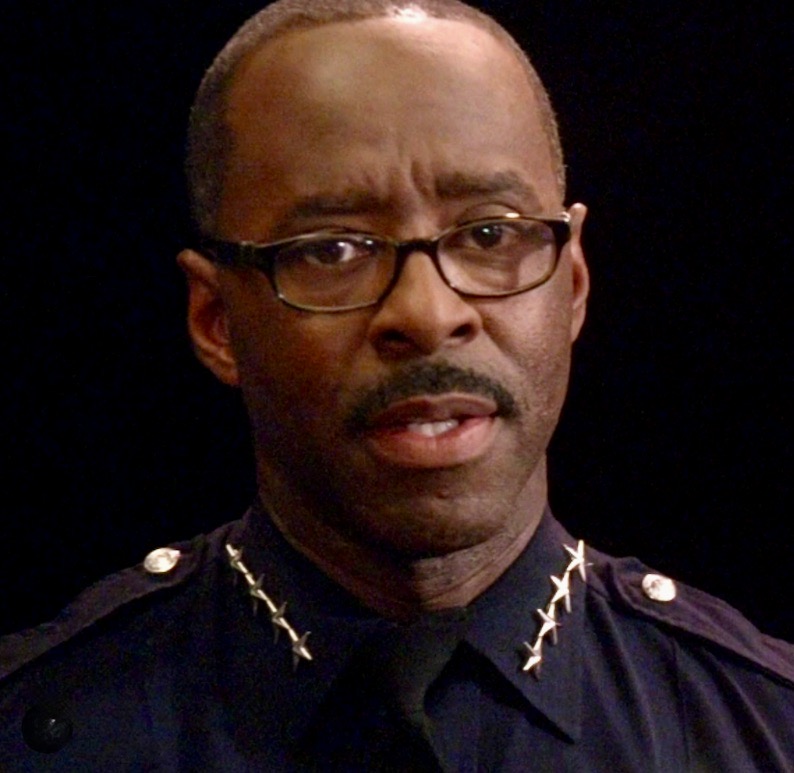
I did have an idea of how kelp and skulk got into my head — through a proper name that’s phonologically similar to both of my morning names: the surname Delk. The last name of a character on the American tv show The Closer, which I’d watched two episodes of last night: Thomas “Tommy” Delk, a fictional Chief of the Los Angeles Police Department (beautifully portrayed by Courtney B. Vance).

Scup the fish and Delk the cop:


(#1) Stenotomus chrysops, a porgy; and (#2) Tommy Delk, a chief

(more…)

Der Vogelfänger bin ich ja

November 20, 2023

Or, in rhyming colloquial English:

I’m Papageno, that’s my name,
And catching birds, well, that’s my game!


Nathan Gunn as Papageno, clutching his magic bells

And he more or less literally animates the Mozart / Schikaneder (think: Sullivan / Gilbert, Rodgers / Hammerstein, McCartney / Lennon) opera Die Zauberflöte (The Magic Flute) — since he’s on the scene and in the action during most of the opera’s duration; and since he brings common, earthy, fallible, playful, humane depth to the work. The other characters are mostly otherworldly beings of one sort or another, or the presumed central human characters Tamino and Pamina (“a prince on a quest” and “a princess in distress”, according to the screen characterizations in the 2006 abridged video version of the fabulous 2004 Julie Taymor production at the Metropolitan Opera Company), who are earnest but rather cardboard idealizations of humanity (though they are humanized as much as possible in the Taymor production’s performances).

Zauberflöte is a fairy-tale opera with a familiar schematic story line, in which someone achieves a much-sought goal (love; entrance into the adult world; admission to some desirable association, band, or circle; whatever) by enduring probative tests, trials, or ordeals. T&P do that, but kids nevertheless seem to think — as I do — that the opera is about Papageno, who brought T&P together in the first place and then gets dragged along with them, serving as an unwilling hero in their ordeals but in the end failing to undergo the trials of fire and water (instead he gets his mate, Papagena). I doubt that any child seeing the video identifies with either T or P; but Papageno is a great kid, one of them: silly, error-prone, adorable, sometimes scared shitless, a sturdy friend, and a hell of a lot of fun.

It also has two prominent subtexts, which work together to support the theme of brotherhood that runs through the opera: Freemasonry and the Enlightenment ideal of the brotherhood of all humanity.   Many people will experience a performance of the opera without appreciating either element of its late-18th-century European intellectual and political context, and children will surely not get any of this (they will instead have their own understanding of what’s going on, and that’s fine; after all, there can be 17 ways of looking at a blackbird), but it’s especially relevant to the Taymor production because that production is richly overloaded with symbolism for both subtexts — which children will experience as the ways and forms of a strange but delightful imaginary world (imaginary worlds being a central element of childhood experience).

I write this after having watched the video again, twice, and of course seeing lots of things I hadn’t seen before, thereby complicating my intentions of reporting a lamentable memory lapse on my part. But I’ll press on.

(more…)

On the plot of Die Zauberflöte

November 19, 2023

(Side material for a posting in preparation about Julie Taymor’s Metropolitan Opera production of Mozart’s Die Zauberflöte)

Opera plots are notoriously packed with preposterous and incomprehensible details, but at least at first glance, The Magic Flute would win some sort of grand prize in the problematic plot department. But some of it makes sense when you understand it as a fairy-tale (so accommodating many of the fantastical elements) in which someone (the prince Tamino, with whom the opera opens) undertakes a quest and undergoes an ordeal to achieve some prize (admission into the wizard Sarastro’s (S’s) Brotherhood of the Sun); it’s also a love story, with Tamino (T) falling in love with the princess Pamina (P) — daughter of the otherworldly Queen of the Night (Q) — through seeing a portrait of her brought to him by his quest-companion (acquired in the early scenes of the opera), the bird-catcher Papageno (Pg); T&P become a couple, undergo the trials together, and so join S’s band.

Summing up this much, there are five central characters:

three ordinary mortals (in the order of their appearance): T, Pg, P (T&P become a couple; Pg picks up a mate along the way, instead of undergoing the trials)

two otherworldly mortals, S and Q

More of the details become comprehensible if you know that the opera is full of allusions to and symbols of Freemasonry; Mozart and his librettist Schikaneder were both active Masons, and they seem to have viewed Die Zauberflöte as their “Masonic opera”. The Taymor production is way overloaded with Masonic symbolism. But unless you’re a Mason or read analyses of the opera, you’ll miss all this.

But we’re still left with two sources of audience bewilderment: the nature of S and of Q, which appears to shift dramatically between the two acts of the opera; and a sixth character, Monostatos (M), a third otherworldly mortal character, who keeps cropping up in a creepy subplot that stretches through a considerable span within the opera. A Moor in the original, in the Taymor production M is white but bizarre, hawk-beaked and grotesquely fleshy (with a troupe of Turkish followers). But the question is what M’s intrusions are doing in the opera at all; they might just be Mozartean effusions of dark and dangerous Turkishness, with M replaying the character Osmin from Mozart’s earlier German Singspiel opera Die Entführung aus dem Serail (The Abduction from the Seraglio). A bit more below.

(more…)

Zwicky on the Art of the Skateboard

February 28, 2023

Notified via Google Alert on Saturday: on the Jenkem Magazine (skateboarding) site, “Allies: Calder Zwicky of MOMA” (with a YouTube video) by Alexis Castro & Ollie Rodgers on 10/2/18. Another chapter in the story of artist Calder Zwicky — previously reported on in this blog back in 2016, so this is an update, but not actually up-to-date (though it gets skateboarding into CZ’s story, which is a good thing).


(#1) Screen shot from the video: CZ talking about a work of his from the Lonely Thrasher series — slang thrasher, roughly ‘excellent skateboarder’, also the name of a skater magazine — showing a cover of this magazine with the skater removed, to yield an image that, CZ argues, is still a skateboarding image, of the huge space and the complex physical structure that offers a challenge to a serious skateboarder; the skater is implicit in the image

(more…)

Angela goes to dance camp

February 2, 2023

(It’s the morning of Groundhog Day 2023. American families: do you know where your marmots are?)

The late Angela Lansbury, starring in a glitzy television production as the introduction to the 1973 Academy Awards show: a 7-minute extravagant celebration (in three parts) of show business glamor.

Now, the Academy Awards shows are already spectacles of Hollywood’s rapturous self-congratulation, always teetering on the edge of self-parody, but for a while in the 1970s and 1980s, the brakes on spectacle were off, and we got Oscar openers that could, just barely, be read as fabulously glamorous, but were always open to being interpreted as camp — earnest, usually unintended, but definitely camp.

Sometimes, as in 1973, surely intended.

In any case, the star vehicle for the 1973 opener was Angela Lansbury.


(#1) AL’s 1973 Oscars apotheosis: Star Descending a Staircase, packing into a few moments a whole fabulous universe of allusions to stage musicals, extravagant choreography, movies, stylized glamor, carnival, and flagrant camp

I’ll start with a brief 2016 review of the show, go on to some chat between Aaron Broadwell and me last October on the show as profoundly gay, and take it from there, with a special tribute to AL as one of the great character actors of all time.

(more…)

Death of a character actor

February 2, 2023

A death notice for Angela Lansbury (last October) and appreciation of her achievements: in The New Yorker, “Angela Lansbury Shimmered Through the Decades: The actress, who died this week at ninety-six, revealed every facet of her talents” by Michael Schulman on 10/12/22 — which I reproduce here so that I can refer to it in a separate posting I’m doing on an AL performance from 1973. I would like readers of the other posting to read Schulman’s piece and take it to heart, because it makes such an important point about AL — that AL was one of the great character actors of all time, her genius being her ability to fully inhabit whatever part she was playing, to be that character, with no hint of showing off how wonderfully she was playing that part.

It follows that if she appears to be guying us, wink-nudging her acting ability at us (something that Meryl Streep, for one, is inclined to do), then that’s because that’s the character she’s playing, that’s who she is in the scene we’re watching; she’s showing us that her character is an impersonator.

Schulman’s piece is an extended appreciation of this genius of hers, so I want it in my AL-1973 posting, but it’s much too long to just insert into the middle of that posting, so I’m providing it here as auxiliary material.

From here on, it’s all Schulman.


(more…)

Zed of Zardoz

January 3, 2023

A personal note: I’m just barely hanging on here, with extravagant hip pain and cramping up of my hands — both apparently connected somehow to the current weather — plus DoE (dyspnea on exertion) so severe that I’m exhausted by walking from the bedroom to the living room, and recurrent narcoleptic episodes with elaborate, hard-to-shake visual hallucinations.

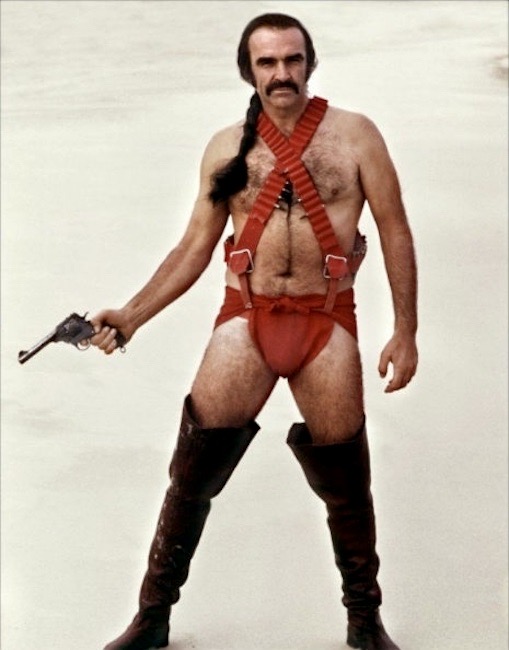
But along came this remarkable image of Sean Connery as Zed in the film Zardoz, which despite being a Z-person (note boldface) and a longtime fan of Connery’s, I missed completely when it came out in 1974. Material from the film is being distributed in the mistaken belief that it’s set in 2023 — it’s actually 2293 — but this is what we get:


(#1) Connery, hot as hell and giggle-inducing too,  hypersexual and, oh yes, ridiculous

(more…)

New Girl in Town

December 30, 2022

This follows up on my 12/28/22 posting “Building wealth”, with its section on Princeton in 1959-60 and musical theatre (and Clark Gesner), mentioning New Girl in Town (which I learned about first from my roommate Frank (Franklyn J. Carr III), and then talked about with Clark). My old friend from those days (and still) Bonnie Campbell (Benita Bendon Campbell), also Elizabeth Daingerfield Zwicky’s godmother, responded to this in e-mail to me on 12/28 (quoted here with her permission):

Your poignant look back at Princeton years, especially the importance of Broadway musicals as background, carried me back there, too.

At my request, you gave me the cast album of New Girl In Town, for a birthday present in 1961. I had seen the show in New York, including Gwen Verdon and Thelma Ritter, in September of 1957, the night before I sailed to France on the Mauritania. Thus, the night before I met Ann.

The song “It’s Good To Be Alive” became a sort of mantra for me.

The Ann here is Ann Walcutt Daingerfield (later Ann Daingerfield Zwicky), who became Bonnie’s roommate during their junior year in France (1957-58); and a bit later her roommate when they were both working in Princeton. Thereafter, Bonnie was Ann’s best female friend (from among a number of such friends), until Ann’s death in the bleak midwinter, 17 January 1985. Many of the things in (as I put it in that earlier posting) “the giant album of Things I Learned at Princeton” came from Ann and Bonnie, together and separately. So: New Girl in Town, from Frank and Clark and Bonnie and Ann, over 60 years ago.

(more…)

A kiss before dying

November 6, 2022

My interpretation of Susie Bright’s complex feelings before Election Tuesday, as she reported them on Facebook yesterday by re-posting her FB image from 11/5/14 (cropped here to focus on the crucial bits):


(#1) From a theatrical poster for the 1969 cowboy dinosaur movie The Valley of Gwangi: on the one hand, exhilaration (above, on being kissed by, omigod, the young James Franciscus in cowboy gear; in the election, on exercising the power of the vote, which has been a big thing for me since 1961); on the other hand, fear of looming devastation (above, in that rapacious death-dealing giant reptile, a vicious allosaurus; in the election, on what could happen if (delusional and malevolent) brutes and bullies take over the government) — is this a kiss before dying?

(more…)

Agador, and his flagrant Guatemalan-ness

August 14, 2022

Agador, today’s morning name, which I quickly expanded to Agador Spartacus. Calling up wonderful images of Hank Azaria’s character in the comedy film The Birdcage:


In the movie, Agador is male couple Armand and Albert’s flamboyantly gay Guatemalan housekeeper / maid, who poses as a Greek butler named Spartacus for the purposes of a family charade on behalf of Armand’s son Val; you can watch a short clip of  a bewigged Agador dancing while feather-dusting here

(more…)