Archive for October, 2014

Drunk on words, and a lot of whiskey

October 28, 2014

From the New York Times yesterday, “In Wales, a Toast to Dylan Thomas on His 100th Birthday” by Katrin Bennhold:

Laugharne [pronounced LARN], Wales — Down the footpath from his writing shed, along the curve of the water and up the hill, you see what the poet Dylan Thomas once saw: tall birds on the “heron priested shore,” a “sea wet church the size of a snail” atop the ridge, the castle ruin to your left still “brown as owls.”

… Thomas died young, at 39, after boasting that he had downed 18 straight whiskeys (“I believe that’s the record”) in New York in 1953. On Monday, he would have turned 100. His small country, long ill at ease with its hard-living, hard-loving son who wrote in English, not in Welsh, and caricatured his roots as much as he claimed them, is celebrating perhaps its greatest poet.

(more…)

Putrid in context

October 27, 2014

Back on the 15th, I posted about the appearance of the adjective putrid in a NYT feature story. From that posting:

Natto for breakfast. From the NYT Magazine on the 12th, in “Rise and Shine: What kids around the world eat for breakfast” (photographs by Hannah Whitaker, text by Malia Wollan) … [in the section on a Japanese breakfast that included the fermented soybean dish natto]

I was taken aback by putrid [for natto], which struck me as much too negative in the context. [in fact, the article had “putrid soybean goop”]

In a comment on this posting, Steve Anderson wrote:

I don’t know whether you’ve ever eaten (or tried to eat) natto, Arnold, but in my opinion ‘putrid’ [meaning ‘rotten’, and by extension, ‘very unpleasant, repulsive’] is precisely descriptive.

Two comments here. First, note the “in this context” in my posting. I meant that seriously. My objection to putrid was to its use in the specific context of the NYT piece, not to its use in any context whatsoever (specifically, not to its use in a description of personal tastes). Second, a note on my own experiences of natto. I’ll reserve for another posting a (lengthy) discussion about rotten or rotted food, fermented food and drink, and related topics — a domain in which ordinary English is poor in vocabulary.

(more…)

doxxing

October 26, 2014

A slang term (also spelled doxing) from the Gamergate controversy (see below), for “researching and publishing personally identifiable information about an individual” (Wikipedia), in a form of cyber-bullying. The Wikipedia article derives the term from dox, which it treats as a clipped version of document, but it seems more likely that dox is just a re-spelling of docs, which is a clipped version of documents, used here with a specialized meaning.

(more…)

Giving offense, or the Right to Trample

October 26, 2014

The most recent Wondermark:

Giving and taking offense is a very complex matter, but this strip mocks an extreme case, where someone straightforwardly behaves with contempt for others, including using slurs. And then complains that those who take offense are threatening his rights.

On the orphan initialism front

October 26, 2014

From Roger Klorese, the news that the alphabetic abbreviation PFLAG no longer stands for anything. From the PFLAG website:

The acronym PFLAG, pronounced “P-FLAG” /ˈpiːflæɡ/, originally stood for Parents, Families and Friends of Lesbians and Gays, but in 2013 the organization switched to using only the acronym to be more inclusive of all in the LGBT community.

That is, PFLAG has become an orphan initialism, unmoored from its initialistic source.

(Roger is not particularly happy with a name that sounds like urinating on the flag.)

(more…)

Advances in telephony

October 26, 2014

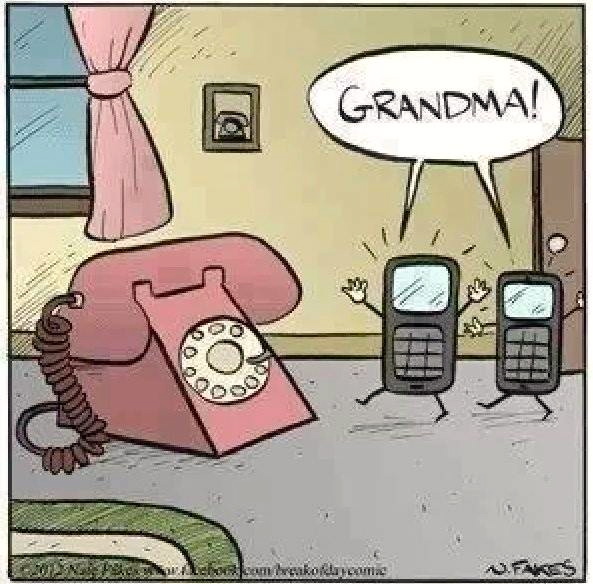
From Facebook friends, this cartoon by Nate Fakes:

  (#1)

Grandma is a rotary dial phone; presumably mama is a touch-tone phone. Telephonic communications marches on.

(more…)

The experts speak

October 25, 2014

Science writer Carl Zimmer in the NYT yesterday, in the middle of “As Ebola Spreads, So Have Several Fallacies”:

Recently on “Fox News Sunday,” the political commentator George F. Will said, “There are now doctors who are saying, ‘We’re not so sure that it can’t be in some instances transmitted by airborne.’ ”

When another guest on the show started to explain that experts have said this is not true, Mr. Will interrupted to say, “Every expert that you’ve seen. Here we go again.”

A familiar rhetorical move, in which “experts” (or “authorities” or “scientists”) are disparaged as sources of information, on the grounds that they are just one source of information among many, and that all these sources are just matters of opinion, each as valid as any other (for instance, the opinions of political commentators).

Frequently, these disparagements are backed up by the claim that “experts”, “authorities”, and “scientists” are in fact biased sources of information, because these people have a personal stake in the matter: their reputations, positions, income, and so on hinge on what they do. (I recall the days of the wars over smoking, when representatives of the tobacco industry attacked the American Lung Association and the American Heart Association in just these terms, as “special interests”.)

I’m familiar with the disparagement of “experts” etc. (especially linguists and lexicographers) in discussions of usage, where it’s vexing that so many people assume that all opinions on usage are equally valid, and that the work of professionals should in fact be dismissed because it’s biased. In many contexts, not a lot hinges on the outcomes of these confrontations, though many of us have pointed out that the rejection of expert information about language can have grave consequences in some contexts, especially in education.

But when we’re dealing with matters of life and death (as in responses to Ebola), the stakes are immediately and urgently higher. I won’t try to assess George Will’s motives here, but he is disparaging statements of fact (as far as this is known) in favor of fallacious rumors, and that, I think, is just wicked. (Don’t get me started on Bobby Jindal.)

Mel Blanc

October 25, 2014

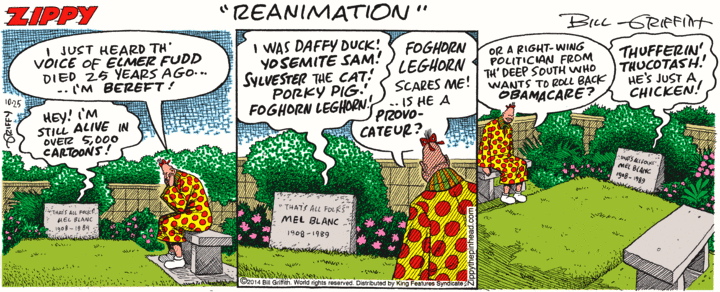
Today’s Zippy, a tribute to actor Mel Blanc:

Lots of linguistic interest (not to mention humor) in Blanc.

(more…)

Today’s outrageous pun

October 24, 2014

Today’s Bizarro:

(medical) marinara as a pun on (medical) marijuana: same prosody (double trochee), same first syllable, same final schwa. Then there’s Mrs. Rotini, the (literal) pasta woman, suitable for treating with marinara sauce.

(more…)

Familiarity

October 24, 2014

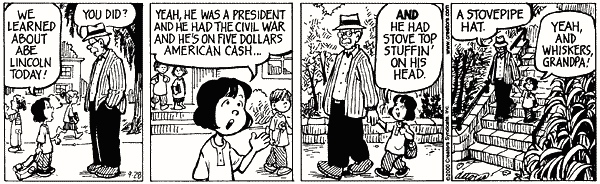
Yesterday’s One Big Happy, in which Ruthie goes (as usual) with the familiar over the novel:

(#1)

Stovepipe hat (an unfamiliar expression for Ruthie) is transformed in Ruthie’s ears into Stove Top Stuffing, a familiar expression in her world (context is crucial!), even though the two are pretty distant phonologically (very imperfect as a pun).

(more…)