One more eccentric vein of modern still lifes, on the Production Paradise site: from the Spotlight Nov. 2018 magazine: “Piotr Gregorcyk Photography – Food & Drink Photography & Motion”: still photographs of food and drink floating, disassembled, in zero gravity. Frozen moments captured from floating motion in time and space.
Archive for the ‘Photography’ Category
The unbearable lightness of food and drink
September 24, 2020Revisiting 38: More male beauty
November 25, 2019A return to the subject of my 3/10/16 posting “Male beauty”, on cultural categorizations of attractiveness and masculinity, primarily as evidenced in facial characteristics. Adding to the mix (a) yesterday’s posting on my man Jacques Transue as a young “dreamboat” (“Him, 55 years ago”); and (b) repeated passing references here to the Clint Eastwood of the tv series Rawhide (1959-66) as “young and beautiful, but ruggedly handsome”.
Him, 55 years ago
November 24, 2019(A personal posting, not about language, and only glancingly about gender and sexuality.)
From Virginia Transue today, the photo of my man Jacques H. Transue (1942-2003) from his Haverford College yearbook in 1964:
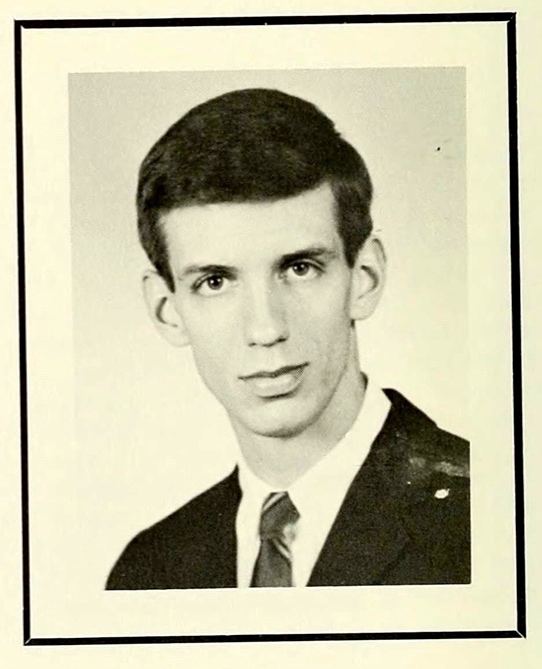
Virginia had just discovered that tons of yearbooks were available on-line, so she searched and found this — which I had never seen before. Virginia (the widow of Jacques’s older brother, Bill) described it as “one of the dreamboatiest photos” she’d ever seen, a judgment I’m inclined to agree with (but then I’m wildly prejudiced).
News at the Miss Albany
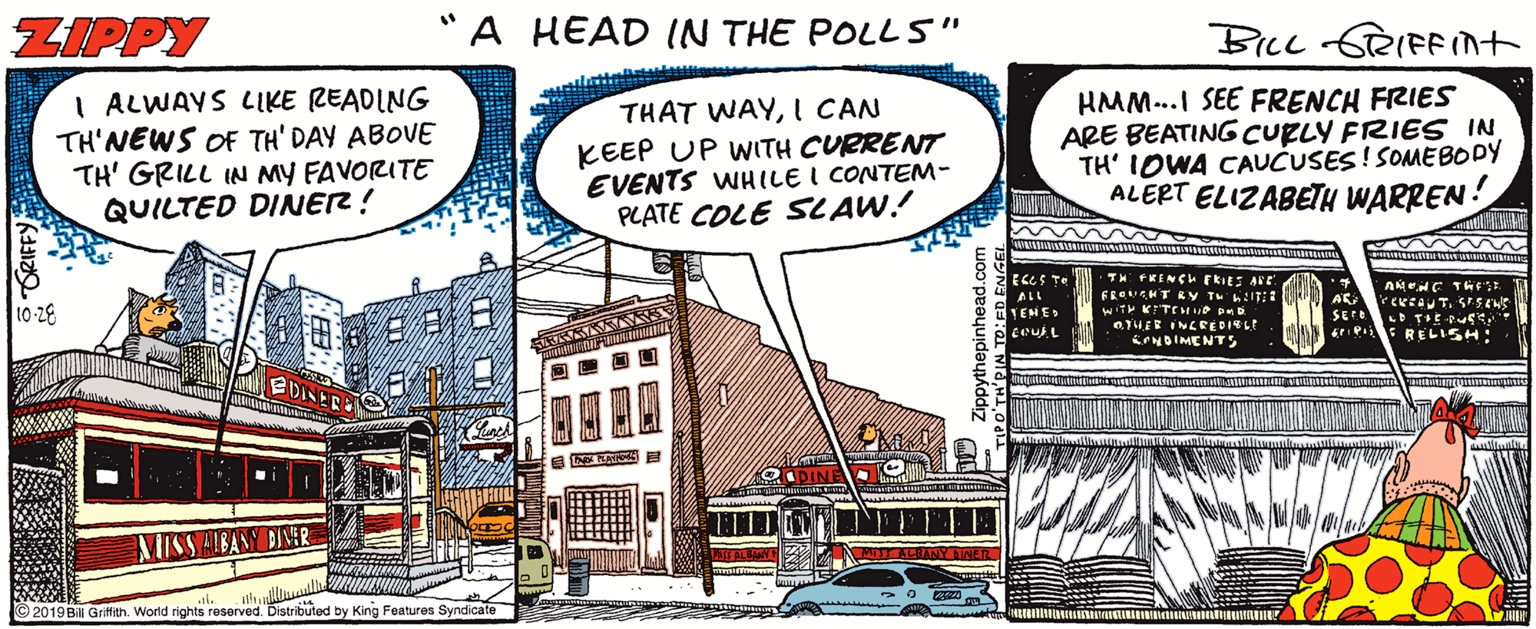
October 29, 2019Yesterday’s Zippy takes us to a historic diner in Albany NY and its notifications boards:
(#1) Note the parochial character of the messages: bulletins about the diner’s offerings
The real diner’s interior:
(#2) From the diner’s last day of service, posted 2/17/12 on the All Over Albany site

Giovanni in Ferragamo
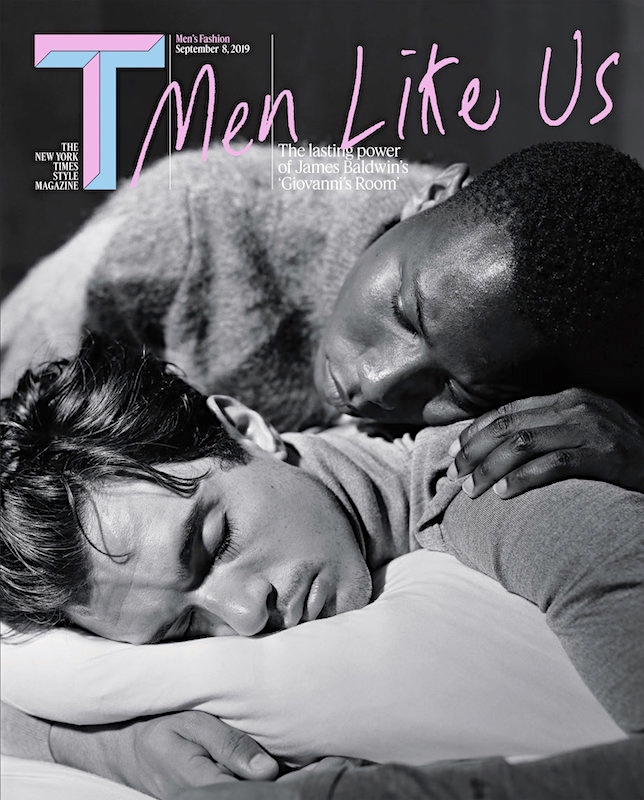
September 11, 2019In the NYT Style Magazine (Men’s Style) on-line on 9/5/19 (in print 9/8), a remarkable piece by Hilton Als, “‘Giovanni’s Room’ Revisited”, with the subtitle: “James Baldwin’s 1956 novel is a layered exploration of queer desire — and of the writer’s own sense of self”. The cover:
 (#1)
(#1)
Als’s text comes with an artful photo-essay illustrating a reimagining of the story of Giovanni’s Room as an interracial gay love story, each photo also serving as a men’s high-fashion spread, displaying extraordinarily expensive clothing from famous brands.
A jarring moment in modern culture.
Come frolic and cavort in the water
June 11, 2019Today’s Zippy has our playful Pinhead frolicking and cavorting in the surf, on a water trike:
 (#1)
(#1)
In no particular order: the Aqua-Cycle water trike, seen above churning through the surf (and, quite possibly, several holiday-goers); the verbs frolic and cavort, great favorites of Zippy’s, which tend to come with a sexual tinge; the social custom of pleasurable frolicking and cavorting in the water, easily bent to homoerotic purposes, in displays of the body and playful contact between men; and one particular artist of that scene (from a great many), Keith Vaughan.
The videographer
May 22, 2019It came to me via Google Alert last week, another creative Zwicky: Denis Zwicky, videographer in Miami. At first, I guessed from his French first name and his fluent but non-native English that he was related to the Zwickys of Wallisellen, outside Zürich, of the Zwicky thread and yarn company and now the Zwicky Areal Facility, an exploration of urban development on the grounds of the thread factory:
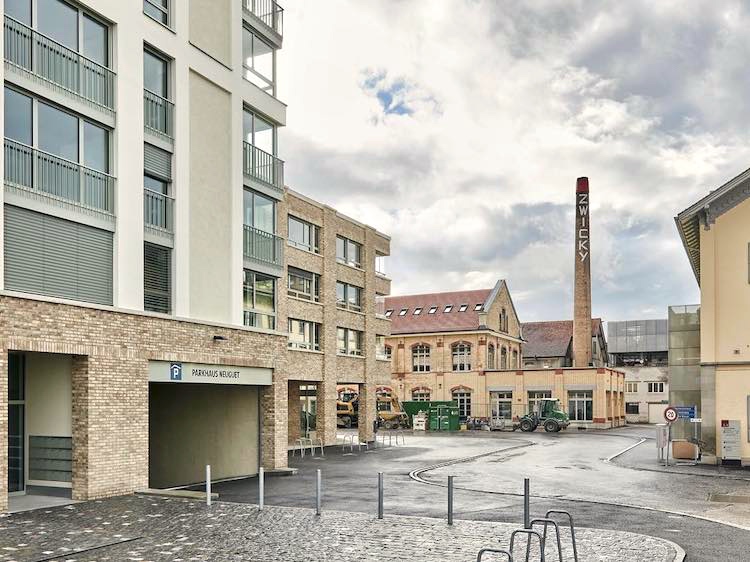
(#1) Wallisellen: the old factory and a corner of the new development
Though they’re in German-speaking Switzerland, the younger generations of the family mostly have French names (I’ve written about Joelle); see my 6/27/18 posting “Three Züricher Peter Zwickys”, with a section about “Silk Peter” of the thread company and his four daughters.
But no, far otherwise. As I wrote in yesterday’s posting “Das Wappen”, Denis turned out to be one of the Slavic Zwickys (more in today’s posting “Tsviki from Belarus”). However, I’ll put this personal and family history aside for today, to report on Denis the videographer.
Revisiting 30: Fragonard at Neuschwanstein
May 2, 2019My 4/22/19 posting “The Easter egg in the salt mine” took off from this archive photo used in an Economist article:
 (#1)
(#1)
The article tells us nothing about the provenance of the photo or about the scene represented in it, though in the context of the article, we’re invited to suppose that the photo shows us the retrieval of Raubkunst, art seized by the Nazis from Jewish families during World War II. From which we guess that the soldier is an American G.I., the time is 1945, and the locale is one of the Nazi storage places for stolen art, perhaps even one of the celebrated salt mines used for this purpose. (All of this is assumption and guesswork, not a single actual fact in the pack.)
The painting in the photograph is in the courtly style of the 18th century — I speculated on what the scene might be — but not one famous enough to be identified through various sorts of searches.
Then in a comment, John Baker came to the rescue, enabling me to make substantial advances: the painting is a Fragonard (apparently a minor one) — as it turned out, one recovered by Americans in a gigantic hoard of Raubkunst in Neuschwanstein Castle in Bavaria (the fantasy castle Ludwig II built for Richard Wagner).
A standout in his shorts
April 27, 2019(Mesh Man in his underwear, leading us in many directions, but with plenty of sexual content — not suitable for kids or the sexually modest.)
From the 12th: Mesh Man returns to the Daily Jocks underverse, flogging their fabulous Varsity Mesh Shorts, flaunting his famous receptive organ — he’s all man and a foot deep — kneeling with feeling in #1 and flashing a finger gun to his fans in #2:

(#1) Party shorts! (see the ad below) — I go down on one knee to go down on my guy