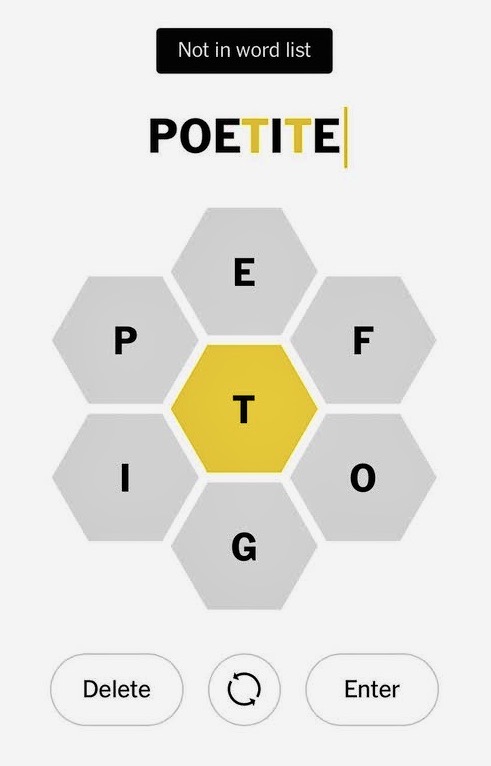
Faced with this judgment on Facebook today about the Spelling Bee puzzle from the New York Times,
Dennis Baron owlishly protested with word play incorporating a pun on concrete:
It’s the stuff concrete poems are made from.
Well played, Dennis!
Faced with this judgment on Facebook today about the Spelling Bee puzzle from the New York Times,
Dennis Baron owlishly protested with word play incorporating a pun on concrete:
It’s the stuff concrete poems are made from.
Well played, Dennis!
Today’s morning name was Zimbalist, which came to me at 4:10 am to the accompaniment of the delicious, very French, piano music of Erik Satie (to which it has no associations I can think of). I understood the name to refer to Stephanie Zimbalist, most famously (with Pierce Brosnan and Doris Roberts) a star of the American tv show Remington Steele. But then the topic branched wildly in many directions, in a way I couldn’t imagine organizing into a single posting. So, today, just one piece of that network of topics, the surname Zimbalist.
Zimbalist looks like zimbal + ist, an association surname, possibly an association to an occupation, and so it is: it’s a Slavic Jewish surname meaning ‘cimbalom / cimbal player’ (so it’s parallel to the common nouns pianist, violinist, accordionist, trombonist, clarinetist, etc.).
(The initial letter c of cimbalom represents a voiceless dental affricate [ts], spelled with a c in Russian, a z in German; because of the spelling with c, the name cimbalom is pronounced in English with an [s], and because of the spelling with Z, the name Zimbalist is pronounced in English with a [z] — yes, this is a multilingual, multiorthographic mess, but don’t blame me, I’m just the reporter.)
Now, briefly, to the instrument.
Heard on MSNBC on 1/9, a reporter on scene at the Palisades wildfire in Los Angeles, noting that looterers had become a problem — using, not the agent noun looter, based on the established verb loot, but the agent noun looterer, based on the innovative verb looter (a verbing of the noun looter). A looterer is someone engaged in lootering, which is a kind of looting.
The question is why the reporter went for the elaborate innovative noun looterer rather than the simpler established noun looter. In the context, it was clearly not a mistake, and the reporter repeated it. And then it turns out that the usage wasn’t her invention on the spot; the verb looter and its derived agent noun looterer are attested from others. Even with reference to the Los Angeles fires; from the iHeart podcasts about the fires:
2 days ago — That’s just the estimate. Speaker 2 (00:43): So the Los Angeles Police arrested a possible arson suspect … twenty looterers have been arrested
(There will be mentions — in vernacular but not actually vulgar terms — of male-male sexual practices that some will find icky, so this posting will not be to everyone’s taste; and it might stretch some kids’ horizons a bit, so a gentle warning)
From back on 10/30, e-mail from Gadi Niram, with a video gift for me, saying: I found this video (and the young man in it) to be quite a pleasant diversion:
(#1) Screen shot from the video, which you can view here
A shirtless young man in ripped denim shorts playing the 3rd movement of Beethoven’s “Moonlight” Sonata (Piano Sonata No. 14 in C-sharp minor, Op. 27 No.2) on a fancy grand piano (with a mirrored fallboard, as in the finest piano lounges). alongside the pool at at what looks like a tropical oceanside resort. (For a bit of extra sexiness, those shorts are down far enough in the back to expose the waistband of his black Calvins; here the girls and the gay boys swoon.)
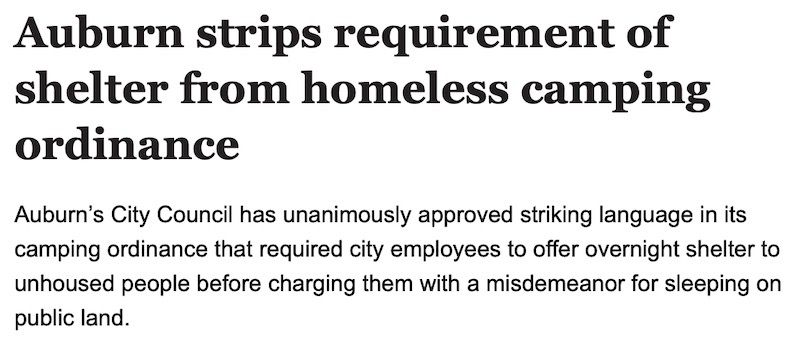
From Ellen Kaisse in e-mail to me on 10/4 (yes, the blog mill grinds very very slowly on Ramona St.): a nice ambiguity from the Seattle Times, in the first sentence of the story:
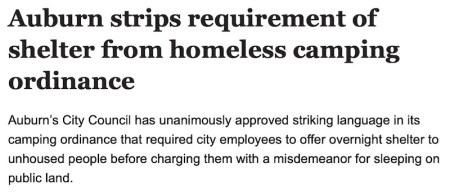
[what EK wrote, with some bracketed amendments by me:] I read striking as an adjective meaning ‘notable’ and modifying language rather than the intended reading where striking is [the nominalization of] a verb with language as its direct object [AZ: the nominalization (together with language and a very long relative clause modifying language) is itself the direct object of the verb approved]. It was only the headline that alerted me that my first reading was the opposite of what was actually approved.
Now if you ask an ordinary person what’s gong on with that sentence, they’ll tell you that it’s ambiguous, and they’ll provide some attempt at a paraphrase (as a sufficient account of the ambiguity), but they’ll simplify things somewhat by disregarding that long relative cause and, in effect, localizing the source of the ambiguity in the expression striking language, telling you that in the Auburn City Council sentence this expression means two different things, ‘notable language’ or ‘removing language’ (from something), and maybe they’ll go on to localize the source even further in the word striking, saying that striking in striking language can mean either ‘notable’ or ‘removing’ (from something).
Ask a linguist, like Ellen or me, and even our briefest answer will go immediately to localizing the ambiguity in specific words that are the crux of the matter. We’ll identify the lexical items involved and supply some relevant properties of the words — what syntactic category they belong to (EK refers explicitly to adjective (Adj) and verb (V) and implicitly to noun (N)); perhaps what derivational and inflectional categories they belong to (implicit in our references to nominalization). And then, especially, we’ll tell you something about the syntactic constructions in which the words are related to one another (we’ll refer to modifying / attributive adjectives, to verbs with direct objects, and so on). Our very brief comments are laden with allusions to the structure of English — its morphology and syntax — as well as to its lexicon.
The linguists’ view is that the lexicon, morphology, and syntax of the language work together in such a way that a stretch of phonological material can convey two different meanings; when we confront an ambiguous expression, we see it not as a brute fact (as if people somehow memorize how phonological substance and semantics are paired with one another, expression by expression), but as the consequence of the system of the language. Surprise! There are two ways you can end up with striking language, two ways the expression can be analyzed. (There are, in fact, more than two; but there are at least the two EK told us about.)
Now I’m going to wade hip-deep into the system of English involved in striking language (and some similar expressions). Not to tell you everything, but to tell you just enough to show you that the system is both big and complex. Therefore, challenging. And therefore, wonderful to figure out. Contemplating stuff like this makes me happy.
Well, actually, concept time. First come the useful concepts, then come the terms for them. My comments are prompted by Martin Haspelmath on Facebook today, on the useful terms (due to Alexandre François) colexification and dislexification for the expression, in some language, of distinct concepts in a single lexical form or distinct lexical forms, respectively; with MH citing this 2024 article from the journal Asia Pacific Translation and Intercultural Studies: “Colexification of “thunder” and “dragon” in Sino-Tibetan languages” by Hongdi Ding and Sicong Ding. From the abstract:
[372] languages were classified into colexifying and dislexifying languages, depending on whether the two concepts are associated with shared lexical forms. The findings reveal that 47 languages in the sample exhibit thunder-dragon colexification; most of them are Bodic and Na-Qiangic languages, with a few Sinitic, Mongolic, and Turkic languages. This areal pattern results from both inheritance and language contact.
So, patterns of colexification spread areally, through both inheritance and language contact, just like other linguistic features.
Note that colexification must have arisen in at least one language at some time, but this article isn’t about the mechanisms that might have given rise to colexification of ‘thunder’ and ‘dragon’ or to simple examples of colexification in English: ‘grain stalks’ (in the mass N straw) and ‘drinking tube’ (in the count N straw); ‘riverside land’ (in the count N bank, as in both banks of the Seine) and ‘financial institution’ (in the count N bank, as in savings banks).
But now the terminology.
(Tasteless and obscene, in two languages, so not to everyone’s taste)
(#1) A rainbow raised fist, representing proud defiance; image from Redbubble, by designer MAS-S (in Berlin, Germany)
And now the frocio ‘queer, homo, faggot, fairy, queen’ mock-Pope intoning benedico questa frociata ‘I bless this faggotry’ (more literally, ‘this faggoting’) at the 6/15 Pride celebration in Rome, where t-shirts proclaimed “There is never too much frociaggine” — never too much faggotry — as participants enthusiastically embraced every vulgar insult they know (but especially frociaggine), turning them into proud badges of identity and defiance, raising the rainbow fist:
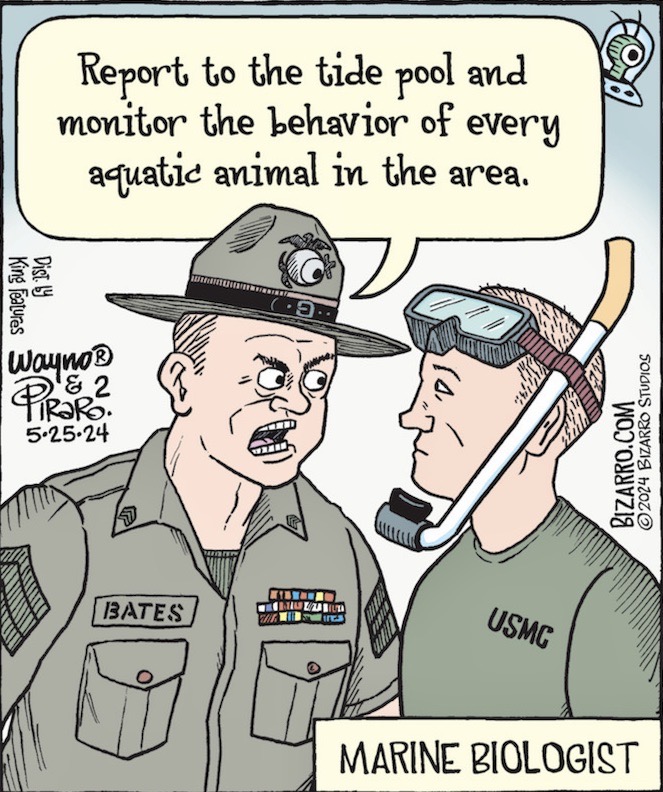
Today’s Wayno / Piraro Bizarro is a little treasure chest of interesting morphosemantics, all from a pun on marine biologist, whose everyday use is to refer to a scientist specializing in marine biology:
But instead we get, unexpectedly, a biologist who is a marine, assigned to duty monitoring aquatic animals (if you’re puzzled by the odd symbols in the cartoon — Dan Piraro says there are only 2 in this strip — see this Page)
The pun has the USMC noun marine; its base has the sea adjective marine. But that’s just the beginning of the fun.
(Playing around with English morphology and male masturbation, so not to everyone’s taste)
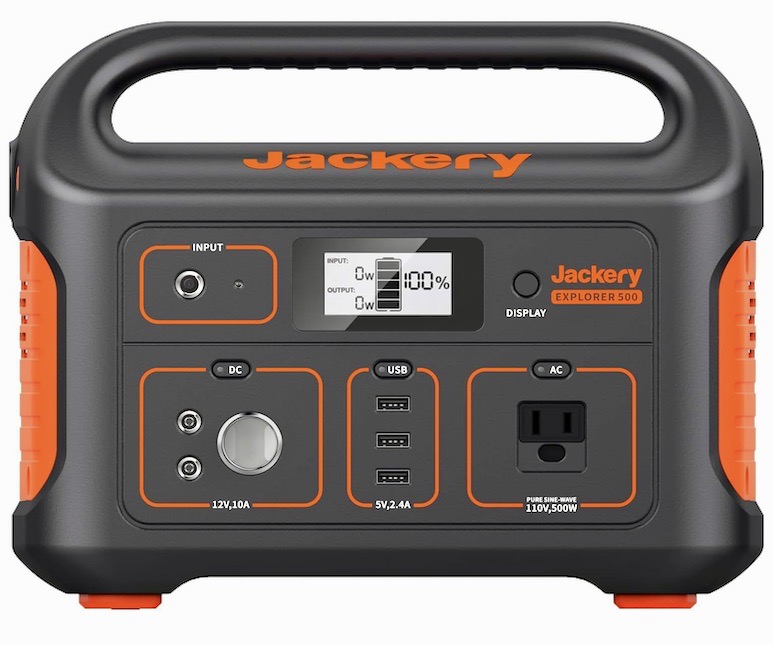
It all started with a chance encounter with an ad for Jackery portable power stations, like this one:
Given the orientation of my imagination, I was immediately taken to the idea of jackery ‘male masturbation, jacking off’, at places especially devoted to the practice, jackeries (aka jack-off / jerk-off / JO clubs). Clearly not what the Jackery Company had in mind, but where did they get their name?
From the “get to know Jackery” page on the company’s website:
Jackery was established in 2012 and co-founded by a former Apple senior engineer and a CEO called Z Sun, a pioneer in the field of Li-battery technology. The original founder developed a battery jacket for the Apple iPhone, which is where the name Jackery comes from.
… Jackery makes portable power stations, solar panels, solar generators, and accessories for the outdoor and mobile market, but they are best known for their portable power stations.
So Jackery has the derivational suffix –ery (denoting ‘a place where some occupation, trade, or activity is carried on’) attached to an abbreviated form of jacket, referring to one of the company’s first products.
The details of words with the the noun-forming derivational suffix –ery are not at all straightforward, full of oddities of history; it’s not a particularly productive suffix. But there’s enough there that you can play with it.
On to this interesting messiness in some detail, and moving from battery jackets to male masturbation.