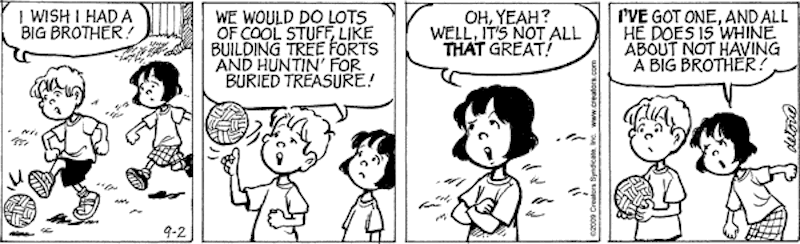
On the value of a big brother (and his responsibilities). The One Big Happy from 9/2:

(#1) Joe and his younger sister Ruthie
If Joe had a big brother (not too much older than he was), then by the codes governing masculinity in modern American society, it would be that brother’s duty to join adult male figures (fathers, uncles, coaches, etc.) in instructing Joe (and other younger boys, but especially his younger brother Joe) about the practices, attitudes, and behaviors of normative masculinity, and in enforcing those teachings. Older boys have pretty much full responsibility for the practices, attitudes, and behaviors specific to kids (kids having their own elaborate social worlds); and, in fact, they are the primary vectors passing on normatively masculine values.
The special virtue of a (somewhat) older brother is that not only is he a guide to the normative world of boys, he’s also around a lot of the time, so he’s a kind of built-in wiser buddy. Someone you can, for example, engage in imaginative conflict play and active adventures with. Cool. And besides that, he’s older and stronger and can be a buffer for you against the world.
Meanwhile, Joe is himself an older brother, but his younger sibling is a girl, and that relationship calls up a different set of responsibilities: not to induct the younger child into the world of her normative gender, but merely to do the buffer thing, to serve as her protector, as a stand-in for her father. We don’t see much of that in the One Big Happy strip, though.
(more…)