Archive for May, 2011

The Boring Store

May 28, 2011

Through McSweeney’s, a pointer to The Boring Store in Chicago (1331 N. Milwaukee Ave.), with a wonderful website. Part of the store’s sign:

Ironic reversal, attraction by denial: “the only store in Chicago that denies its own existence”. The store bills itself in one place, positively, as “Chicago’s only Secret Agency Supply Store” (it actually sells disguise kits, X-ray specs, and other spy gear for kids) and in another, negatively, as “Not a Clandestine Supplier of Espionagical Wares”.

(more…)

50th anniversary report to Princeton

May 27, 2011

(Not about language, and personal. This is a report for a 50th-reunion book at Princeton, about my life. So much left out … Remember that the audience for this is my 1962 classmates at Princeton.)

(more…)

Portmanteau spawns libfix

May 27, 2011

It’s an often-told story: A portmanteau word (useful or playful or both) invites other portmanteaus sharing an element (usually the second), and then these drift from the phonology and semantics of the original to such an extent that the shared element takes on a life of its own — is “liberated” as an affix. Some examples follow.

(more…)

Patti Smith Flandrin

May 27, 2011

On Facebook, Rebecca Brown pointed out a Mapplethorpe photograph (from 1976) of Patti Smith in (something close to) the Flandrin pose:

Compare this to Mapplethorpe’s 1981 Ajitto (here), which is very close indeed to the Flandrin original (but with a black model and with his genitals incorporated into the composition). Smith’s hands are not folded over one another, but stretched out in front of her. And, most important, Smith is gazing at us directly, rather than resting her head on her knees, with no eye contact with us. So, more like a cousin of Flandrin than a sister.

Exclamatory -S?

May 26, 2011

Possible addition to the cases of “extra -S” listed in this earlier posting: the -S on exclamations like yipes, yikes, gee whillikers, and possibly some others.

The /z/ in zounds represents a historical plural (in wounds), though only students of language appreciate that these days.

The /s/ in cripes probably reflects that segment in Christ, but again that might not be appreciated by people who use the expression.

Then there’s the final element of the testicular exclamations balls, bollocks, and nuts: a plural marker, historically, but why did these forms get chosen for this purpose?

Further nominations are welcomed.

Loinfruit

May 26, 2011

Elizabeth Daingerfield Zwicky ranted in Facebook a while back, when Mothers Day loomed:

As a breeder, let me go on record as saying get over it already and stop turning my ability to produce loin fruit [she meant to type “loinfruit”] into an excuse to plaster the world with commercialized guilt and stereotyping.

First, there’s breeder, which has two salient senses here (both applicable to Elizabeth): ‘a heterosexual’ and ‘someone who has had a child’. But her posting was noticed mainly for its use of loinfruit ‘child, children’, which was new for some readers and struck them as inventive and entertaining.

Elizabeth was in fact using an expression she had learned some years ago on the Usenet newsgroup soc.motss. She and I picked it up from Gwendolyn Alden Dean, who referred to her son as “the loinfruit”. So I asked about the expression on the Facebook descendant of the newsgroup and got the local history of the expression.

(more…)

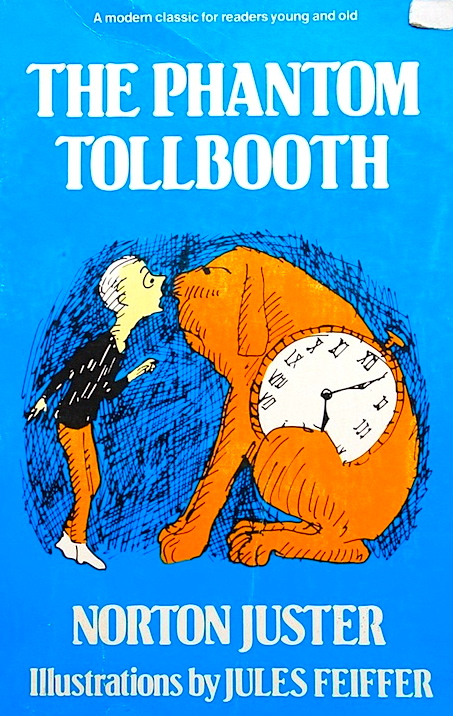
The Phantom Tollbooth

May 26, 2011

In the latest New York Review of Books (June 9), Michael Chabon celebrates The Phantom Tollbooth (1961, by Norton Juster, with illustrations by Jules Feiffer):

He writes about

venturing into a wonderful book, into a world made entirely of language, by language, about language.

(more…)

Double dactylic sniff

May 25, 2011

Once I realized that I’d written “músk ănd tĕstóstĕròne” in my piece on “Scent and masculinity”, I saw that the double dactyl needed a poetic home.

(more…)

Ralph and Monty

May 25, 2011

I’ve posted a few of the photos from James Gardiner’s 1992 book A Class Apart: The Private Pictures of Montague Glover, much of which is taken up with the story of the long (53-year) relationship between the working-class Cockney Ralph Hall and the upper-middle-class (and significantly older) Montague Glover. The text and photographs give a window into gay male life in the U.K. 50 or so years ago, when same-sex relationships were illegal and sometimes savagely prosecuted. (Gardiner chronicled the history in his 1996 book Who’s a Pretty Boy Then? One Hundred and Fifty Years of Gay Life in Pictures.)

Along with the photos is a trove of Ralph’s letters to Monty during the four years Ralph served in the army during World War II. These have some linguistic interest, but even more interest as a record of an inter-class relationship between British men in the period. (It’s an accident that the photos and Ralph’s letters were saved. It’s a great shame that Monty’s letters were lost.)

(more…)

Scent and masculinity

May 25, 2011

(Mostly not about language, but about gender and culture.)

From the April 2011 Details (p. 70), a spread (in the “Rules of Style” section):

THE SEASON’S BEST (GUY-APPROPRIATE) CANDLES

THESE COMPLEX, ROBUST, AND, YES, MASCULINE CREATIONS BELONG IN EVERY MAN’S HOME.

(A slide show of the nine candles can be viewed here.)

(more…)