An announcement on the Language Typology mailing list on 12/30:
we are hosting the ninth Syntax of the World’s languages in Lima (Pontificia Universidad Católica del Perú) between July 23th and 26th 2024. We are “cooking” (the culinary verb is in order when we talk about Peru) a very nice and welcoming conference for all of you, so we really hope you come over … SWL IX will provide a forum for linguists working on the syntax of less widely studied languages from a variety of perspectives.
This from the organizer, Roberto Zariquiey, at PUCP. Whoa! A splendid Z-name, one I’m sure I’d never seen before. And, extra points, on an Amazonian linguist. (I suppose it would have been too much to hope that RZ came from the town of Zaraza in Venezuela.)
You see, as a Z-person, I’m keenly aware of the letter Z, unconsciously aware of words (especially names) with a Z in them, which is why I’m so sure that the name Zariquiey is new to me. More on implicit attentiveness below.
Then there’s the question of the origins of the name. My family name, Zwicky, has been a Swiss name for hundreds of years, centered very specifically on a small town in the Alps. But there are some variant spellings. Also the possibility of a historical connection to somewhat similar names in Bavaria, and of those names to another set of names from the Slavic areas of Eastern Europe, More on those names below too. There are some surprises, like the remarkable spelling Tsviki, first seen in Belarus (but then people get up and move to new places, so there are now Tsvikis in the Miami area and New York City).
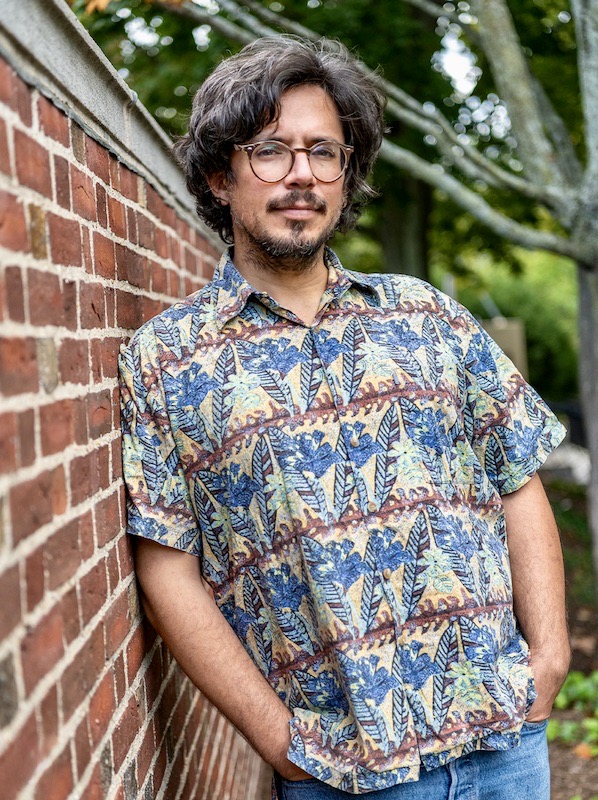
The family name Zariquiey doesn’t look much like any of the Swiss, Bavarian, or Slavic names (Slavic Zawickey is about as close as it gets), and it’s way separated from them geographically as well: apparently, almost all the Zariquieys in the world come from Spain, or from what is pretty clearly a Spanish settlement, in Peru (where RZ comes from). At some point, I will write RZ — I have his e-mail address — and ask him what he knows about his family’s origins. I’m somewhat reluctant to do this, though, since as you’re about to see, he’s a busy person, intellectually and emotionally committed to a program of intense and pressing research in Amazonia. On the other hand, as you can also see from the tone of his SWL IX announcement above and judge from his Radcliffe Institute photo (to come in a moment), he seems like a pretty cool guy.
In any case, now I dive right into information about RZ and his research. With all the other stuff to follow
(Random fact encountered while assembling this posting: there’s a Spanish town named Zarza, whose name is straightforwardly derived from Spanish zarza ‘thornbush, blackberry bramble’. I can’t see any way of making this name relevant to my posting, but I enjoy the name, especially if it’s pronounced [θárθa]. No, it has nothing to do with Zaraza in Venezuela.)
Zariquiey of the Amazon. (Pop-cultural echoes: M of MI6, Tarzan of the Apes, Ramar (and George) of the Jungle) Harvard Radcliffe Institute newsletter, “Shifting the Narrative on “Dying” Languages”: Roberto Zariquiey wants to reframe the discussion around languages with few speakers” by Sam Zuniga-Levy on 11/10/22:
RZ (Radcliffe Institute photo)The linguist and 2022–2023 Hilles Bush Fellow Roberto Zariquiey studies Iskonawa, a language with only four living native speakers whose home is in the Peruvian Amazon. When I first sat down with Zariquiey, I thought we would be discussing dying languages, also called obsolescing, moribund, or nearly extinct languages. However, as he explained, this pessimistic framing implies any rare language’s trajectory is irreversible; that it is impossible to revitalize the language. Yet even languages with no living speakers might be brought back if certain conditions are met. “If we have enough data, enough materials, and a community that ethnically identifies with the language, we might revitalize the language,” says Zariquiey.
Then from the Hay Festival site:
[44-year-old] Roberto Zariquiey holds a PhD in Linguistics from LaTrobe University (Melbourne). He is currently a senior lecturer at the Pontificia Universidad Católica del Perú (PUCP) and was a fellow of the Radcliffe Institute at Harvard University (he is the first Peruvian to receive such recognition). He is also a research associate at the Department of Linguistic and Cultural Evolution (Max Planck Institute for Evolutionary Anthropology) and a National Geographic Society Explorer. Zariquiey has published articles and books on the description and documentation of Peruvian indigenous languages, as well as four collections of poetry. He has led several research and social projects on Amazonian languages on diverse topics (from acoustic phonetics and computational linguistics to ethnobiological knowledge and traditional art). He is currently developing a revitalization plan for the Iskonawa language in coordination with the National Geographic Society.
Implicit attentiveness. Now about my special interest in RZ’s name, because I’m a Z-person and it’s a Z-name and I’m keenly aware of words with a Z in them, especially names, especially names that begin with Z. Two relevant earlier postings on this blog:
— from 1/10/12, in “Implicit attention”, about my being implicitly attentive to words with a Z in them, especially names, and their then becoming lodged in my memory (case in point: the name of the popular music composer Zez Confrey):
I notice [words with a Z in them] even when I’m not reading text, and attending to it, but merely noticing the text in passing, at a glance. I don’t think I’m looking for names with Zs, but even when my attention is focused on something else, my mind takes me there. I’m implicitly attending to the letter Z.
— from 11/3/21 “Z: Il dort”, with a more detailed discussion of my seeing the world through Z-colored glasses:
As a Z-person, I’m subject to a perceptual affliction in which I am constantly, but entirely unconsciously, scanning my visual field for instances of the letter z, which then leap out to grab my conscious mind. Z in any form will do it, but upper-case Z (Zorro, Zarathustra, Zoom, Franco Zeffirelli, Zeus, Gheorghe Zamfir, AZ, E-Z, etc.) is especially powerful; so is double zz (pizza, piazza, buzz, fuzz, muzzle, etc. — twice in pizzazz); and word-initial z (zigzag, zoo, zucchini, zoot suit, zesty, zabaglione, etc.) is more noticeable than word-internal z (razor, wazoo, Mazatlan, bizarre, Sazerac, bazooka, Pizarro, sleazy, etc.) or word-final z (quiz, Oz, Roz Chast, poz, La Paz, Baz Luhrmann, Les Miz, Duz detergent, etc.).
… I’m given to posting about words with initial z or Z [a sampling of such postings on this blog follows]
Zwicknames and the origins. On this blog:
— from 6/8/22 “Zwicknames”, about
Zwicknames — not just Zwicky, but also Zwickey, Zwicki, Zwicke, Zwickie, Zwick, Zwicker, Zwickel, Zwickl — and also at Zwicky-adjacent names, like Zawicky, Swicky, Sowicky, and, oh my, Tsviki.
and their origins in Switzerland, Bavaria, and the Slavic lands of Eastern Europe.
January 3, 2024 at 7:27 am |
Now, if you lived in Zanzibar…
I observe that you didn’t feel the need to mention explicitly the fact (obvious from the photograph) that RZ is very nice to look at.
January 3, 2024 at 8:47 am |
On RZ’s appearance: except for performers and others who intentionally project an attractive appearance, I do not comment on the attractiveness of any person, of either sex, who appears in my postings. And that stance clearly covers RZ.
In addition, I know almost nothing about RZ’s private life. I assume that he is some kind of Roman Catholic (but there’s a gigantic latitude in the ways he might relate to the Church and its teachings), and I know that his commitment to Iskonawa is a genuine passion, full of personal meaning to him (he has said so in interviews). He’s easily multilingual and multicultural, also multitalented (note the poetry), with a charming sense of humor. Beyond that, I know nothing.