Hey, there, server lad,
Have you any wool?
Yes, sir, yes, sir,
One alpaca full!
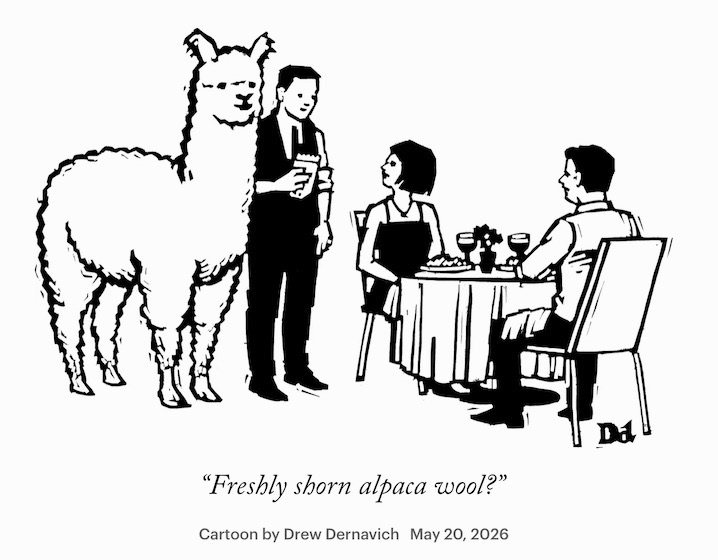
This Drew Dernavich cartoon in the 6/1/26 issue of the New Yorker:
A wonderfully absurd riff on the custom of restaurant servers offering freshly ground black pepper (occasionally, also freshly ground sea salt) upon the appearance of food at the table, obliging the diners to participate in a pretentious edgy ritual of condiment dispensation
The nursery rhyme. From Wikipedia:
“Baa, Baa, Black Sheep” is an English nursery rhyme, the earliest printed version of which dates from around 1744. The words have barely changed in two and a half centuries. It is sung to a variant of the 18th-century French melody “Ah! vous dirai-je, maman” [AZ: the melody of “Twinkle, Twinkle, Little Star”, famously played with by Mozart in a set of 12 delightful variations for the piano].
The first verse, burlesqued above:
Baa, baa, black sheep,
Have you any wool?
Yes, sir, yes, sir,
Three bags full
June 1, 2026 at 6:30 am |
The nursery rhyme has been put to many uses. One as the title of a short story by Kipling that I’ll take up in a separate posting. Another as the title of an American tv series. From Wikipedia: