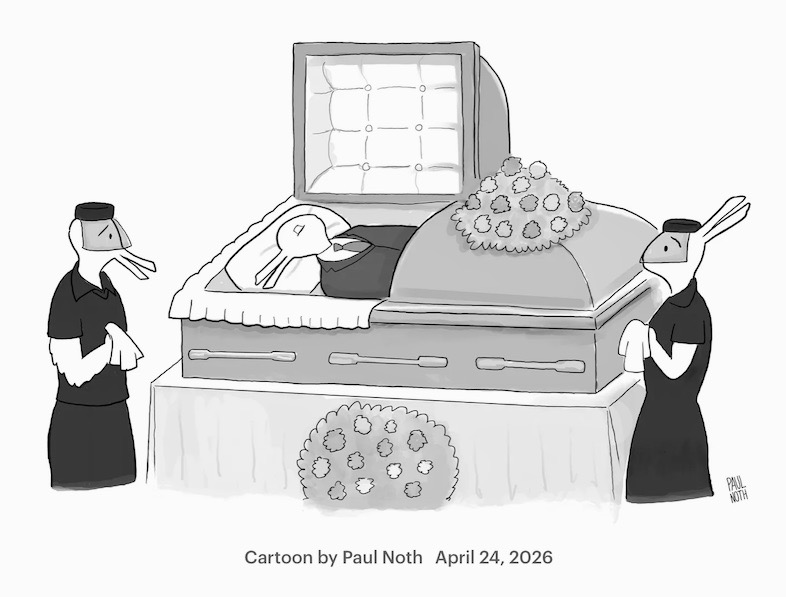
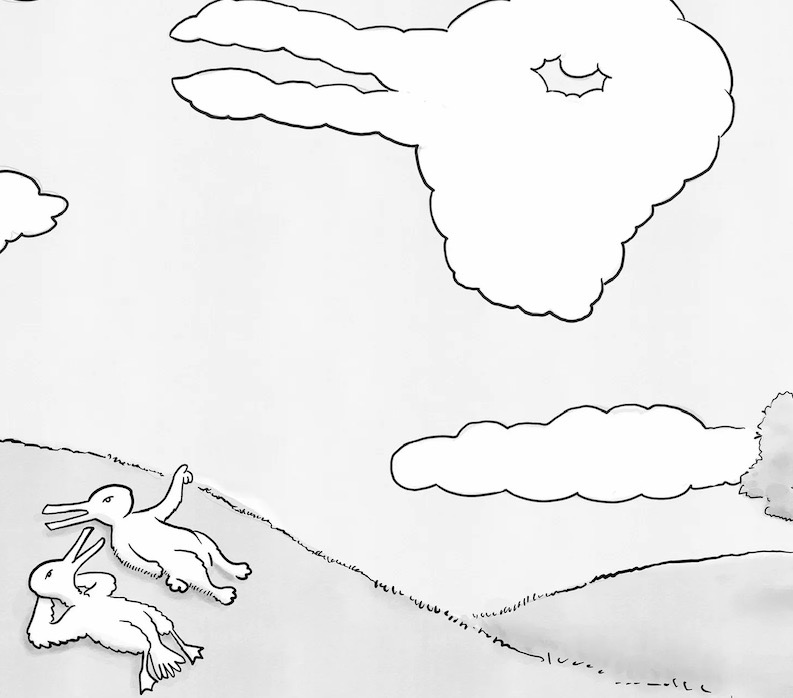
In this cartoon from the latest (5/4/26) New Yorker, Ms. Duck and Ms. Rabbit mourn their versatile paramour, Mr. Shimmer the duck-rabbit (or rabbit-duck); see my 8/24/25 posting “Shimmer is both a floor wax AND a dessert topping”, and reflect on versatile gay men, who are bottoms or tops, depending on how you approach them:
(#1) The widows weep for their bi-stable beloved; meanwhile, the famous illusion that lies at the very center of their world turns out to be a lifelong preoccupation of the cartoonist
Background on ambiguous images. First, from Wikipedia:
Ambiguous images or reversible figures are visual forms that create ambiguity by exploiting graphical similarities and other properties of visual system interpretation between two or more distinct image forms. These are famous for inducing the phenomenon of multistable perception. Multistable perception is the occurrence of an image being able to provide multiple, although stable, perceptions.
One of the earliest examples of this type is the rabbit–duck illusion [aka the duck-rabbit illusion], first published in Fliegende Blätter, a German humor magazine
Then from my 5/8/17 posting “What is figure, what is ground?”, a David Sipress New Yorker cartoon, captioned “I can’t remember — do I work at home or do I live at work?”, seen in terms of figure and ground, as in visual figure-ground ambiguities “like the famous Edgar Rubin vase/faces drawing: a white vase against a black background, or black faces (in profile) against a white background?”.
Paul Noth’s commentary. On PN’s “Noth Things” substack of 5/1/26, the entry “Bi-Stable Curious”, most of which I now reproduce here:
My cartoon in this week’s New Yorker [#1 above] marks the ignominious return of a favorite recurring character.
The “duck-rabbit illusion,” created by an unknown artist, first appeared in the German humor magazine Fliegende Blätter in 1892. It was later popularized by Ludwig Wittgenstein in his Philosophical Investigations and is what psychologists call a bi-stable (or multi-stable) percept.
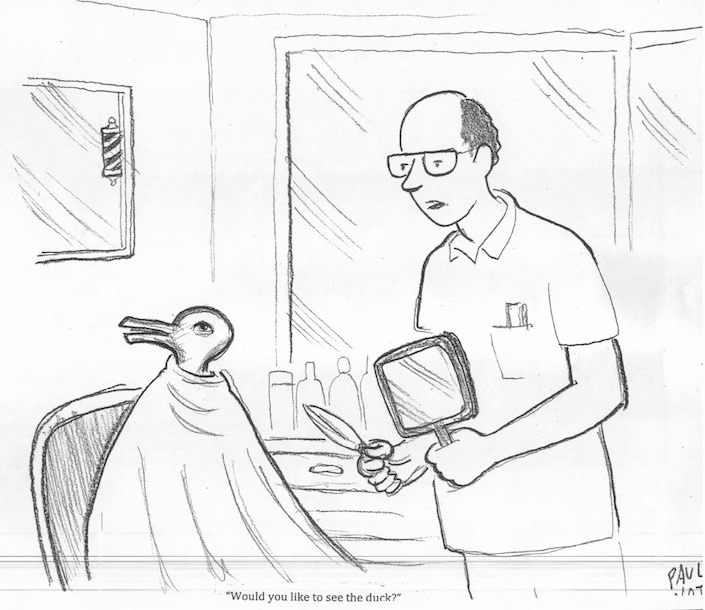
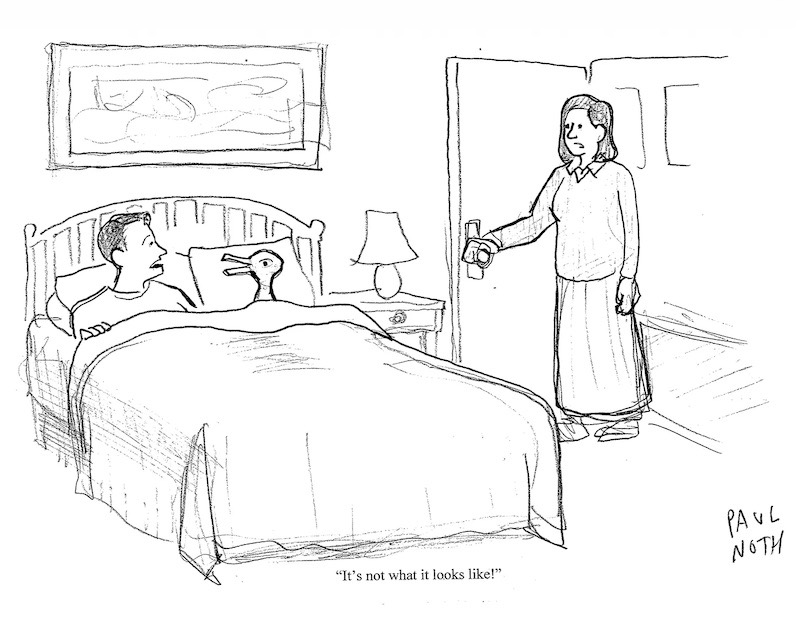
These optical illusions fascinated me as a kid. Like most of my childhood obsessions, they began appearing in my cartoons almost from the start. Two unsuccessful early attempts to get the duck-rabbit into the New Yorker can be seen in today’s Cartoon Combat [below].
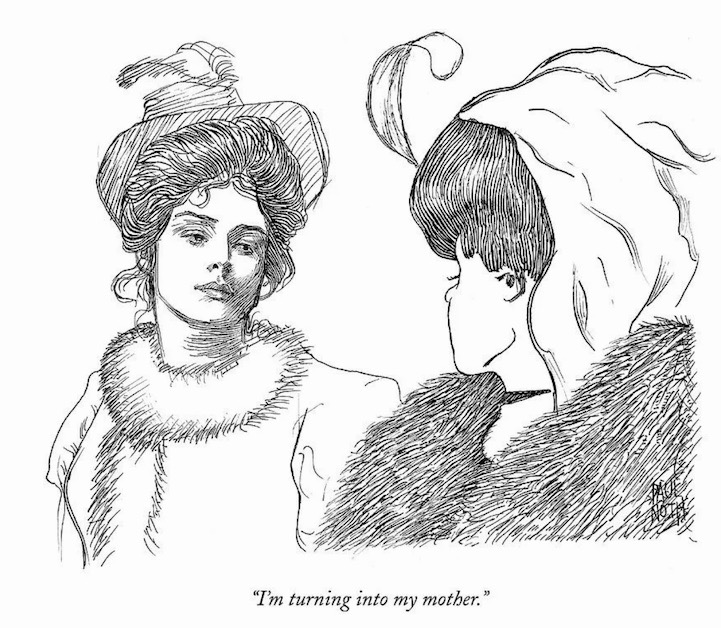
My first multi-stable percept cartoon made it into the magazine in August 2006. It featured the “My Wife and My Mother-in-Law” illusion — originally created for Puck by W.E. Hill in 1915 — shown here chatting with her more famous contemporary, Charles Dana Gibson’s “Gibson Girl.”
(#2)
It took over ten years before the Duck-Rabbit finally made its New Yorker debut in December 2014.
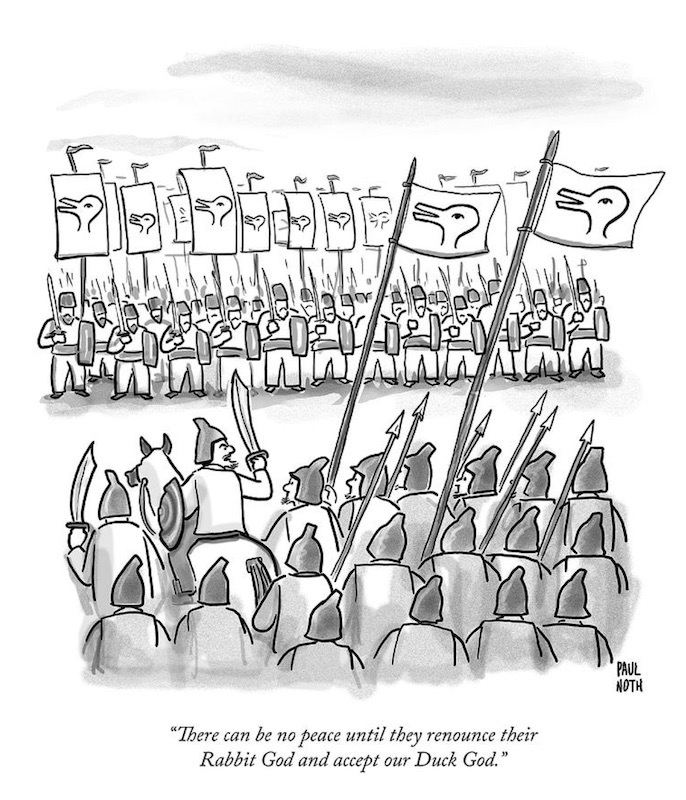 (#3)
(#3)
Then, in July 2017, both illusions teamed up:
(#4)
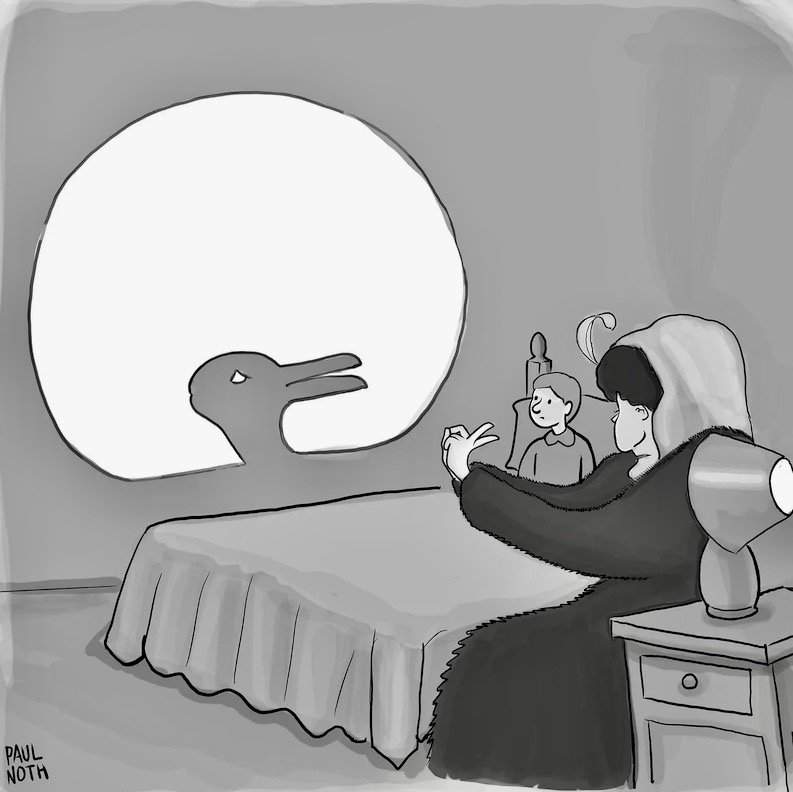
A psychologist emailed me to suggest that the bedside lamp should have been the famous Rubin Vase illusion, effectively making the drawing the Avengers of multi-stable percepts. I decided that was a bridge too far, because the vase wouldn’t really serve the joke.
One of my favorite duck-rabbit cartoons won’t be found in the New Yorker or on this Substack; instead, it is among the fifty never-before-published cartoons in my forthcoming collection, I Am Going to Eat You… And Other Awkward Truths. I hope to officially announce the book soon, but in the meantime, here is a preview:
(#5)
[And now:]
(#6)
Our first contender in this all-duck-rabbit showdown is Animal Barber.
(#7)
And our challenger — the implications of which I suggest you avoid over-analyzing — is Bi-Stable Curious.
(#8)
Leave a Reply