Or, for that matter, the eccentrically spelled elecamphane. This in reaction to a third plate from the 19th-century American Flora compendium that I’ve been posting about recently (“My wild valentine” posting here; “Daffodil poem” posting here). Which calls the plant elecamphane, but the name is elecampane, and everyone knows this plant as sneezeweed. The plate:
(#1) The usual spelling is elecampane; a net search turns up the ph spelling only on this American Flora plate — but in any case the flower is pretty clearly not elecampane (Inula helenium), but is instead a garden variety of the closely related common sneezeweed (Helenium autumnale), which is (to my eye anyway) considerably prettier than elecampane

elecampane (accented èlecampáne). From my 3/28/19 posting “Revisiting 28: van Gogh and Redon, on (among other things)
elecampane (Inula helenium), whose common and scientific names are a giant tribute to Helen of Troy.
(#2) A stand of elecampaneOn the plant and its names, from two sources. First Wikipedia:
Elecampane, Inula helenium, also called horse-heal or elfdock, is a widespread plant species in the sunflower [or daisy or aster] family Asteraceae [formerly Compositae]. It is native to Europe and Asia from Spain to Xinjiang Province in western China, and naturalized in parts of North America. [AZ: and is also available in garden varieties, which (like the wildflowers) are tall and rangy, as in #2]
… The plant’s specific name, helenium, derives from Helen of Troy; elecampane is said to have sprung up from where her tears fell. It was sacred to the ancient Celts, and once had the name “elfwort”.
And then NOAD:
noun elecampane: a plant that has yellow daisylike flowers with long slender petals and bitter aromatic roots that are used in herbal medicine, native to central Asia. Inula helenium, family Compositae. ORIGIN late Middle English: from medieval Latin enula (from Greek helenion [Helen again] ‘elecampane’) + campana probably meaning ‘of the fields’ (from campus ‘field’).
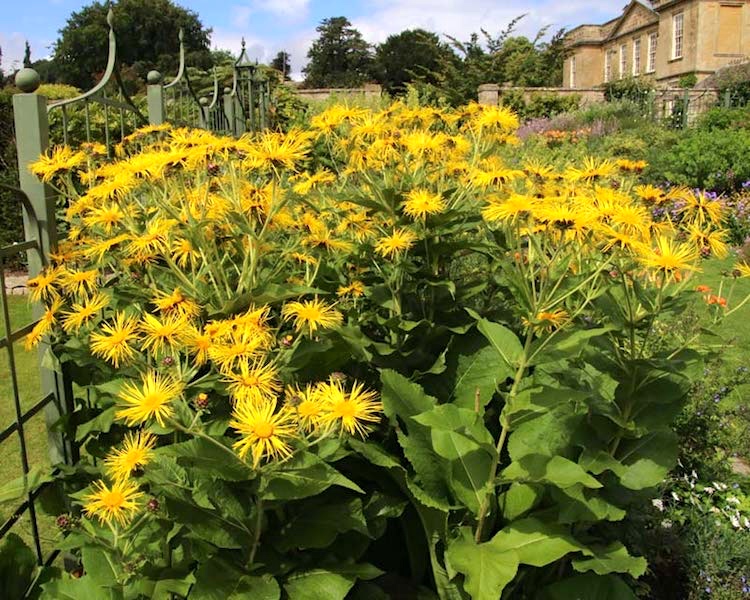
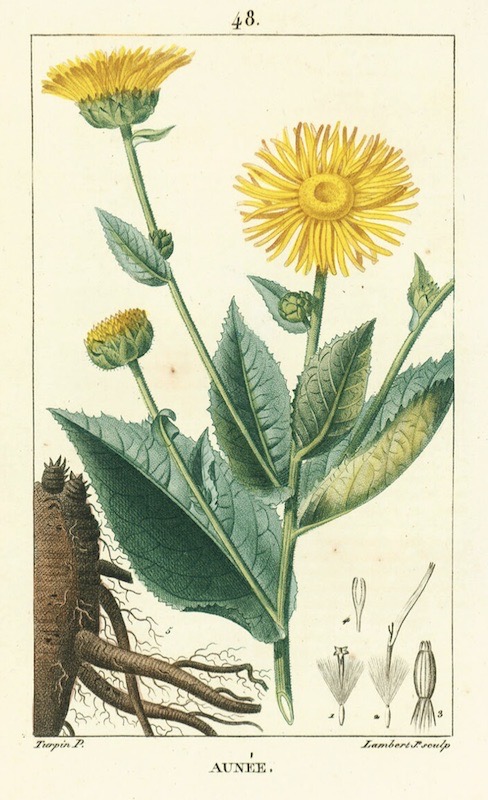
One striking characteristic of elecampane is that the rays of its composite flowers are what we call in the Pennsylvania Dutch English of my childhood strivvely (an adjective used of hair): uncombed, stringy, wild, unruly, tousled. A striking contrast to the flower in #1, with its very straight rays. And then elecampane flowers are yellow throughout, in both central disc and rays (as in #2), while the flower in #1 has bicolored rays. Other 19th-century plates of elecampane look like #2, not #1 — as here (a plate dated 1831 in a catalog of botanical plates for sale):
(#3)
sneezewort. What #1 looks like is a garden variety of common sneezewort. From Wikipedia:
Helenium autumnale is a North American species of … flowering plants in the family Asteraceae. Common names include common sneezeweed and large-flowered sneezeweed.
… The Latin specific epithet autumnale is in reference to the plant’s autumn flowering.
… This plant is widespread across much of the United States and Canada
… Common sneezeweed is cultivated as a garden perennial. There are multiple named varieties varying in color and height. ‘Pumilum Magnificum’ is a yellow variety about two feet tall. ‘Bruno’, a reddish-brown cultivar, ‘Kupfersprudel’, which is yellow/orange, and ‘Butterpat’, which is golden, all grow 3 to 3.5 feet tall. ‘Chippersfield Orange’ is up to 3 feet tall and is orange streaked with gold.
… The plant owes its [common] name to the use of its dried leaves in snuff, the inhaling of which causes sneezing — supposedly casting out evil spirits.
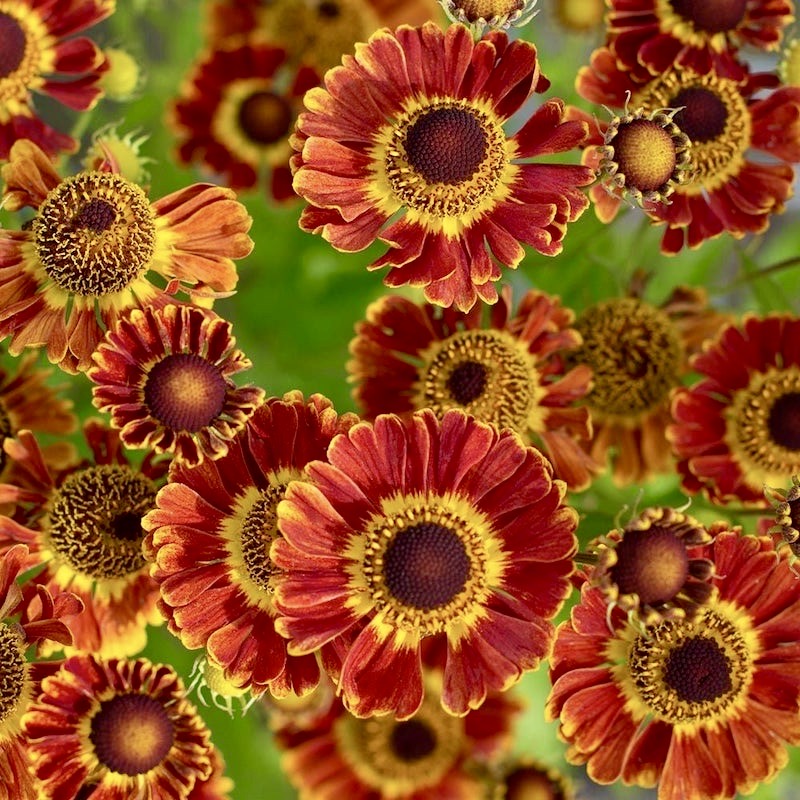
The flowers of all variants of common sneezeweed have straight rather than strivelly rays, and many of the cultivated variants have flowers that are bicolored in one way or another, some quite gorgeously. One example from the White Flower Farm catalog:
(#4) Helenium autumnale Mariachi™ ‘Fuego’ (with bicolor rays and a colored (non-yellow) central disc as well)
Leave a Reply