From The Economist, “Was Abraham Lincoln gay? A controversial documentary [Lover of Men: The Untold Story of Abraham Lincoln (2024)] re-examines the president’s relationships with men”, on-line on 10/1/24 (and in the print issue of 10/5). An article behind a paywall, but I’m reproducing it here in full (I have a subscription), so that I can, first, express my dismay at the way the label gay is used there and, second, juxtapose this treatment with my careful analysis, originally from 2005, reacting to similarly dismaying discussions of Brokeback Mountain, the story and the film. And add some further material on male friendship, normative masculinity, and male attitudes towards women and femininity.
Meanwhile, I note that as I write this, I’m wearing this t-shirt —
(#1) GAY AS FUCK in big rainbow letters
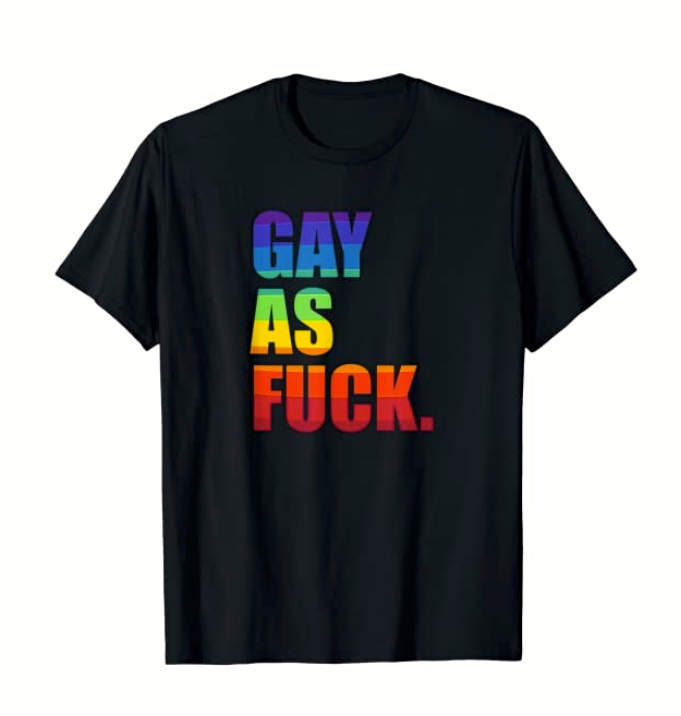
— fully understanding that its message is an affirmation of an identity that is both highly localized in time and place and social setting, and also a kind of umbrella identity, accommodating a wide variety of “gay people”.
The Economist‘s story.
During America’s civil war, in 1862, Abraham Lincoln reportedly began sharing a bed with his bodyguard, a soldier named David Derickson. The tittle-tattle was recorded in the diary of Virginia Woodbury Fox, the wife of Lincoln’s naval aide, who wrote about “a soldier here devoted to the president, drives with him, and when Mrs. L. is not home, sleeps with him”. She added: “What stuff!”
Mere gossip, you might argue — or simply a sensible idea, given the target on Lincoln’s back. But a new film, “Lover of Men”, examines four of Lincoln’s relationships, conducted from his 20s to his 50s, to claim that he had sex with men.
(#2) Poster for the film
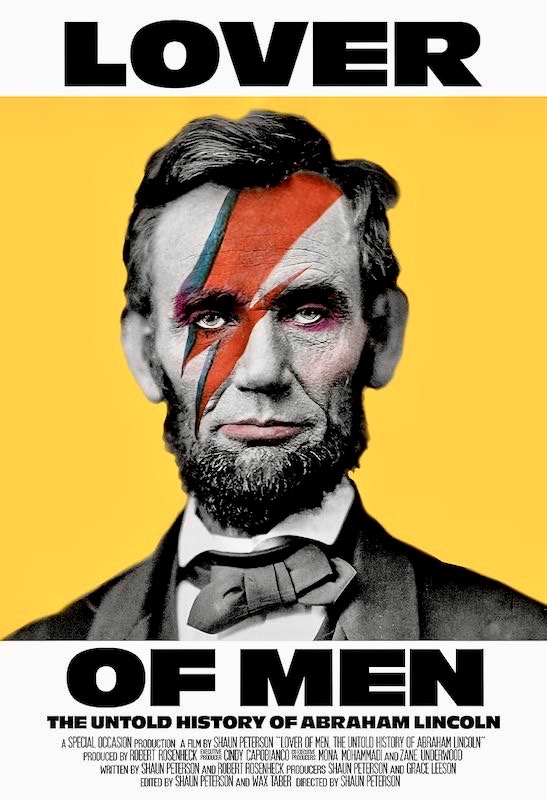
A popular comedy play, “Oh, Mary!”, presents Lincoln’s wife as his beard; its run on Broadway was recently extended until January.
In the early 1830s, while working at a general store in Illinois, Lincoln shared a cot with William Greene, his co-worker, for 18 months. The bed was cosy: in a suggestive letter, Greene remarked that Lincoln’s “thighs were as perfect as a human being could be”. In 1837 Lincoln moved to Springfield to practise law and met Joshua Speed. They shared a bed for four years. “No two men were ever more intimate,” is how Speed summarised their relationship.
Just how intimate is a touchy subject among scholars. “Such sleeping arrangements were not uncommon on the Illinois frontier,” asserts Michael Burlingame, a historian at the University of Illinois, who does not see any “proof of a homosexual relationship” in Lincoln’s bedsharing. Mattresses, after all, were expensive at the time. But once he was a lawyer Lincoln “could have afforded not only a bed but a house”, Thomas Balcerski of Eastern Connecticut State University says in the film; Lincoln was offered housing elsewhere but chose to stay with Speed.
When Speed returned to Kentucky in 1841, Lincoln became depressed. He wrote: “I am now the most miserable man living. If what I feel were equally distributed to the whole human family, there would not be one cheerful face on the earth.” The two men continued to exchange letters sharing their fears of marriage and women.
Lincoln’s aversion to women was remarked on. He “never took much interest in the girls,” Sarah Bush Lincoln, his stepmother, said. Marriage was helpful for public office, though, and Lincoln married Mary Todd in 1842. Lincoln had often signed his letters to Speed “yours forever”, but never missives to his wife.
To some, speculation about Lincoln’s sexuality is inevitable in an era obsessed with identity politics. But such surmising is not new. In a biography from 1926, Carl Sandburg, a Pulitzer-prizewinning biographer, wrote that the president had “a streak of lavender, and spots soft as May violets” (a euphemism for homosexuality). The passage was later removed.
It is only as same-sex relationships have gained legal and social acceptance that historians have reopened this line of inquiry. “Lover of Men” is part of a larger trend in revisionist history — the challenging of orthodox views and narratives. “Revisionism” can carry a pejorative connotation, and histories that dissent from conventional interpretation can be deemed heretical. Yet historians often update their understanding of the past. New methods of analysis and perspectives introduced by fresh generations of scholars alter received wisdom. For years scholars denied that Thomas Jefferson fathered children by his slave, Sally Hemings, as it was a proposition too unsavoury to stomach. Today most historians accept that he did.
Interpretations of Lincoln’s relationships have “shifted considerably”, says John Stauffer, a historian at Harvard University. Still, many scholars maintain that Lincoln’s relationships with men were platonic. One reason, according to Mr Stauffer, is that they treat Lincoln “as an almost godlike figure” and do not want to contemplate hidden sexual tastes. “Lover of Men” is unlikely to precipitate a wholesale re-evaluation of Lincoln’s legacy. Some Americans will continue to see the great patriot in much the same light as before; others will lambast the documentary’s findings as woke nonsense. In the 21st century, America remains a house divided.◼︎
AMZ on Taste Y. First the background:
This is an edited version of postings to the newsgroup soc.motss in December 2005. The original context was a discussion of aspects of the Ang Lee film Brokeback Mountain and the Annie Proulx story it was based on, particularly on the question of whether the label gay could be applied to the central characters Jack and Ennis. That’s a question about categorization and a question also about labeling, but as so often in discussions of social categories, the two questions got confounded — and, worse, the discussion ranged over the many different uses of gay, slipping back and forth from one to another.
(#2) Poster for the filmSo I embarked on an attempt to clarify things more or less from the ground up, which involved using entirely fresh terminology for the concepts involved.
In the current version I’ve eliminated references to much of the 2005 discussion, but the focus on Brokeback Mountain surfaces later in this piece.
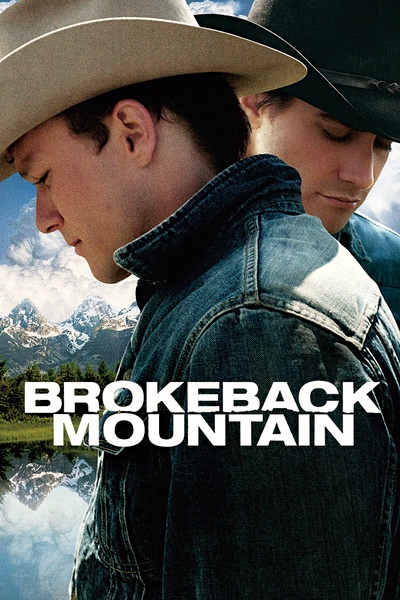
Now the text, plus a comment from Ellen Evans:
I start with a characteristic of individual men, a kind of (powerful) taste, a significant desire for physical intimacy (of one or another kind — cuddling and kissing, body play, various sorts of genital sex acts, whatever) with other males, and in adult men, significant arousal by (some) other men (what my friend Steven Levine calls DHL — dick-hardening lust). Call this Taste Y (Y as in Y chromosome).
Men can have Taste Y in varying strengths, it can coexist with Taste X, it comes in various flavors, etc. There’s lots of complexity here. Men can have Taste Y but not engage in man-man sex. Men can engage in man-man sex without having Taste Y; there are other reasons for doing so. Men can have Taste Y, even to a high degree, but not understand this consciously; people can be self-deceived. Men can have Taste Y, and recognize that they do, but believe that having Taste Y is not a particularly important fact about them. A man who has Taste Y, recognizes it, and believes that having this taste is an important fact about him is someone I’ll call a Y Man.
You can be a Y Man without having a name for your taste. You can be a Y Man without anybody’s having a name for your taste. Presumably there have been some Y Men around as long as there have been men around. You can be a Y Man in a culture that has names for your taste but reject these labels because they have additional denotations or connotations that you believe do not apply to you. You can be a Y Man and believe that no one you know is one, or even that no other man in the world is one; this is actually fairly common in Y Boys. Being a Y Man is not a social fact or state, but an individual, psychological one.
On the other hand, there is a related social category, a recognized kind of person in our culture, a kind of social identity (well, probably, several kinds, but let’s keep it simple). We view some set of men with Taste Y as constituting a class for social purposes. Call this Category G, and call a member of Category G a G Man. (Yes, I recognize that these are desperate, unlovely labels. But we need to get away from the usual labels, because they’re used in diverse, even contradictory, ways by different people on different occasions, and the concepts in question are frequently confused.)
People suppose that G Men will tend to share properties beyond having Taste Y and that they will fit into society in certain ways. G Men will tend to believe that are in some significant ways like (many) other G Men. (These are the ways social categories work in general.)
The existence of a Category G is a historically contingent fact. It’s reasonable to claim that in Western culture in general Category G is a fairly recent development, that before some period there were no G Men.
Ordinary language is generally very poor in distinguishing properties of individuals from social categories. Cowboy, for example, names a characteristic of some individual men, who do certain kinds of ranch work, and it also names a social identity. (To complicate things still further, there’s another cowboy social identity: a gay persona, or presentation of self, which might have precious little to do with ranching.) Jack and Ennis in Brokeback Mountain are cowboys in both (non-gay) senses; Ennis can’t imagine anything but the cowboy life, and Jack’s dream is not to get away from the cowboy milieu, but to ranch with Ennis. (It happens that in the story and the film, Jack and Ennis become attached to one another while they are herding sheep together, but for them that’s just another kind of farm work.)
So it is with gay. I’ve been accustomed to using this word, as applied to men, either for men with Taste Y in general, or more specifically for Y Men (putting some men in a marginal gray area of sexual taste). I myself had Taste Y from roughly the age of 7, but didn’t become fully conscious of it — I seem to have thought that it was “normal”, that other boys had this taste, this desire to embrace and kiss other boys and men, but just didn’t talk about it, though I saw absolutely no evidence of this in the behavior of the boys around me) and didn’t view it as a significant fact about me (presenting the problem: how am I going to live my life?) until my mid-20s. For G Men, I say that they have a “gay identity” or “identify as gay” (I didn’t identify as gay until my late 20s, several years after my first sexual encounters with men). But it’s hard not to slip into using the simple, single word gay to refer to the identity. Often there’s no problem; the context makes it clear.
But there can be problems. People can slip easily from the question of whether someone is “gay” to the question of whether they have a “gay identity”.
Jack and Ennis deny a gay identity, and there’s no reason I can see not to take them at their word. But it seems to me that they are unquestionably men with Taste Y, at least for each other (and in Jack’s case, rather more generally), and there’s some evidence that they are both Y Men. At several points we see really urgent desire on both men’s parts (possibly stronger in Ennis than in Jack), with kisses both passionate and affectionate. Both men articulate their aching need for one another — and what they mean by this is not just best-buddy time together, but physical intimacy everywhere on the scale from stroking and nuzzling up to fucking. Ennis notes that if they were out in the real world together, they’d sooner or later give themselves away (meaning, something like they wouldn’t be able to keep their hands (and lips) off one another), and in the final confrontation scene, Ennis asks Jack if he doesn’t think sometimes that when he goes out on the street other people can see(meaning, can recognize that he’s a man who desires other men); Jack doesn’t seem to think so, but Ennis is tortured by the thought. This seems to me like an explicit recognition that same-sex desire is an important (though unwelcome) part of his image of himself. Ennis is also mad for the smell of Jack (as well as the taste of his mouth).
[The smell thing is very poignant for me. I recently abandoned the last piece of my man Jacques’s clothing that once had his smell on it, because it didn’t any more (over seven years after he died). Now I have only the photographs, some of his belongings (some silly things that I nevertheless can’t bear to part with), some clothes of his that fit me, and all my writing about our years together.]
[Ennis is a complex character. He is, first of all, absolutely starved for affection, and gets it from Jack. Jack opens Ennis up emotionally, truly changes his life (I think that the affection he shows for his daughter, especially in the movie’s final scene, would never have been within his emotional range if Jack hadn’t brought him to life emotionally), and also triggers his desire. Ennis is depicted as desiring his wife mostly instrumentally — to get his rocks off (though he doesn’t articulate that) and to make babies (that he articulates) — and as increasingly less affectionate with her over the years, while becoming more and more affectionate with Jack.]
Ok, another complexity. So many people want to say that Brokeback Mountain is just a love story between men. (Many critics seem to have wanted to stay all the way out of the icky icky fag zone.) It is certainly that. But it seems clear to me that it is also a story of man-man desire.
This is not a matter of choosing one and only one thing. In fact, the movie is full of touches that communicate two things at once. Several times Ennis talks about “Jack fuckin’ Twist”, expressing both affection and complaint. And when Ennis explains that they can’t meet because he has to go on roundup, he needs the job, we see that this is both true on its face (Ennis is a solid, responsible guy) and also an excuse, covering a desire to escape from this painful relationship (their “thing”).
Some people say that it was entirely “natural” for Jack and Ennis to express their love for one another through sex. This is profoundly silly. If by love we mean a relationship to someone else characterized by intense pleasure in their company (probably accompanied by elevated levels of certain hormones), desire to spend time with them, admiration and respect for them, a feeling of being a better person when you’re with them, feelings of trust and support, feelings of simultaneous likeness and complementarity (Jack and Ennis are wonderfully paired on these two dimensions), etc., then there are plenty of straight guys who love one another. They call each other “best buddies”, or have no name for their relationship at all. But they’re very important to one another. Almost never do these relationships involve physical intimacy, even at the cuddling and kissing level. And that’s because these guys don’t have Taste Y. For them, there’s no natural progression from love to sex. Jack and Ennis do have (heretofore unrecognized) Taste Y, so they’re soon going down that slide into fucking.
(Of course, if your idea of what counts as love includes a component of desire, then there is such a progression. But then we’re playing with words, and I’ll go back and reformulate what I just said about “love” in terms of “being in Relation L” or something like that.)
Addendum on some Brokeback Mountain literature:
Proulx, Annie; Larry McMurtry; & Diana Ossana. 2005. Brokeback Mountain: Story to screenplay. NY: Scribner. [the story, the screenplay, and essays from each of the three writers]
Ultimate Brokeback Forum. 2007. Beyond Brokeback: The impact of a film. Livermore CA: WingSpan Press. [selections from an astonishing outpouring of viewer responses to the movie, from an on-line forum]
Stacy, Jim (ed.). 2007. Reading Brokeback Mountain: Essays on the story and the film. Jefferson NC: McFarland & Co. [essays mostly from the academy]
Patterson, Eric. 2008. On Brokeback Mountain: Meditations about masculinity, fear, and love in the story and the film. Lanham MD: Lexington Books.◼︎
October 28, 2024 at 1:33 pm |
Another aspect that’s built into the word “gay” is being happy about being homo (and/or public about being out). I’m thankful that an older generation did all the pioneering work to normalize queerness! I’m also thankful that most sitcom stereotypes of straight marriage troubles don’t apply to me — no “Does this make me look fat?” and such.
October 28, 2024 at 2:00 pm |
So zipperbear writes, with tongue in cheek. Yes, it’s truly wonderful that the woes and disaffections that bedeviled my generation have somehow dissipated for yours and later ones. You lucky kids, you.