It is my annual November pleasure to discourse some on the just-revealed winner of the AZ Award from the Linguistic Society of America; the minimal announcement from the LSA:
This award … is intended to recognize the contributions of LGBTQ+ scholars in linguistics and is named for Arnold Zwicky, the first LGBTQ+ president of the LSA.
Join the Committee on LGBTQ+ [Z] Issues in Linguistics in congratulating Robert J. Podesva on receiving this prestigious award! A Stanford Associate Professor, he researches phonetic variation and identity while actively mentoring LGBTQ+ students to promote inclusivity in academia.
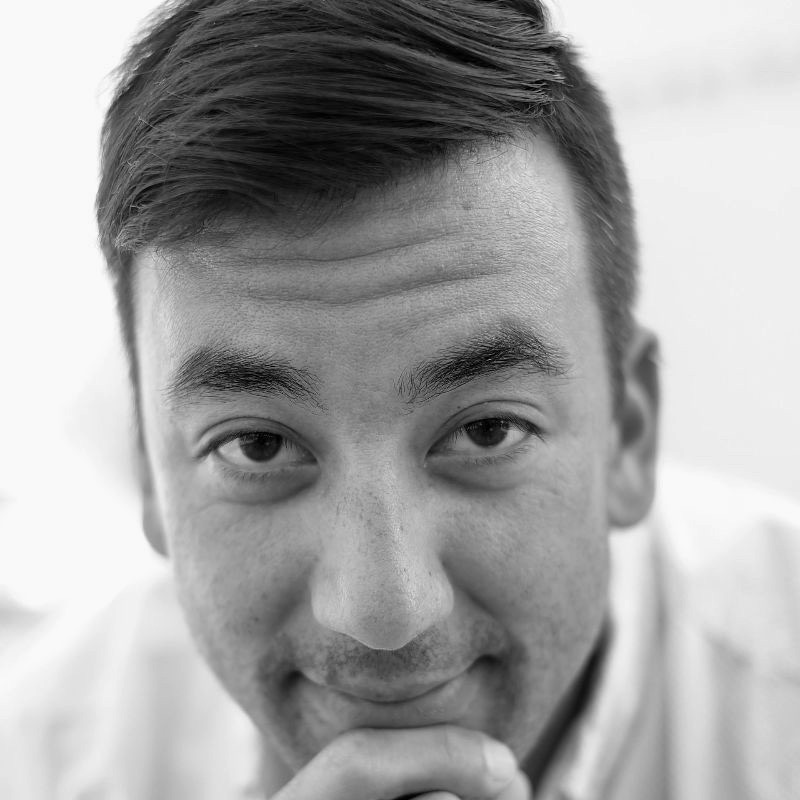
Rob is the fourth awardee — preceded by Kirby Conrod for 2022, Rusty Barrett for 2023, and Lal Zimman for 2024 — and will be officially feted at the LSA’s annual meetings in January. I always provide some encomium material for the awardees on this blog, but this year is special, because Rob is an old friend; a former student of mine (his PhD dissertation committee was Penny Eckert (chair), John Rickford, and me, which is about as socioculturally diverse a committee of three as you could concoct in the academic world); and a valued colleague of mine at Stanford. So there are four reasons for me to write this posting, and I will take some liberties in digressing into personal remarks along the way.
A preliminary declaration, in the deep sepulchral tones of officialdom: I have absolutely nothing to do with nominating and selecting people for this award. And I get not the slightest hint of how these processes are proceeding. And I offer not the slightest clue, to anyone, as to who I might fancy for the award. That’s the way things should be, and that’s the way I want them to be.
In any case, when the white smoke drifts from the chimney in Washington and the identity of the newly anointed one is revealed, I am always as (pleasantly) surprised as any random member of the LSA. This year same as the others, even though (the excellently named) Committee Z has selected someone on my, so to speak, home team.
Just the facts, man. For Stanford’s public face, in his faculty profile:
I am currently an Assistant Professor in the Department of Linguistics at Stanford University. I hold degrees from Stanford University (PhD [2006], MA [2000]) and Cornell University (BA) [1998] and have been an Assistant Professor at Georgetown University [2006 – 2011]. My research examines the social significance of variation in the domains of segmental phonetics, prosody, and voice quality. I have a particular interest in how phonetic resources participate in the construction of identity, most notably gender, sexuality, race, and their intersections. My latest projects focus on the social meaning of non-modal voice qualities in interactional contexts and sociolinguistic variation in inland California and Washington, DC. I have co-edited Research Methods in Linguistics (with Devyani Sharma), Language and Sexuality: Contesting Meaning in Theory and Practice (with Kathryn Cambpell-Kibler, Sarah Roberts, and Andrew Wong), and a special issue of American Speech on sociophonetics and sexuality (with Penelope Eckert). I live in San Francisco.
The sort-of encomium. Committee Z at some point prepared an encomium for Rob, but I haven’t seen it. But the LSA asked him for a short bio and he composed this one, which includes some of the reputation praise that belongs in an encomium:
Robert J. Podesva is an Associate Professor of Linguistics at Stanford University. His work investigates the social meaning of phonetic variation and how meanings are mobilized in constructing identity, especially intersections of gender, sexuality, and race. Among his co-edited volumes are Social Meaning and Linguistic Variation and Language and Sexuality. He is a devoted mentor who has always valued creating welcoming spaces in academia for all members of the LGBTQ+ community. He takes pride in having had many advisees who are now themselves advancing this mission.
This stuff is hard to write, saying what a fabulous person you are. So when I asked to see it, Rob managed to counter this praise of himself by first writing a moving little encomium for me:
I’ve always been inspired on a personal level by the way you live your life so authentically and on a professional level by your intellectual open-mindedness and curiosity.
Oh wow. I don’t know if there’s a name for this kind of deflection, but people have commented on how often I do it myself. It has occurred to me that this is a social routine that women and gay men are especially inclined to. Just an idle thought.
In any case, Rob went on to add something especially impressive that I think deserves a wider audience:
when I took over the undergraduate course on Language, Gender, and Sexuality upon Penny’s retirement, I was dismayed by the lack of (mainly gender and racial) diversity among the scholars who defined the field’s primary issues. So I commissioned a dozen or so trans, nonbinary, and/or racially minoritized younger scholars (grad students and junior faculty) to prepare brief videos, each of which was meant to present a perspective that they felt was missing from the canon. And I organized the course around these perspectives. The students and I both learned a lot, and a few of the students in the class expressed that they felt included in the course material in ways that they hadn’t experienced before.
Bingo. In e-mail to Rob, I added two perspectives from the gay male world that I would add; a (considerable) revision of this message:
I’d add fems and queens and pussy-boys and submissives etc. My submissive fem bottom friend Richard Vytniorgu (a British literary scholar, and a delightful man) recently published a nice book on fem bottoming as an identity, from which I have learned a lot. Also lower working class gay men; I have personal experience there (originally with a British boyfriend who was a hod-carrier in the Midlands; I was then led to what turns out to be a considerable literature on roles and gender identities in lower working class men, something academics don’t see much of).
Some details, professor, some details. Material lifted from the Wikipedia page on LGBTQ Linguistics:
… Changing styles of speech. Changing speech styles can indicate which identity individuals want to put forward as primary at a given time. Code-switching is often used to describe the switching of languages or language styles, within a sentence or conversation.
… Podesva discusses an example of code-switching where a gay lawyer is being interviewed about anti-gay discrimination on the radio, so he balances the need to sound recognizably gay and the need to sound recognizably educated, since “gay speech” tends to be associated with frivolity and lack of education.
… Multiplicity of social identity. Contemporary sociolinguistic studies suggest that styles are learned, rather than assigned at the time of birth. With that said, identities emerge in a time series of social practice, through the combined effects of structure and agency.
… Podesva (2004) is a paper that studies recordings of a gay medical student, whom he called “Heath”, as he moved through different situations in the course of his everyday life. The fact that Heath’s pronunciation of the voiceless alveolar stop, /t/, varies when he deals with different groups of people suggest not only some of gay people’s speech features, but also the multiplicity of a person’s social identity. Furthermore, Podesva also examined the relationship between the California Vowel Shift (CVS) and the gay identity, again by investigating intra-speaker patterns in a single individual, Regan, as opposed to inter-speaker variation, and found that Regan, who is a self-identified gay Asian American, realized CVS differently depending on the context, whether it be a “boys’ night out”, “dinner with friend”, or “meeting with supervisor”. This cross-situational patterns are critical in the sense that an individual’s speech styles can change not only across time, but also across space, depending on which social identity the individual is attempting to engage in under a given situation.
Personal matters. Rob’s Instagram site identifies him as:
Linguist, triathlete, baker, cat lover
along with a ton of photos mostly illustrating the triathlete, baker, and cat lover, plus a fair number of photos with Quan D. Nguyen in them — Rob’s partner (of 9 years), and now husband (of 2 years — they’ve been intending to celebrate the event publicly, but their lives have been overfull). In any case, congratulatory cheers for Rob and Quan! As I said to Rob (somewhat expanded here):
Marriage isn’t for everybody, for various reasons, but I do think it’s good to make commitments explicit and public, also that it’s especially important for LGBT people to have someone who stands with them against the threats of the world around them, also that same-sex marriages are good publicity for our community / tribe / folk (the personal really is political).
Rob added:
Quan is not a linguist — he’s a UX and product designer — but he’s astonishingly perceptive about language for someone with no linguistic training. We have common interests in cat-loving and to some extent triathlon, but he’s never once baked a dessert.
On the first point, I said:
Several of my (techie) boyfriends were like this; it’s wonderful.
On the second:
I think it’s a very good thing that each of you has interests and activities not shared by the other. (This for couples in general, not just for gay couples.)
The future. When I was elected president of the LSA, I was well aware that the honor came with a huge load — three years’ worth — of service to the society and the profession. It’s another job. Well, the honor of the AZ Award has its duties too: service on Committee Z, not so onerous, but nevertheless a genuine responsibility. No, Rob, you can’t back down now; you will be press-ganged into the work of, among other things, picking your successor. Put down your laurel wreath and get ready for a pile of CVs and the like. But not until 2025.
Leave a Reply