A surprise on Pinterest this morning: the head from a 1925 Saint Sebastian painting by Swedish artist Owe Zerge (1894 – 1983); even in the crowded field of homoerotic St. Sebastian depictions, the martyred saint in Zerge’s painting stands out as an exceptionally beautiful young man:
(#1) The Auctionet site says it’s a painting of Zerge’s (20 years younger) friend and travel companion Hugo Holmer (1915 – 2002) and reports that it was Zerge’s favorite work, one he refused to sell in his lifetime
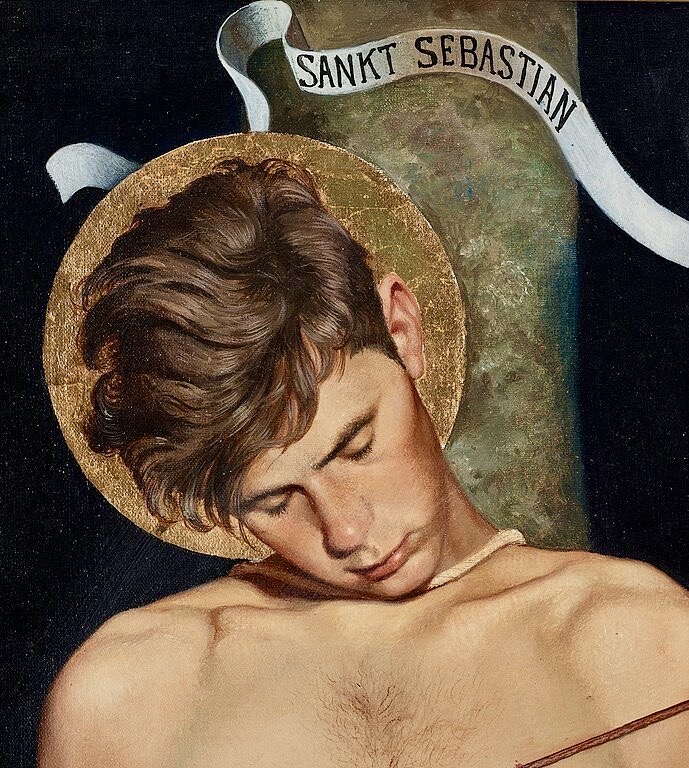
I then searched further for biographical information on Zerge, finding material only on artworld — art sales and auction — sites, all of it talking in bland terms about his artistic styles and his quiet life history in Sweden, and nothing more. Meanwhile, various gay sites have noted the evident homoeroticism in many of his works, citing especially the 1925 Saint Sebastian, a 1919 Model Act, and a 1948 Boy in American Sailor Costume (I’ll get to all of them in a little while). It could hardly be clearer that Zerge’s sexual imagination — richly manifested in his art — centered on boys and young men, and that he had a long-term affectionate friendship with Holman, who could fairly be characterized as the love of his life. Whether Zerge and Holman were sexual partners is none of our business (unconsummated passions were commonplace a hundred years ago), and there’s no evidence that I can find that Zerge ever did more than, scrupulously, appreciate young, lean male bodies. So I view it as a shame that his substantial body of homoerotic art is not better known and celebrated.
Two artworld sites on OZ. From the Artnet site, which says only that he’s
known for his abstract and surrealist paintings that often showcased vivid colors and intricate details. His work was influenced by a mix of Cubism and Expressionism, reflecting a unique blend of styles
The Stephen Ongpin Fine Art site has a more detailed life history for OZ, characterizing him in a nutshell as
a painter of portraits, figure subjects, flower pieces, landscapes and nudes
(that would be male nudes).
Four paintings. Out of dozens of possibilities, from 30 years of work. In chronological order.
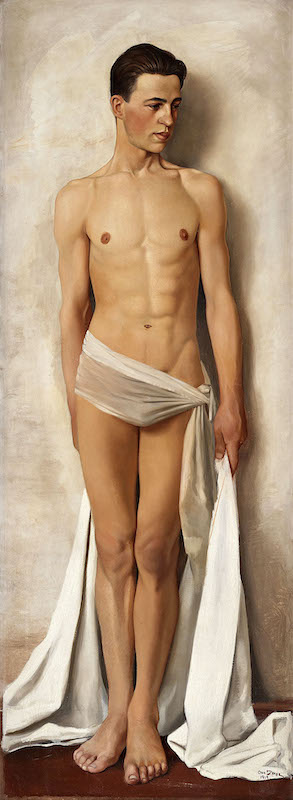
— 1 Model Act (1919):
(#2) Young, lean, and hung; but also thoughtful, and apparently artlessly charming
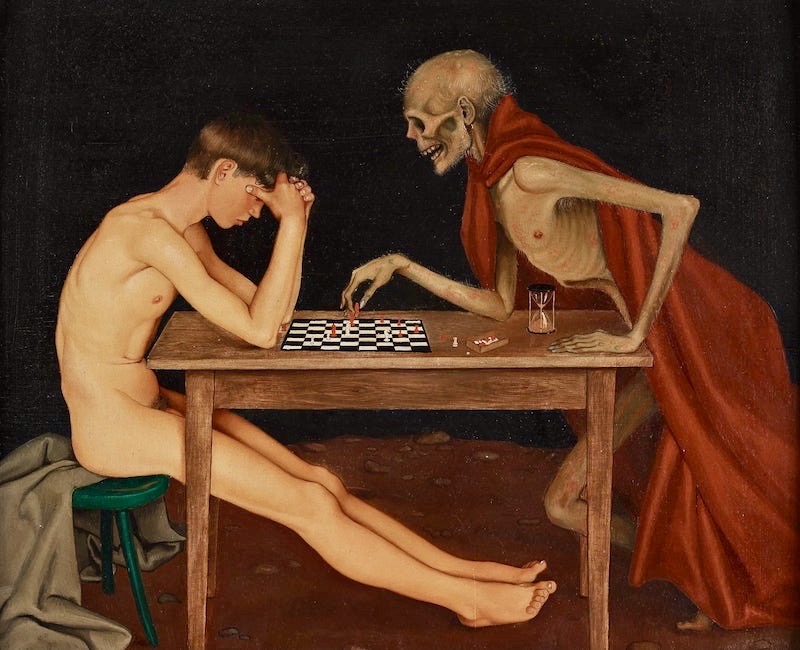
— 2 Victoria Mortis (1921), the victory of Death, with a description from the Dark Gloomy Art site:
(#3) Young, lean, and naked in the presence of DeathThis painting … by Owe Zerge depicts a young, nude man seated at a table, deeply engrossed in a game of chess. His opponent is a skeletal figure, symbolizing death, wearing a tattered red cloak. The background is stark black, highlighting the two figures and the game, which serves as a metaphor for the man’s struggle against mortality. Death’s bony hand moves a chess piece, suggesting it’s his turn, while an hourglass on the table hints that time is running out. The overall mood of the painting is somber and reflective of the existential themes of life and death.
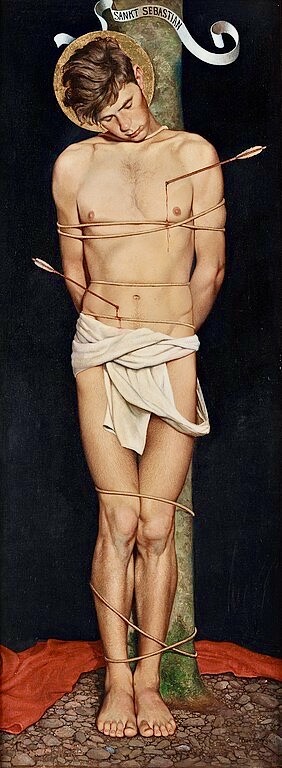
— 3 Saint Sebastian (1925), the full-length painting:
(#4) Young, lean, and beautiful; also, alas, mortally pierced by arrows
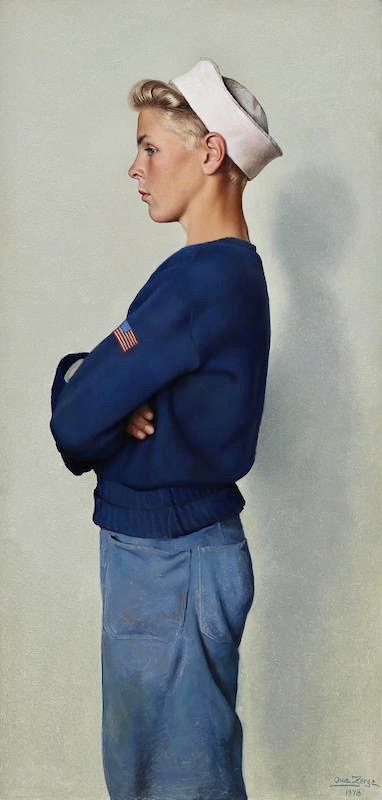
— 4 Boy in American Sailor Costume (1948), one of many boy paintings, though most of the boys are in religious garb:
(#5) Young and beautiful, but aloof (and maybe impertinent)
Leave a Reply