First the depths of bleak mid-winter, in the third week of January, then a string of luminous birthdays in the last week, to bring the promise of a rising spring.
The backdrop. From my 1/14/25 posting “The worst week of the year”, which is:
According to Susie Bright’s substack, the third week of January; for me, the Mournful Valley of Mid-Winter, in between January 17th, the anniversary of Ann Daingerfield Zwicky’s death and January 22nd, my man Jacques Transue’s birthday (both long gone now)
And then last years’s posting on the four birthdays on 1/25 through 1/27: my 1/26/24 posting “Three days to crown dark January”, about the poet Robert Burns (born 1/25), the anthropological linguist Edward Sapir (born 1/26); and the composer Wolfgang Amadeus Mozart and the writer Lewis Carroll, two agents of delight (both born 1/27):
Burns and Mozart both died young — Burns died in 1796, Mozart in 1791 — so their almost identical lifetimes were also the closing years of the 18th century. The whimsical Dodgson / Carroll was a figure of the late 19th century, Sapir of the early 20th century (he died [young too,] just a year before I was born, and I knew a number of his students).
Bawdy Burns. I was aware of Burns’s Scots verse, but first experienced it with full force (over 50 years ago) in recordings of songs from his collection The Merry Muses of Caledonia. From Wikipedia:
The Merry Muses of Caledonia is a collection of bawdy songs said to have been collected or written by Robert Burns, the 18th-century Scottish poet.
The poems and songs were collected for the private use of Robert Burns and his friends, including the Crochallan Fencibles, an 18th-century Edinburgh club, which met at the Anchor Close, a public house off the High Street. Robert Burns was introduced to the club by William Smellie, while setting the Edinburgh edition of Poems, Chiefly in the Scottish Dialect (Edinburgh Edition) in his shop in the same close. The songs in the collection were intended to be performed in a “convivial” atmosphere.
To paraphrase a bit: Meg had a muff, and the muff was rough, and Duncan Davidson stuck his highland pintle in it. (Just to keep warm, mind you.)
More details. Burns above. On to Sapir and Mozart (leaving Lewis Carroll and his droll fiction and verse for another time).
1/26 Edward Sapir. Of special significance for me: I held the Sapir Professorship at the 1999 Linguistic Institute of the Linguistic Society of America. From Wikipedia:
Sapir ca. 1910Edward Sapir (January 26, 1884 – February 4, 1939) was an American anthropologist-linguist, who is widely considered to be one of the most important figures in the development of the discipline of linguistics in the United States
Sapir was born in German Pomerania, in what is now northern Poland. His family emigrated to the United States of America when he was a child. He studied Germanic linguistics at Columbia, where he came under the influence of Franz Boas, who inspired him to work on Native American languages. While finishing his Ph.D. he went to California to work with Alfred Kroeber documenting the indigenous languages there. He was employed by the Geological Survey of Canada for fifteen years, where he came into his own as one of the most significant linguists in North America, the other being Leonard Bloomfield. He was offered a professorship at the University of Chicago, and stayed for several years continuing to work for the professionalization of the discipline of linguistics. By the end of his life he was professor of anthropology at Yale. Among his many students were the linguists Mary Haas and Morris Swadesh, and anthropologists such as Fred Eggan and Hortense Powdermaker.
With his linguistic background, Sapir became the one student of Boas to develop most completely the relationship between linguistics and anthropology. Sapir studied the ways in which language and culture influence each other, and he was interested in the relation between linguistic differences, and differences in cultural world views. This part of his thinking was developed by his student Benjamin Lee Whorf into the principle of linguistic relativity [sometimes referred to as the Sapir-Whorf Hypothesis hypothesis, though Sapir’s thinking was nuanced and tentative in a way Whorf’s was not]. In anthropology Sapir is known as an early proponent of the importance of psychology to anthropology, maintaining that studying the nature of relationships between different individual personalities is important for the ways in which culture and society develop.
Among his major contributions to linguistics is his classification of Indigenous languages of the Americas, upon which he elaborated for most of his professional life. He played an important role in developing the modern concept of the phoneme, greatly advancing the understanding of phonology.
Before Sapir it was generally considered impossible to apply the methods of historical linguistics to languages of indigenous peoples because they were believed to be more primitive than the Indo-European languages. Sapir was the first to prove that the methods of comparative linguistics were equally valid when applied to indigenous languages. In the 1929 edition of Encyclopædia Britannica he published what was then the most authoritative classification of Native American languages, and the first based on evidence from modern comparative linguistics …
He specialized in the study of Athabascan languages, Chinookan languages, and Uto-Aztecan languages, producing important grammatical descriptions of Takelma, Wishram, Southern Paiute. Later in his career he also worked with Yiddish, Hebrew, and Chinese, as well as Germanic languages
… [Personal life] Sapir was born into a family of Lithuanian Jews in Lauenburg (now Lębork) in the Province of Pomerania, where his father, Jacob David Sapir, worked as a cantor. The family was not Orthodox, and his father maintained his ties to Judaism through its music. The Sapir family did not stay long in Pomerania and never accepted German as a nationality. Edward Sapir’s first language was Yiddish and later English.
… In the years 1910–25 Sapir established and directed the Anthropological Division in the Geological Survey of Canada in Ottawa. When he was hired, he was one of the first full-time anthropologists in Canada. He brought his parents with him to Ottawa, and also quickly established his own family, marrying Florence Delson, who also had Lithuanian Jewish roots. Neither the Sapirs nor the Delsons were in favor of the match. The Delsons, who hailed from the prestigious Jewish center of Vilna, considered the Sapirs to be rural upstarts and were less than impressed with Sapir’s career in an unpronounceable academic field. Edward and Florence had three children together: Herbert Michael, Helen Ruth, and Philip. [Florence died in 1924]
… Sapir’s second wife, Jean Victoria McClenaghan, was sixteen years younger than he. She had first met Sapir when a student in Ottawa, but had since also come to work at the University of Chicago’s department of Juvenile Research. Their son Paul Edward Sapir was born in 1928 Their other son J. David Sapir became a linguist and anthropologist specializing in West African Languages, especially Jola languages.
… From 1931 until his death in 1939, Sapir taught at Yale University, where he became the head of the Department of Anthropology. He was invited to Yale to found an interdisciplinary program combining anthropology, linguistics and psychology, aimed at studying “the impact of culture on personality”. … Sapir never thrived at Yale, where as one of only four Jewish faculty members out of 569 he was denied membership to the faculty club where the senior faculty discussed academic business.
At Yale, Sapir’s graduate students included Morris Swadesh, Benjamin Lee Whorf, Mary Haas, Charles Hockett, and Harry Hoijer, several of whom he brought with him from Chicago. Sapir came to regard a young Semiticist named Zellig Harris [at the University of Pennsylvania] as his intellectual heir, although Harris was never a formal student of Sapir. [Harris went on to direct the PhD dissertations of (among others) Noam Chomsky, Aravind Joshi, Naomi Sager, Charles Ferguson, Fred Lukoff, Lila Gleitman, and Ellen Prince. I continue this roll call to get to people mentioned on this blog — and to those names I add those of my FB friends Rachel Hockett (daughter of Charles) and Benjamin Donguk Lukoff (son of Fred)]
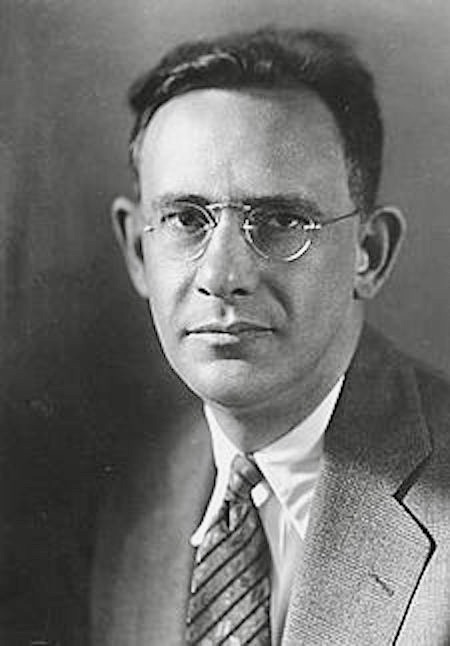
Sapir was also an essayist, poet, and composer. Clearly someone of great charm. I wish I’d gotten to know him. Sapir died young (of a heart attack, at the age of 55), so though he was 5 years younger than my grandfather Melchior Arnold Zwicky (born 1879, died 1976), who I knew well, he died before I was born. But I got to be the Sapir Professor.
1/27 Wolfgang Amadeus Mozart. What is there to add? Well, yesterday evening I went to sleep for a long night of Mozart wind compositions on my Apple Music, getting up (as is my custom) roughly every hour to whizz. Normally this takes less than a minute, and I can go back to sleep in seconds, but at 8:30 last night what was playing was Mozart’s Quintet for Piano and Winds, really a piano concerto with a wind quartet as orchestra, and it’s just fabulous, so I had to wake up and actually listen to it, then go to my computer to get information about it, and then there was an hour’s break from my sleep.
From Wikipedia:
The Quintet in E♭ major for Piano and Winds, K. 452 [K. 451 is a wonderful piano concerto that I’ve actually played], was composed by Wolfgang Amadeus Mozart, who entered it in his thematic catalogue of his works on March 30, 1784. It was premiered two days later at the Imperial and Royal National Court Theater in Vienna. Shortly after the premiere, Mozart wrote to his father that “I myself consider it to be the best thing I have written in my life.” It is scored for piano, oboe, clarinet, horn and bassoon.
In three movements: I Largo – Allegro moderato; II Larghetto; III (Rondo) Allegretto. You can listen here to a 1986 performance by Alfred Brendel (piano), Heinz Holliger (oboe), Eduard Brunner (clarinet), Hermann Baumann (horn), and Klaus Thunemann (bassoon), with an on-screen score.
Surely one of the best things he had written up to that point (the combination of timbres alone is delicious, and the composition is extraordinary, Mozart at his most delightful), but some marvelous stuff — The Marriage of Figaro, in particular — was still to come. It was a truly fine time for him, in any case. You wish those years could just have gone on for a long wonderful life for him (as they did for Haydn, and much later, for Dvořák).
January 27, 2025 at 7:04 am |
I am reminded of another upcoming birthday of significance to music lovers, namely that of Franz Schubert (1/31), who died even younger than Mozart, and was writing quite extraordinary and forward-looking music in his last years. I can’t help thinking that 19th-century music history could well have been very different if Schubert had lived even another 20 years.
The Mozart wind quintet is indeed a wonderful piece – he was also writing many of his great piano concertos around the same time – but, since I listen to classical-music radio a lot (Boston’s WCRB or New York’s WQXR), I hear it a little too often. When one of the hosts says that a Mozart quintet is coming up, I have learned not to anticipate the possibility that they will actually play one of the truly remarkable late string quintets; it’s always either the wind quintet or the clarinet quintet, not that there’s anything wrong with either of those.
January 27, 2025 at 10:14 am |
Yes, yes, Schubert; just astounding music. Certainly to add to my calendar, and I’ll try to post for his birthday (but my life is indescribably in ruins, and I might be reduced to posting little things just to show I’m still alive).
January 27, 2025 at 11:20 am |
You could try WFMT in Chicago. They have different go-to pieces than the east coast stations.
January 28, 2025 at 7:43 am
Gary: Good suggestion, thanks. It’s slightly disconcerting to get New York weather forecasts in eastern MA (they get almost the same weather as us, but not quite); we could safely ignore Chicago ones.
We don’t have internet radio in the car, so we’re stuck with WCRB there (I haven’t been happy with the choices on Pandora and the like, and they don’t always work).
January 28, 2025 at 8:44 pm |
Robert, at least in winter Chicago forecasts make you feel warm. The wrong time one hour off is disconcerting though. If your data plan is not too draconian you could turn on the hotspot on your phone. Then the world’s your oyster radiowise.