I haven’t been coping well with daily life for a while now, but see no reason to issue fresh bulletins on my anxieties, incapacities, and infirmities in these difficult times, so I’ve been posting on things that entertain me and might entertain you, often just the wispiest of notes in the spirit of the Pythonic Mary, Queen of Scots. As here, with a report on what I had for lunch today — and yesterday too, but it was much better the second day.
Better The Second Day, a general principle for most hot soups, and a variety of other foods too. In this case, for lamb and spinach curry (with fenugreek leaves): so, palak mathi gosht plus a lot of basmati rice, from Zareens (a Z! a good omen) Indian restaurant on Broadway in Redwood City CA:
palak ‘spinach’; methi ‘fenugreek leaves’; gosht, literally ‘meat’, specifically referring to goat, mutton, or lamb
From the Foodtalk site on “Lamb Palak / Saag Gosht (Lamb and Spinach Curry)”:
From NOAD: noun saag (also sag): Indian spinach or another leafy vegetable [AZ: often used for any combination of chopped leafy greens]
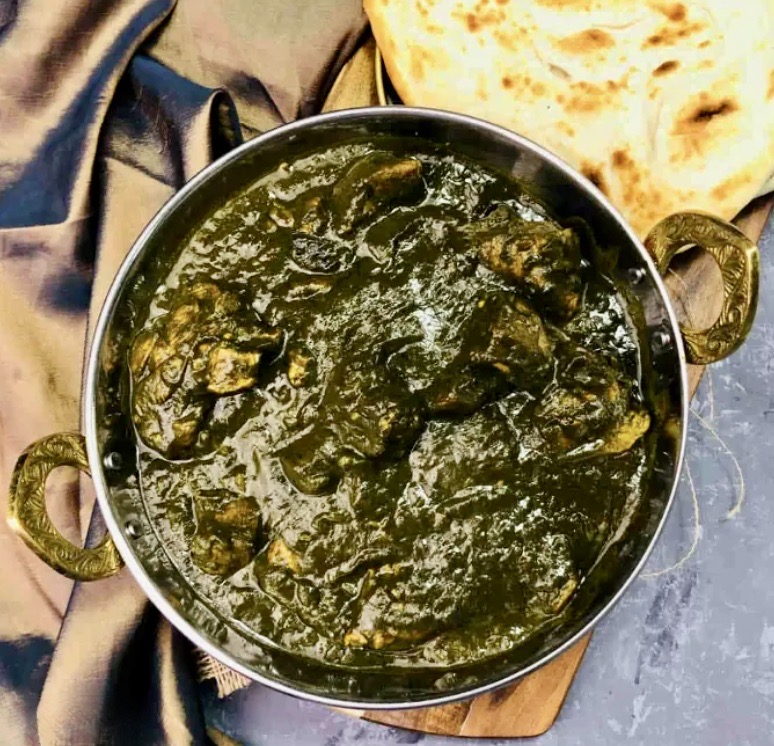
Yesterday, Zareen’s palak mathi gosht was ok; today, reheated, it was deeply flavorful.
April 26, 2024 at 6:54 am |
Dear Mr Zwicky,
Greetings from Bunbury, Western Australia!
I have lurked on your blog for years and I would never have expected that my first comment would be about food, rather than linguistics, but there ya go! I first made saag/palak a few years ago and have made many since – and I agree it is about the best example of a ‘better the next day’ dish I have ever encountered.
I enjoy using different plants in saag – usually a blend of silver beet or spinach beet leaves with whatever else is around, including weeds such as sow thistle, white goosefoot, soursob (oxalis) and pigweed (an amaranth) as well as the leafy tops of carrot or turnip or other brassicas. The white goosefoot which is also known as lamb’s quarters is a traditional inclusion in northern India and is known as bathua ka saag. I’m blessed to have this marvellously nutritious weed in seasonal abundance in my yard.
I haven’t ever used spinach in saag, because it’s harder to grow in my warmer climate and because I’m too miserly to buy it either fresh or frozen. I plan to grow fenugreek this year so that I can try saag methi to round out my repertoire.
I enjoy reading your blog and appreciate your tenacity and good humour in spite of your shockingly poor health. More strength to your elbow, sir!
Kind regards,
Glenn.
April 26, 2024 at 9:36 am |
A delight to hear from you (I have very little sense of my audience for this blog, so I enjoy hearing from readers, especially if they have interesting things to say). Two side matters:
First, call me Arnold (or I’ll have to call you Mr. Brockman).
Second, I realize you live in an actual Bunbury, in WA, but for me “Bunbury” inevitably comes with an Oscar Wilde resonance. But you’re probably used to that.
Then: wonderful to hear about saag made from beet greens and wild plants (especially the excellent lamb’s quarters, Chenopodium album). I live in a Mediterranean climate, with cool winters that are excellent for growing spinach (there are lots of winter crops), so I get plenty of spinach, even if I don’t grow it myself. (My actual gardening is minimal.)
Finally, thanks for your encouraging good words.