In my posting yesterday (3/26), “A fortuitous cold soup” Safeway’s house-brand tomato bisque combined with plenty of chopped clams (and some sriracha sauce for spiciness), served unheated (eventually, actually chilled): a (cold) clam-tomato bisque. With a bow to the movie The Wizard of Oz: tomatoes and spices and clams, oh my!
Which I will build up to by starting with bisques, and then running through
tomato juice, tomato soup, tomato bisque
clam juice, clam soup, clam bisque
and going on, at the urging of Tim Evanson on Facebook, to another meeting of clam with tomato, the commercial product Clamato, created as the basis for cocktails.
Background: bisques. From Wikipedia:
Bisque … is a smooth, creamy, highly seasoned soup of French origin, classically based on a strained broth (coulis) of crustaceans. It can be made from lobster, langoustine, crab, shrimp, or crawfish. The French bisque is one of the most popular seafood soups around the world. [AZ: call this seafood bisque]
Although originally applied to seafood soups, the use of the word has expanded to mean any thick soup made with cream, such as bisque of tomato or bisque of mushroom. [AZ: call this cream bisque] It is differentiated from a chowder, also a seafood soup, by its consistency, a chowder being less smooth and more chunky.
In Tomatoland.
1 from Wikipedia:
Tomato juice is a juice made from tomatoes, usually used as a beverage, either plain or in cocktails such as a Bloody Mary, a Caesar, or Michelada
Many commercial manufacturers of tomato juice also add salt. Other ingredients are also often added, such as onion powder, garlic powder, and other spices.
2 from Wikipedia:
Tomato soup is a soup with tomatoes as the primary ingredient. It can be served hot or cold, and may be made in a variety of ways. It may be smooth in texture, and there are also recipes that include chunks of tomato, cream, chicken or vegetable stock, vermicelli, chunks of other vegetables and meatballs. Many countries have their own versions of tomato soup which all vary in taste, portions and ingredients.
The first published recipe for tomato soup appeared in N. K. M. Lee’s The Cook’s Own Book in 1832. Eliza Leslie’s tomato soup recipe featured in New Cookery Book in 1857 popularized the dish. The Campbell Soup Company later helped popularize the dish with the introduction of condensed tomato soup in 1897.
3 and then, a tomato (cream) bisque, as supplied by Safeway.
In Clamland.
1 from Wikipedia:
Clam juice is a broth derived from steamed clams, which can be consumed on its own or used as an ingredient in various dishes and beverages.
… Clam juice may be prepared fresh for consumption, or purchased in prepared bottled form. Some companies mass-produce prepared clam juice, which is made by steaming fresh clams in water with salt, collecting the extracted liquid known as clam extract or clam liquor, and then filtering it.
2 from Wikipedia:
Clam soup is prepared using clams as a main ingredient. Additional ingredients can include carrot, celery, onion and other vegetables, vegetable broth or stock or other types of broths and stocks (such as fish stock) seasonings and spices, salt and pepper. Fresh or canned clams can be used to prepare the dish. Clam chowder is a well-known clam soup, but not all clam soups are chowders or have the thick consistency that chowders typically possess.
3 and then, clam (seafood) bisque, a thick, smooth creamy, highly seasoned seafood bisque with bits of clam in it); and clam-tomato (cream) bisque — tomato (cream) bisque with lots of chopped clams in it, the soup I assembled two days ago.
In Clamatoland. Tim Evanson on Facebook:
— TE: I was sure this was going to swerve off into a discussion of Clamato, but it never did.
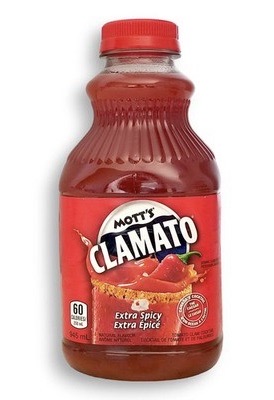
— AZ > TE (later): Well, now it is. From Wikipedia:
Clamato is a commercial drink made of reconstituted tomato juice concentrate and sugar, which is flavored with spices, dried clam broth and MSG. It is made by Mott’s. The name is a portmanteau of clam and tomato.
… Clamato was produced in its current form beginning in 1966 by the Duffy-Mott company in Hamlin, New York, created by Francis Luskey, a chemist, and another employee working out of California who wanted to create a Manhattan clam chowder style cocktail by combining tomato juice and clam broth with spices. The employees named the new cocktail “Mott’s Clamato” and secured the trademark for the new brand.
… In recent years, the Clamato label was updated and no longer shows the image of a clam, an attempt by the manufacturer to downplay the seafood aspect of the beverage.
Earlier on this blog:
— in my 4/22/14 posting “The bloody Mary”:
Rosie Schaap on the Bloody Mary:
All it took was a good slug of Smirnoff …, a can of tomato juice (or, as my mother sometimes preferred, Clamato) [mixed vegetable juice, like V-8, is also common… ], a shake of Lea & Perrins Worcestershire sauce, a heaping teaspoon of grated horseradish, a few shakes of black pepper, a good stir with ice, a lemon wedge for garnish, and that was that.
— in my 5/25/17 posting “Light and sometimes mixed”:
from Emily Rizzo:
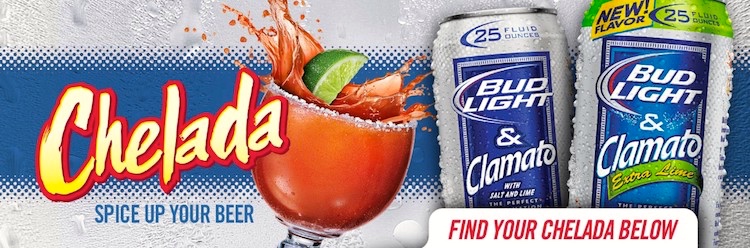
with chelada (a variant of michelada), a type of beer cocktail — that is, a mixed drink with beer as one of its ingredients.
— in my 3/26/18 posting “The Caesar cocktail”:
the Canadian answer to the Bloody Mary. From Wikipedia:
A Caesar is a cocktail created and primarily consumed in Canada. It typically contains vodka, a caesar mix (a blend of tomato juice and clam broth), hot sauce, and Worcestershire sauce, and is served with ice in a large, celery salt-rimmed glass, typically garnished with a stalk of celery and wedge of lime. What distinguishes it from a Bloody Mary is the inclusion of clam broth.
(It seems that everything goes better with clam in it.)
Leave a Reply