[4/25 disclaimer. In the constant upheavals of my life and the world around me, I’m now just picking random stuff to post about, from the 60 or 70 items in my ever-expanding queue — whatever catches my fancy at the moment. Don’t try to make sense of it as a whole.]
A little tribute to the linguist Sonja Lanehart, because I admire her work, but also — current relevance in my country — because she’s a vivid embodiment of the principles of diversity, equity, and inclusion in research, teaching, and writing. She’s a distinguished authority, so she’s the editor of the 2021 Oxford Handbook of African American Language and similar authoritative works. She’s also the author of the 2002 Sista, Speak! Black Women Kinfolk Talk about Language and Literacy — a remarkable piece of narrative anthropology from personal experience (a variety of participant-observer sociology / anthropology that I have ventured into myself, but in the gay male world rather than the Black female world).
(#1) SL in a recent photo (from the Univ. of Arizona)
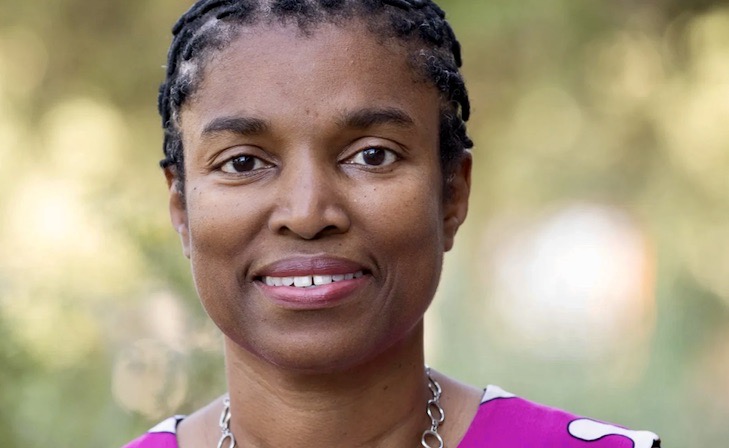
On SL from Wikipedia:
Sonja L. Lanehart (born November 4, 1966) is an American linguist and professor of linguistics in the College of Social and Behavioral Sciences at the University of Arizona who has advanced the study of language use in the African American community. Her work as a researcher, author, and editor includes African American English, education, literacy, identity, language variation, women’s languages, intersectionality, and inclusivity within the African American community. Lanehart’s sociolinguistic orientation prioritizes language as a phenomenon influenced by sociocultural and historical factors. She also utilizes the perspectives of Critical Race Theory and Black feminism in her work. Lanehart was the Brackenridge Endowed Chair in Literature and Humanities at the University of Texas at San Antonio from 2006 to 2019
… Lanehart cites her family as having a significant influence on her studies. Her book Sista, Speak! (2002) presents the narratives of five African American women all immediately related to Lanehart (including Lanehart herself). Their struggles with literacy, due to a lack of education and opportunity, motivated her to create an outlet in which their stories could be told, and so she prioritizes supporting those closest to her through her work.
More on this book, from the publisher’s blurb on Amazon:
(#2) The Univ. of Texas Press book (from 2002; that was 23 years ago)The demand of white, affluent society that all Americans should speak, read, and write “proper” English causes many people who are not white and/or middle class to attempt to “talk in a way that feel peculiar to [their] mind,” as a character in Alice Walker’s The Color Purple puts it. In this book, Sonja Lanehart explores how this valorization of “proper” English has affected the language, literacy, educational achievements, and self-image of five African American women — her grandmother, mother, aunt, sister, and herself.
Through interviews and written statements by each woman, Lanehart draws out the life stories of these women and their attitudes toward and use of language. Making comparisons and contrasts among them, she shows how, even within a single family, differences in age, educational opportunities, and social circumstances can lead to widely different abilities and comfort in using language to navigate daily life. Her research also adds a new dimension to our understanding of African American English, which has been little studied in relation to women.

Leave a Reply