On awakening this morning, I had the Kuder Interest Inventory stuck in my head.
Would you
RATHER: build a birdhouse OR: draw a basket of kittens?
An invented example of the sort of test item that the Kuder offered (when I took it in grade school). The aim of the test was to gauge your interests so as to direct you to a good career choice.
(If I remember correctly, the suggestion for me was that I should consider teaching or chemistry.)
(It’s only too easy to make up preposterous or indecent Kuder items, though it’s fun.)
From the kuder.com site on “The Legacy of Dr. Frederic “Fritz” Kuder” on 2/14/13:
Dr. Frederic Kuder (1903-2000) was one of the premier innovators of vocational assessments. His 1938 Kuder Preference Record became one of the most-used career guidance instruments in schools and colleges, and was taken by more than a million people worldwide over the course of several decades.
Following the success of the Preference Record, Kuder turned his attention to developing an occupational interest inventory, using selected preference items, but scoring for a range of occupations. He eventually combined the preference record and the occupational inventory into a single form, the Occupational Interest Survey.
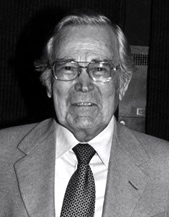
From the 2001 obit on the American Psychological Association site, the story of a life in psychometrics and statistics:
Frederic (Fritz) Kuder died at his home on Sanibel Island, Florida, on April 2, 2000. He was born June 23, 1903. Like many psychologists of the era, he was the child (the first) of a minister, Frederick A. Kuder, and his wife, Elizabeth Laiblin Kuder.
Kuder liked to say that his life was formed by many serendipities. He met his wife of 68 years, Dorothy Linn DeBeck, as a result of an ambivalently accepted invitation to a church discussion group. He later learned that she almost did not attend the meeting either.
As a junior transfer student from Wooster College to the University of Arizona, Kuder became a close friend of one of James McKeen Cattell’s sons. After his graduation in 1925 with a degree in English, this association led to a job as an editorial assistant with Cattell’s Science Press. The fledgling Psychological Corporation, formed by Cattell and E. L. Thorndike, was located down the hall. From his desk, Kuder sometimes observed David Wechsler working on a mock-up of an automobile seat and steering wheel to develop a test for drivers.
Kuder was attracted to the study of vocational guidance and in 1929 earned a master’s degree in education from the University of Michigan. His adviser was George E. Meyers, one of the first presidents of the National Vocational Guidance Association. Kuder then worked in the personnel department of Procter & Gamble Company, where he collaborated with Marion Richardson to develop a scale to measure with greater reliability the effectiveness of sales personnel.
Kuder continued his studies with Herbert Toops at Ohio State University, earning his doctoral degree in 1937. He began to tinker with an interest inventory there, but, like virtually all of Toops’s students, he did his dissertation research on the Ohio State Psychological Examination. His topic was the construction of valid achievement test items.
After graduation, Kuder immediately joined Richardson, Dael Wolfle, Harold Gulliksen, and Dorothy Adkins as a university examiner at the University of Chicago. They prepared placement and comprehensive exams under the direction of L. L. Thurstone, carrying out Chancellor Robert Hutchins’s higher education reforms. It was here that Kuder collaborated with Richardson to publish the widely used KR-20 and -21 formulas for estimating the reliability of scales. Both had been working independently on the concept and coincidentally learned of each other’s work.
Kuder held several positions with the federal government during World War II. In 1948, he joined the psychology department at Duke University, from which he retired in 1964.
… Kuder was perhaps the last of the prominent mid-20th century psychometricians who added so many formulas, tests, and inventories to the tools of psychology. In his later years, he preferred simply to describe his life as being dedicated to helping young people find satisfying careers.
July 11, 2015 at 8:05 am |
“(It’s only too easy to make up preposterous or indecent Kuder items, though it’s fun.)”
Thanks! Now I have a terrific new activity for my fall semester research methods class!
July 11, 2015 at 3:48 pm |
I recall taking the Kuder Preference Record test when I was in high school in 1954. It had a feature it called a V-score: if the V-score was too low, it was because you were marking items at random, if too high, you were trying to bias the result. I scored so high for interest in science that I very nearly tripped the V-score.
I suppose the testers made money off it. I wonder if it did anybody else any good.
July 30, 2024 at 7:32 am |
I had to take the Kuder in ninth grade as part of my civics (social studies) class. When the time came to tally up the scores, my result was “military service”. I was taken aback, as I never had been attracted to the military as a career choice. In fact, there were several vocational options that seemed far more attractive to my 15-year-old mind. So I was quite skeptical of the test. Fast forward to 1970. Done with college, no more student deferment. (This was during the Vietnam era when we still had the draft.) The inevitable happened. I got a little love letter from old Uncle Sam informing me that my number had come up and “inviting” me to join the military. To make a long story short, I served 3 years in the Army and it was most definitely NOT the career for me! I kept my nose clean and got a few promotions, and an honorable discharge when I had served my time, but I couldn’t WAIT to get out of the army. From then on, the Kuder had zero credibility as far as I’m concerned. Back then, there was a common stereotype that a military career was for losers who couldn’t cut it in the real world. I suspect that my test answers somehow didn’t form a consistent pattern and the Kuder people were using “military career” as a catch-all for those whom they couldn’t neatly pigeonhole into something else.
July 30, 2024 at 9:12 am |
The idea might have been that if you went into the military, you would “find yourself”, discover what you were good at and what would satisfy you. (This actually happens for some people, it’s not a totally crazy idea.)