From Andrew Garrett on Facebook today:
— AG: Glad to be in this (new, despite the ostensible date) issue of AL. The press perpetrated an amusing typo in Julie Marsault’s title:
(#1) Graduated consonants
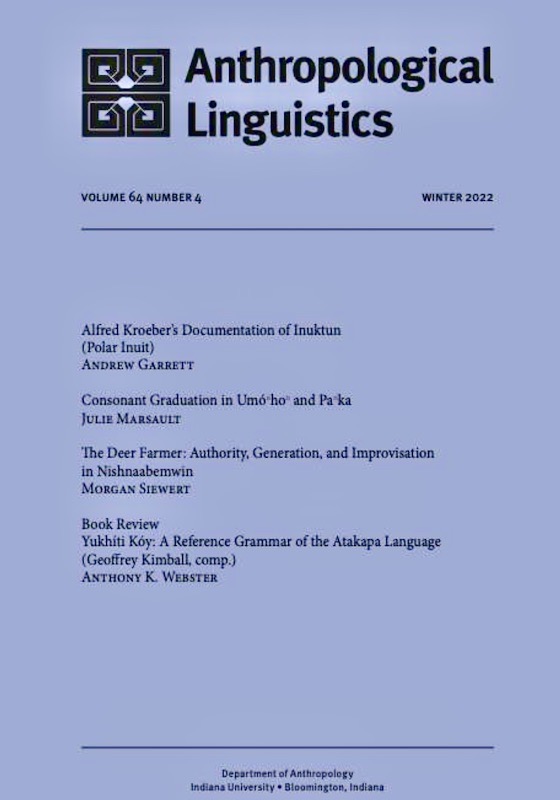
I went right for the typo (quite likely to have been introduced by a spellchecker during the layout stage for the cover [but now see Michael Vnuk’s cogent critique of this idea, in his comment below]):
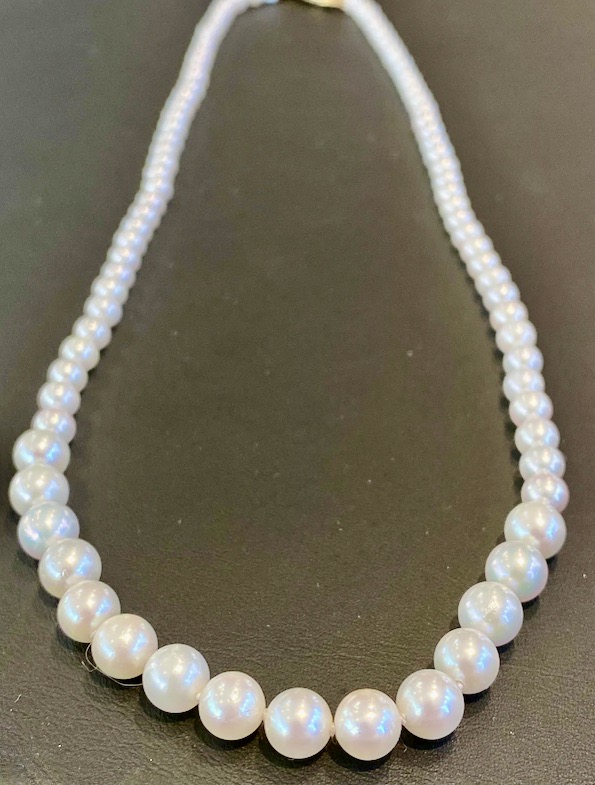
— AZ: Clearly, graduated consonants are like graduated pearls; they come in a series of sizes: bigger, louder, noisier. I can hear them now.
Graduated pearls. An illustration from the Barry Peterson Fine Jewelers website:
(#2) [copy from the company:] This 16″ necklace features 3.5-6.5mm round white cultured Akoya pearls with larger pearls centered in front, graduating smaller toward a 14k yellow gold fishhook clasp.
An alternative understanding. From Bill Poser:
— BP: Oh. I thought they were consonants that could be used in tertiary education.
When you have graduated from (or, for some speakers, have been graduated from) secondary education and then continue your schooling, you have entered tertiary education (usually referred to in the US as higher education).
September 22, 2025 at 6:30 am |
Or they could be consonants that have themselves completed a level of formal education. (It took me a moment to figure out what the title was supposed to be – I assume it was supposed to be “gradation”.)
September 22, 2025 at 7:07 am |
😀 “consonants that have themselves completed a level of formal education”.
But yes, the technical term gradation, referring to consonants graded according to “strength”, typically just weak (lenis) vs. strong (fortis).
September 22, 2025 at 3:12 pm |
You suggest that the typo is ‘quite likely to have been introduced by a spellchecker during the layout stage for the cover’, but I don’t think so.
From the cover, it is clear that the journal contains many uncommon words and characters. Leaving a spellchecker to automatically change words is always fraught with danger. In this case, it would make a mess of the journal, and would have probably been obvious from other introduced errors on the cover. So I don’t think it was the spellchecker’s fault. Furthermore, ‘gradation’ is a correctly spelled, moderately common word. There is no need for a spellchecker to change it.
Because of the uncommon words and characters, whoever set up the cover (which I am assuming was done in a word processor) would be just copying and pasting from the article to the cover, rather than retyping, in order to avoid introducing errors. (Well, I would copy and paste.) My guess is that someone else looked at the cover later and assumed, without checking the article itself, that there was a misspelling and made the change.
September 22, 2025 at 4:05 pm |
Thank you for this critique of my too-hastily written speculation.