Archive for the ‘Ambiguity’ Category

Aged anchovy salt

December 27, 2024

🎁 Boxing Day 🎁 — also St. Stephen, with his feets uneven — coming a day late, because life has been very difficult for me, and postings have piled up so high I’m not sure I can ever get to them, so I’ve picked something I know I can get done, so that this dark, rainy, and excruciatingly painful low-air-pressure day will not be a total loss

I bring you an e-mail message from Victor Steinbok on 12/25, about this ad for Spice Tribe (website here), a San Francisco-based on-line spice store dedicated to mindful cooking:


(#1) VS wrote: Facebook has offered another example of what I used to refer to as parenthetical ambiguity. Is it [aged anchovy] [salt] or [aged] [anchovy salt]. From a culinary perspective, the latter makes no sense (aging salt doesn’t change it). But that doesn’t mean there’s no built-in ambiguity.

(more…)

The Chapel Hill messiah

December 16, 2024

An invitation on Facebook on 12/13 from linguist Jennifer Arnold, performing her musical role (crucial phrase underlined):

If you like to sing, come to the Chapel Hill Messiah open sing tomorrow evening! I’ll be in the viola section.

My response:

I had a confused moment when I thought you’d be singing the praises of the Messiah of Chapel Hill (whoever he is; I’m woefully out of touch with things, and thought I must have missed the rise of a Prince of Peace in the New South).

(more…)

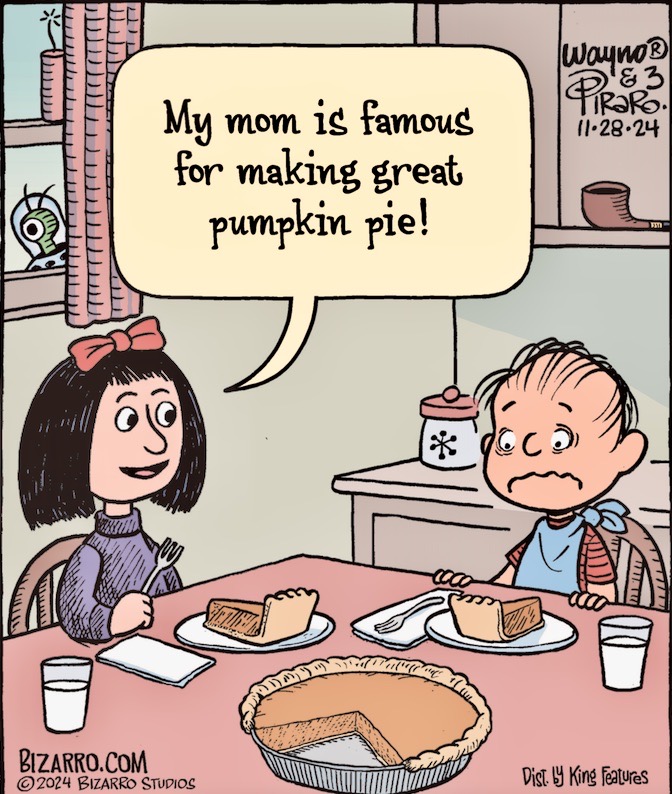
great pumpkin pie

November 28, 2024

The Wayno Bizarro for today, 11/28, is an exercise in cartoon understanding:


(#1) Wayno’s title: “Horrifyingly Tasty”; I would have suggested the more bloodthirsty “Eat Your Gods” (if you’re puzzled by the odd symbols in the cartoon — Wayno says there are 3 in this strip — see this Page)

But it’s all totally baffling unless you recognize the references to Charles Schulz’s comic strip Peanuts; you really have to know about Linus and the Great Pumpkin. (Meanwhile, your appreciation of the strip will be enriched if you know that today is US Thanksgiving, a harvest festival for which the traditional foods include pumpkin pie for dessert.)

And while we’re talking festivals, the cartoon is a festival of ambiguities in English, structural and lexical.

(more…)

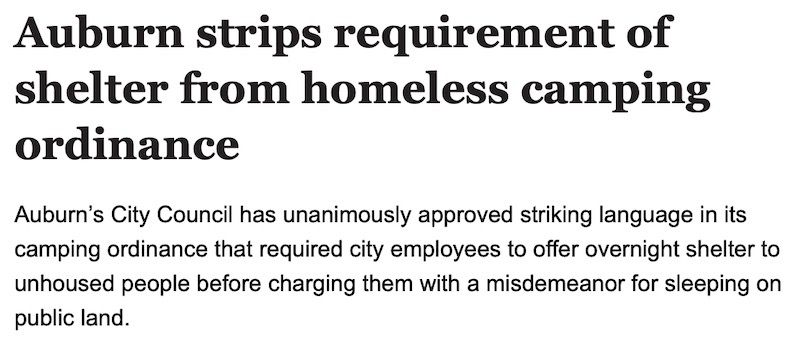
striking language

October 19, 2024

From Ellen Kaisse in e-mail to me on 10/4 (yes, the blog mill grinds very very slowly on Ramona St.): a nice ambiguity from the Seattle Times, in the first sentence of the story:
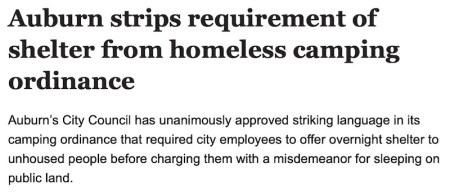

[what EK wrote, with some bracketed amendments by me:] I read striking as an adjective meaning ‘notable’ and modifying language rather than the intended reading where striking is [the nominalization of] a verb with language as its direct object [AZ: the nominalization (together with language and a very long relative clause modifying language) is itself the direct object of the verb approved]. It was only the headline that alerted me that my first reading was the opposite of what was actually approved.

Now if you ask an ordinary person what’s gong on with that sentence, they’ll tell you that it’s ambiguous, and they’ll provide some attempt at a paraphrase (as a sufficient account of the ambiguity), but they’ll simplify things somewhat by disregarding that long relative cause and, in effect, localizing the source of the ambiguity in the expression striking language, telling you that in the Auburn City Council sentence this expression means two different things, ‘notable language’ or ‘removing language’ (from something), and maybe they’ll go on to localize the source even further in the word striking, saying that striking in striking language can mean either ‘notable’ or ‘removing’ (from something).

Ask a linguist, like Ellen or me, and even our briefest answer will go immediately to localizing the ambiguity in specific words that are the crux of the matter. We’ll identify the lexical items involved and supply some relevant properties of the words — what syntactic category they belong to (EK refers explicitly to adjective (Adj) and verb (V) and implicitly to noun (N)); perhaps what derivational and inflectional categories they belong to (implicit in our references to nominalization). And then, especially, we’ll tell you something about the syntactic constructions in which the words are related to one another (we’ll refer to modifying / attributive adjectives, to verbs with direct objects, and so on). Our very brief comments are laden with allusions to the structure of English — its morphology and syntax — as well as to its lexicon.

The linguists’ view is that the lexicon, morphology, and syntax of the language work together in such a way that a stretch of phonological material can convey two different meanings; when we confront an ambiguous expression, we see it not as a brute fact (as if people somehow memorize how phonological substance and semantics are paired with one another, expression by expression), but as the consequence of the system of the language. Surprise! There are two ways you can end up with striking language, two ways the expression can be analyzed. (There are, in fact, more than two; but there are at least the two EK told us about.)

Now I’m going to wade hip-deep into the system of English involved in striking language (and some similar expressions). Not to tell you everything, but to tell you just enough to show you that the system is both big and complex. Therefore, challenging. And therefore, wonderful to figure out. Contemplating stuff like this makes me happy.

(more…)
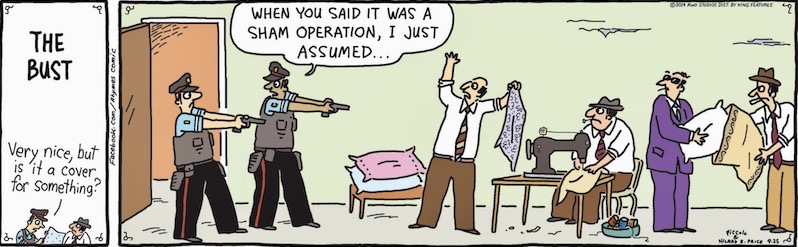
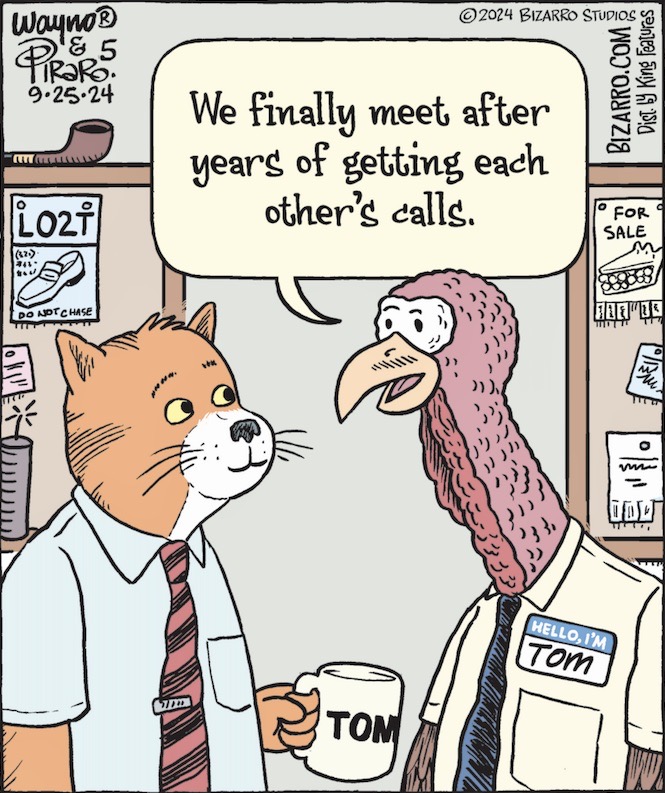
Ambiguity day in the comics

September 26, 2024

Complex ambiguities in the 9/25 comics: a Piccolo / Price Rhymes With Orange turning on the ambiguity of sham; and a Wayno / Piraro Bizarro turning on the ambiguity of tom:


(#1) sham conveying fraud, hence illegality; vs. sham for a decorative pillow cover (being manufactured in a small workshop, though note the suggestion in the title panel that the place might be a cover — ambiguity alert! — in the sense ‘an activity or organization used as a means of concealing an illegal or secret activity’ (NOAD) —  but why are these pillow coverings called shams?


(#2) Personified, talking animals: two toms, a tomcat and a tom turkey, presented as characters named Tom, who work for the same company and are encountering one another over coffee, hence Wayno’s title “Breakroom Encounter” (if you’re puzzled by the odd symbols in the cartoon — Dan Piraro says there are 5 in this strip — see this Page)

(more…)

Put on some pants, ranger!

September 14, 2024

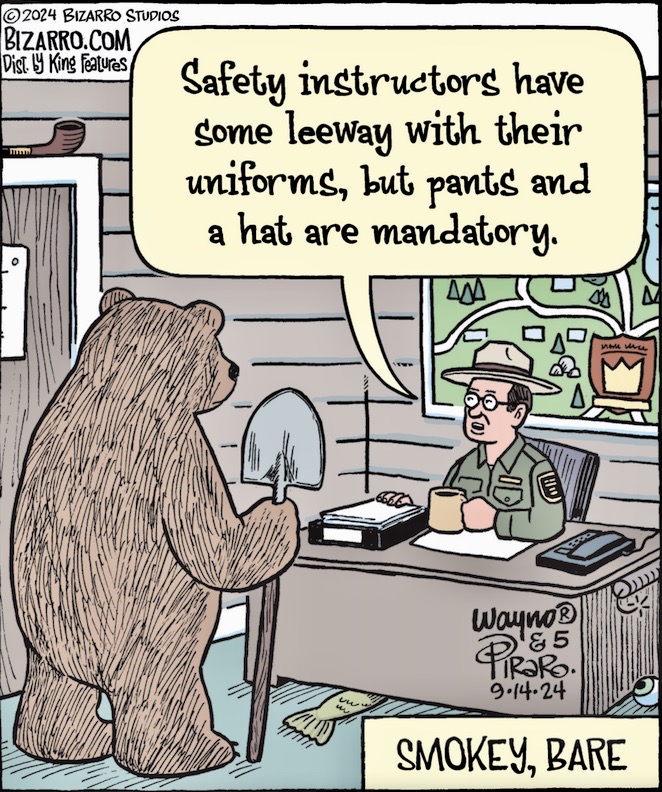
Today’s Wayno / Piraro Bizarro — Wayno’s title: “Forestry Union Negotiations” — plays with the homophones bear and bare in a fresh way, turning on the fact that Smokey the Bear (in those American public service ads for fire safety) is in fact a National Park Service ranger (who happens also to be a talking bear), and so would be required to dress in ranger garb:


(#1) The cartoon, in which Smokey appears on duty with his shovel for fighting fires, but regrettably bare: sans hat and (AmE) pants — also shirt and boots (regulation NPS wear is a gray shirt and green pants) (if you’re puzzled by the odd symbols in the cartoon — Dan Piraro says there are 5 in this strip — see this Page)

Now: a little background on Smokey, followed by some other playing with bear and bare. (By the way, though these are homophones for many English speakers, including most Americans, there are English varieties in which they are distinct — but quite close phonetically, so the word play still works just fine.)

(more…)

Pablo, the drug-sniffing dog

September 13, 2024

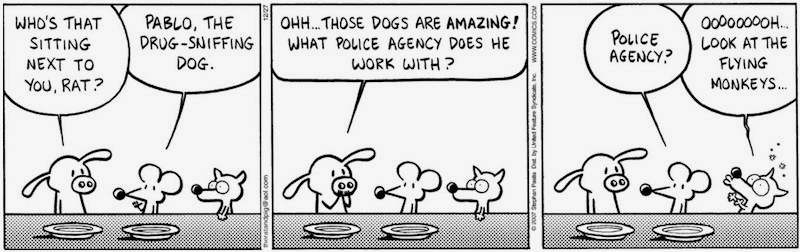
A delightful old Pearls Before Swine strip (from 12/27/07) that Jeff Bowles posted on Facebook this morning:


Pig understands drug-sniffing dog (as will most of us reading this) to refer to a dog that sniffs out drugs, detects / discovers them by its sense of smell, so as parallel to cadaver-sniffing dog; but it turns out that the dog in question actually sniffs — inhales — drugs to get high on them, so that Rat’s use of drug-sniffing dog is parallel to, say, glue-sniffing teenager (glue sniffing ‘the practice of inhaling intoxicating fumes from the solvents in adhesives’ (NOAD)) or snuff-sniffing aristocrat

So drug-sniffing dog is ambiguous — with two different meanings for the PRP-form synthetic compound drug-sniffing — and the strip plays with the ambiguity.

(more…)

The vice of the biscuit bars

September 5, 2024

You imagine the scene: a dark and sleazy establishment serving drinks, but in the back room, hard-core habitués share bites of banned biscuits of every sort, while reveling in vices of the flesh.

Oh, not bar ‘an establishment where alcohol and sometimes other refreshments are served’, but bar ‘an amount of food formed into a regular narrow block’. On which turns a confession by Tim Brookes (of the Endangered Alphabets Project, based in Vermont; website here) on Facebook today:

Back in England, and straight away the old vices return …

In particular, the vice of McVitie’s Penguin biscuit bars.

(more…)

Robotic dim sum

August 31, 2024

🐅 🐅 🐅 tiger tiger tiger for ultimate August, the Roman Emperor’s last day in office, and (by some reckonings) summer’s end, as the tigers are about to be pushed off the scene by autumnally school-going rabbits, in the great cycle of life

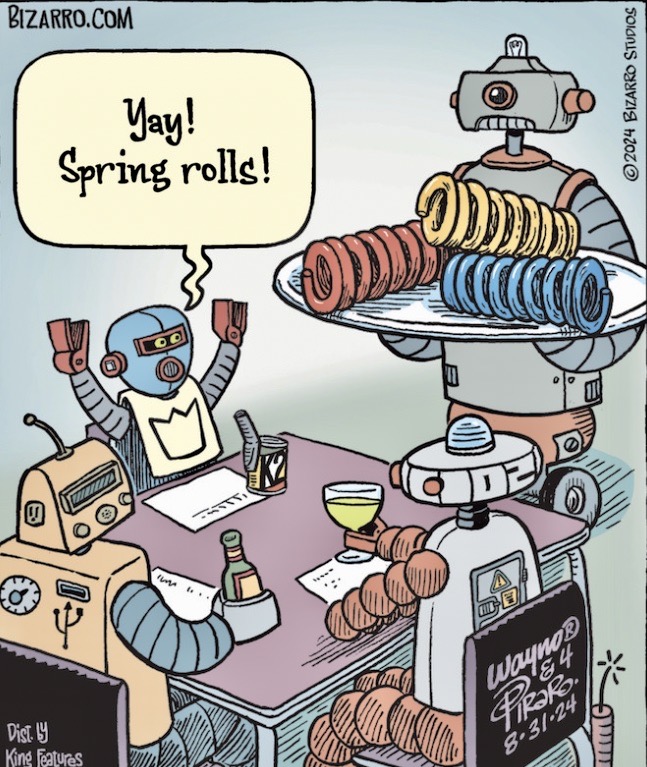
Into this seasonal Sturm und Drang sweeps today’s Wayno / Piraro Bizarro (Wayno’s title: “The appetizer that’s fried in [the motor oil] 10W-40”), in which we witness the cheering of robots presented with a platter of the coiled metallic snacks they are so fond of:


(#1) The UN Pun Convention of 1962 requires that you groan here (if you’re puzzled by the odd symbols in the cartoon — Dan Piraro says there are 4 in this strip — see this Page)

Yes, spring ‘a resilient device, typically a helical metal coil, that can be pressed or pulled but returns to its former shape when released, used chiefly to exert constant tension or absorb movement’ (NOAD), here punning on the spring of spring roll ‘an Asian snack consisting of rice paper filled with minced vegetables and usually meat, rolled into a cylinder and fried’ (NOAD again) — and that spring is in fact the name of the season between winter and summer (just in case you were imagining that spring rolls were so called because they leap, or spring, into your mouth, or because they were historically made along small streams, or springs).

(more…)

The cob-canine corn dog

August 25, 2024

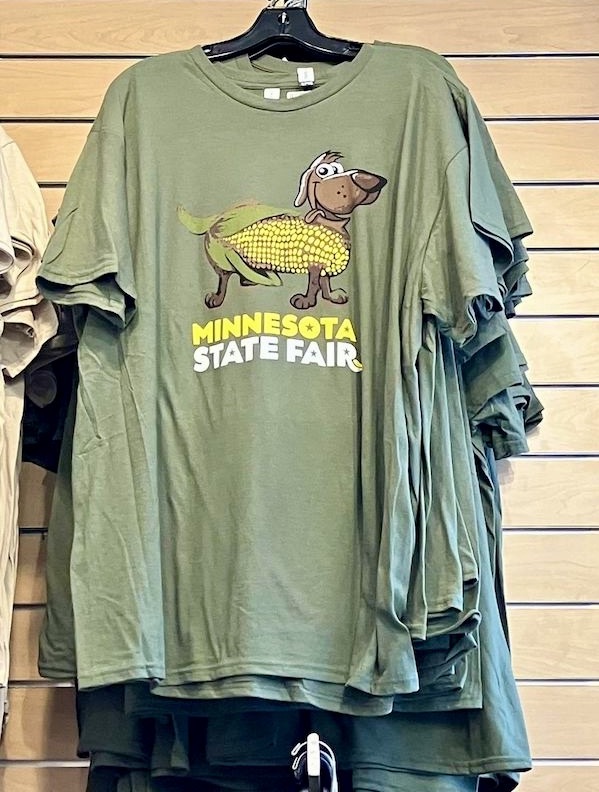
Steven Levine on Facebook on 8/23, reporting in from an enormously crowded Minnesota State Fair, posted this cartoon t-shirt from the fair, with a note of distress:


(#1) SL: I find this t-shirt design to be disturbing. Shades of Charlie the Tuna.

(To which I added: Eat me!) I’ll get to Charlie the vorarephilic horse mackerel (and the Ameglian Major Cow, too) in a little while. But first, on fun-food corn dogs and cob-canine corn dogs.

(more…)